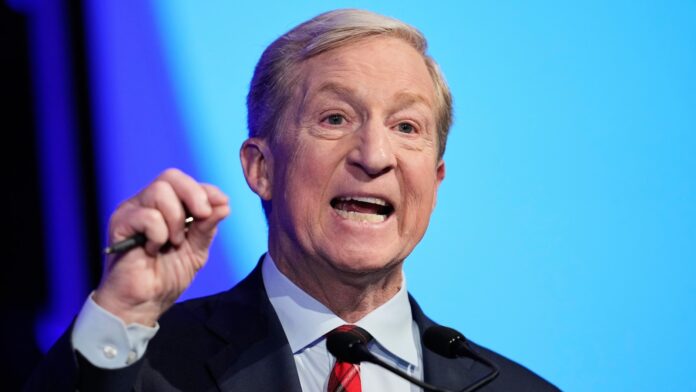

Billionaire Tom Steyer’s ad spending breaks records in California governor’s race
ABC News: Politics — 2026-05-27 01:55:00 — abcnews.com
Steyer’s Historic Campaign Spending Raises Eyebrows
LOS ANGELES — Win or lose, billionaire Democrat Tom Steyer is making headlines in his bid to become California’s next governor, running the most expensive political advertising campaign in the country this year. Steyer, a former hedge fund manager turned liberal activist, has spent or booked over $195 million in ads for broadcast TV, cable, and radio, according to data compiled by advertising tracker AdImpact. This staggering sum has sparked criticism that he is attempting to buy the governor’s chair, as his ad spending dwarfs that of his nearest rival, fellow Democrat Xavier Becerra, by more than 20 times.
Comparative Spending in the Race
Nationally, no other candidate comes close to Steyer’s spending. In Georgia, Republican health care executive Rick Jackson has spent about $83 million on advertising in his primary race for governor, while his Republican rival, Lt. Gov. Burt Jones, who has the endorsement of Donald Trump, has spent nearly $31 million. Following them is Democratic U.S. Rep. Raja Krishnamoorthi of Illinois, who spent over $28 million in a failed bid for the U.S. Senate.
Steyer’s ad blitz has eclipsed the previous record set by Republican Meg Whitman, who spent $178.5 million in her losing bid for governor in 2010. While Whitman’s total remains the highest when adjusted for inflation, Steyer’s spending is unprecedented for a primary campaign.
Criticism and Campaign Dynamics
As the campaign heads toward a June 2 primary, Steyer’s financial advantage has given him a significant publicity edge. He has maintained a steady flow of advertising and online posts questioning Becerra’s credentials. In response, Becerra’s campaign has attempted to connect with voters fatigued by the barrage of Steyer ads, using tranquil imagery in one ad that gently prods, “You can stop the endless Tom Steyer ads. Vote Xavier Becerra.”
Despite his substantial spending, Steyer has not broken away from the crowded field, which includes several other established candidates. Many voters appear slow to engage in a race without a clear frontrunner, with over 50 names on the ballot. California’s “top two” primary system means only the top two vote-getters will advance to the November election, regardless of party affiliation.
Historical Context of Money in Politics
History shows that money does not always translate into votes. Billionaire developer Rick Caruso spent over $100 million in his 2022 bid for Los Angeles mayor but was defeated by Mayor Karen Bass, who spent a fraction of Caruso’s total. Similarly, former New York City Mayor Michael Bloomberg spent more than $1 billion of his own money on his 2020 presidential bid before dropping out. Steyer’s previous presidential campaign also failed to gain traction, leading to his early exit after a poor showing in the South Carolina primary.
Steyer’s Political Experience and Public Perception
Steyer has never held elected office, which raises questions about his motivations. In a 2019 interview with The Associated Press, he addressed concerns about his wealth influencing his political ambitions, stating, “I don’t think that’s possible,” and adding, “I’m never going to apologize for succeeding in business. That’s America, right?”
Current Issues Facing California
The gubernatorial race unfolds against a backdrop of significant challenges for California, including a long-running homeless crisis, wildfire insurance shortages, projected budget shortfalls, and soaring housing costs that are out of reach for many working-class families. Voters are also grappling with rising everyday expenses for groceries, utilities, and gas.
Conclusion
As Tom Steyer’s campaign continues to unfold, his record-breaking spending raises important questions about the influence of money in politics and the effectiveness of advertising in swaying voter opinion. With a crowded field and pressing state issues at stake, the upcoming primary will be a critical test of whether financial resources can indeed translate into electoral success.