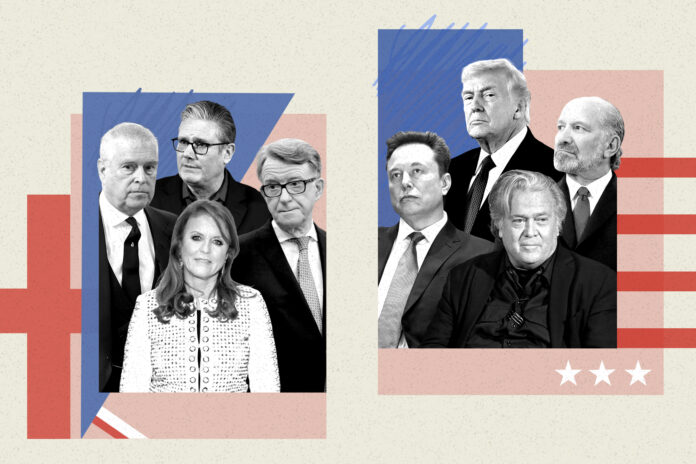

The Epstein scandal is taking down Europe’s political class. In the US, they’re getting a pass.
Across the Atlantic, Epstein Revelations Prompt Action, While U.S. Faces Criticism for Inaction
In recent weeks, revelations linked to the late financier Jeffrey Epstein have sent shockwaves across Europe, leading to high-profile dismissals and investigations. However, across the Atlantic, the U.S. has seen comparatively muted responses, prompting questions about accountability and the political climate under Donald Trump’s influence.
European Accountability: A Wave of Resignations and Apologies
In Norway, a prominent diplomat has been suspended, and a former prime minister is under investigation due to ties with Epstein. The U.K. has witnessed the resignation of its former ambassador to the U.S. from the House of Lords amidst accusations related to Epstein. Furthermore, Andrew Mountbatten-Windsor, previously known as Prince Andrew, has been stripped of his titles, following the release of incriminating emails involving his ex-wife Sarah Ferguson.
British Prime Minister Keir Starmer has publicly apologized to Epstein’s victims, stating, “I am sorry for what was done to you, sorry that so many people with power failed you, sorry for having believed Mandelson’s lies and appointed him.” This move contrasts starkly with the U.S. political landscape, where prominent figures have mostly evaded similar consequences.
Trump and Epstein: Allegations and Denials
Despite documented ties between Donald Trump and Jeffrey Epstein, the former president has denied any wrongdoing. Trump has asserted that he and Epstein had a falling out years ago. These claims have not gone unchallenged. For instance, fact-checkers have pointed out inconsistencies in Trump’s statements regarding the timeline of his relationship with Epstein. Notably, journalist and political analyst Daniel Dale has highlighted Trump’s past praise of Epstein’s “terrific” character in a 2002 interview, which contradicts his later claims of having little to do with Epstein.
Commerce Secretary Howard Lutnick’s position remains stable despite emails suggesting a closer relationship with Epstein than previously disclosed. A spokesperson maintains that Lutnick “had limited interactions with Mr. Epstein in the presence of his wife and has never been accused of wrongdoing.”
A Broader Cultural Shift?
Experts argue that the lack of significant fallout in the U.S. reflects a broader cultural shift under Trump’s presidency. Norm Eisen, a former U.S. ambassador and current critic of Trump, commented, “Trump has set a tone of defiance on refusal to accept and feel any shame.” This sentiment resonates with a public increasingly desensitized to scandal.
In contrast to Europe, some American elites linked to Epstein have only suffered reputational damage. Tech mogul Elon Musk and former Trump aide Steve Bannon have both faced public scrutiny for their associations with Epstein, yet have largely continued their professional endeavors unscathed. Musk has called for justice, stating, “When there is at least one arrest, some justice will have been done. If not, this is all performative.”
Conclusion: Reflecting on Accountability
As Europe grapples with the fallout from Epstein associations, the U.S. stands at a crossroads, facing criticism for its comparative inaction. The difference highlights a broader societal question: how should the U.S. hold its elites accountable in the face of scandal? As Rufus Gifford, a former ambassador, pointedly asks, “Why are we not having that same reaction [as Europe]?” The answer may lie in the lasting impact of the Trump era, where political polarization has altered the landscape of accountability.
This disparity between reactions across the Atlantic underscores the complex dynamics at play in addressing powerful figures’ accountability. As the U.S. continues to navigate these waters, the question remains whether the tide of public opinion will shift towards demands for greater accountability.
Source: www.politico.com