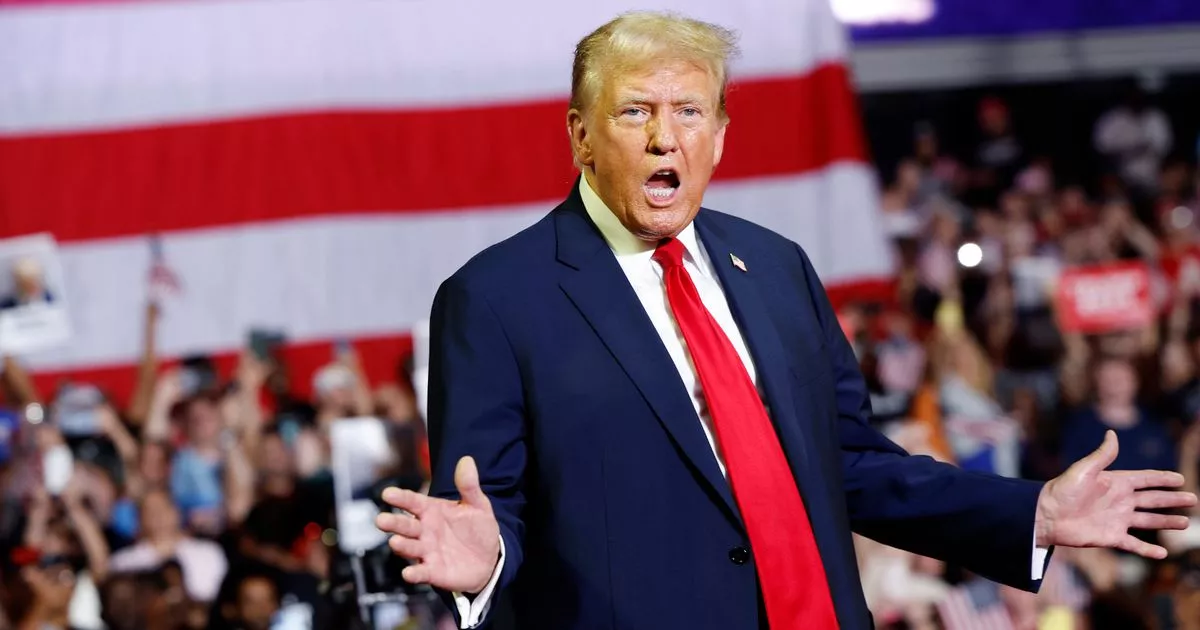

Trump says he will seek to require voter ID for midterms regardless of Congress
Trump Proposes Voter ID Mandate for Midterms Without Congressional Approval
WASHINGTON, Feb 13 (Reuters) – In a bold statement that has stirred political discourse, U.S. President Donald Trump announced on Friday his intention to impose voter identification requirements for the upcoming November midterm elections, regardless of congressional consent. This announcement, made during a rally in Florida, has sparked debates over the legality and implications of such a unilateral move.
The Presidential Announcement
President Trump declared, “We’re going to ensure that every vote cast is a legitimate one. Whether Congress approves it or not, we’ll have voter ID for the November elections.” This remark comes as part of a series of efforts by the President to address what he claims are widespread voter fraud issues—a claim that has been widely discredited by multiple studies and experts.
Fact-Checking Trump’s Voter Fraud Claims
Numerous studies have consistently shown that voter fraud in the United States is exceedingly rare. According to the Brennan Center for Justice, the rate of voter fraud is between 0.00004% and 0.0009%. Despite these findings, Trump has repeatedly insisted that voter fraud is a significant problem.
David Becker, the executive director of the Center for Election Innovation & Research, stated, “There is no credible evidence to support the idea of widespread voter fraud in U.S. elections. These claims undermine public confidence in our electoral system.”
Legal and Political Reactions
The President’s proposal has raised constitutional questions regarding the executive branch’s power over election laws, which are traditionally under the jurisdiction of Congress and state governments. Experts warn that any attempt to implement a federal voter ID requirement without legislative approval could face significant legal challenges.
Rick Hasen, a law professor at the University of California, Irvine, noted, “Election laws are primarily a state matter, and any federal mandate without congressional backing could be deemed unconstitutional.”
Impact on Public Opinion and Behavior
Misinformation around voter fraud and election integrity has had tangible effects on public opinion. Past instances have shown that persistent false narratives can erode trust in the electoral process, leading to decreased voter turnout and increased polarization.
The 2020 elections saw similar claims by President Trump, which led to widespread public belief in unfounded theories about election fraud, as evidenced by polls indicating that a significant number of his supporters doubted the election’s legitimacy.
Conclusion
As President Trump seeks to enforce voter ID requirements for the upcoming midterm elections, the nation faces a crossroads between electoral integrity and constitutional boundaries. While the debate continues, it remains crucial for the American public to discern fact from fiction in the discourse surrounding voter fraud. As experts have highlighted, maintaining trust in the electoral process is vital for the health of American democracy.