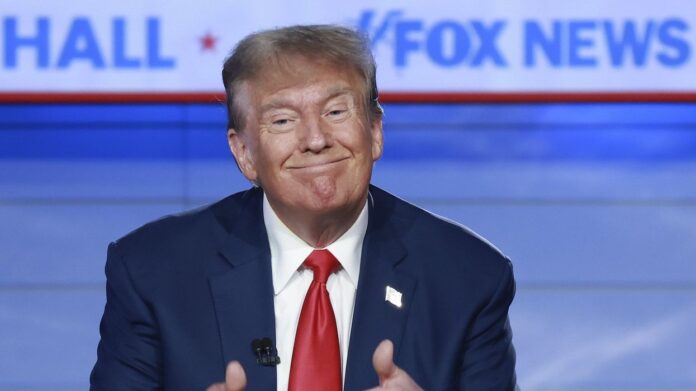

Trump announces new 10% global tariff as he hits out at ‘deeply disappointing’ Supreme Court ruling
Supreme Court’s Landmark Decision: A Rare Check on Trump’s Executive Power
In a significant judicial ruling, the Supreme Court has curtailed President Donald Trump’s ability to impose tariffs, marking a rare check on his broad use of executive authority. For months, Trump had warned that such a decision could lead to what he termed an “economic and national security disaster” with “catastrophic” repercussions. However, a six-justice majority decisively ruled against him, underscoring that Congress, not the president, holds the power to impose tariffs.
Trump’s Legal Setback: The Court’s Rationale
The case revolved around President Trump’s interpretation of the Emergency Economic Powers Act of 1977, which he cited as a legal basis for his tariff actions. The Supreme Court, however, found no provision in the law that granted the president such sweeping powers. This decision comes as a notable deviation from the court’s recent trend of allowing Trump to advance his agenda, particularly in areas like immigration and federal government restructuring, despite ongoing legal challenges.
Evaluating Trump’s Claims
Trump’s dire warnings about the impacts of the court’s decision were not lost on the public. He has repeatedly emphasized potential economic fallout, which some analysts have challenged. The ruling serves as a reminder of the importance of checks and balances in the U.S. government system.
Fact-checking efforts have underscored discrepancies in Trump’s assertions. For instance, the claim of “catastrophic” consequences has been disputed by economists who argue that trade policies require a balanced approach and legislative oversight.
Broader Implications and Future Challenges
This legal setback is not an isolated incident. Several other cases involving controversial uses of executive power are still pending. These include efforts to end birthright citizenship and the controversial dismissal of a Federal Reserve governor. As legal experts observe, this ruling could set a precedent in curbing overreach.
Political analysts, such as constitutional scholar Laurence Tribe, emphasize that this decision reaffirms the judiciary’s role in maintaining a balance of power. “The court’s ruling is a crucial reminder that no president is above the law,” Tribe said.
The Road Ahead
In the wake of this decision, the Trump administration faces the challenge of navigating its policy priorities within the bounds of constitutional authority. With the court’s ruling serving as a potential harbinger, it is yet to be seen how future legal battles will unfold.
In conclusion, the Supreme Court’s decision represents a pivotal moment in the ongoing discourse on executive power. As the nation grapples with the implications, the ruling stands as a testament to the enduring principles of American democracy. This case underscores the judiciary’s essential role in safeguarding the separation of powers, ensuring that no single branch dominates the others.