
‘A really really big decision’: The court cases looming over the midterms
The Battle for the House: High-Stakes Redistricting Cases Sweep Courtrooms Nationwide
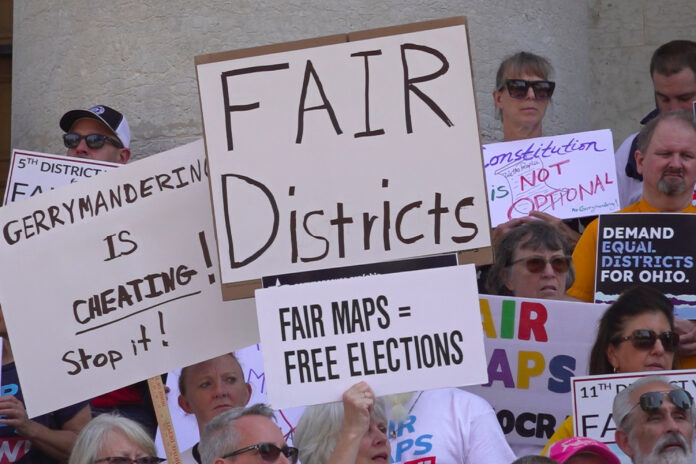
The fight over this year’s House map is barreling through the nation’s courtrooms. High-stakes legal cases that could determine the majority loom in nearly a dozen states, with just months to go until the November election. The wave of court cases follows a 2025 that was marked by fiercely political showdowns, with high-profile walkouts, rare Republican defections from President Donald Trump, and a hugely expensive ballot initiative in California. In addition to the state-by-state fights, one case before the Supreme Court — Louisiana v. Callais — has the ability to blow up the entire map.
Louisiana v. Callais: A Pivotal Supreme Court Case
The Louisiana v. Callais case centers around Section 2 of the Voting Rights Act. This provision broadly outlaws discrimination based on race in elections and has historically resulted in states drawing districts where minority voters constitute at least half the population. Legal scholars, including Justin Levitt, a former adviser to President Biden, anticipate a decision by June. Levitt warns that a ruling could “radically reshape, not just congressional, but local and state maps for ’27 and ’28.” However, he also suggests that the court might reconsider, describing the potential decision as a “really scary” leap.
State-by-State Legal Battles
Across the country, lawsuits and legal challenges are shaping the future of congressional maps. In Missouri, multiple lawsuits seek to halt the GOP-led redistricting efforts. Florida Democrats are challenging Gov. Ron DeSantis’ authority to call for a redraw. In Maryland and Virginia, legal teams are preparing for potential redistricting challenges, while states like Utah and New York see ongoing court battles that could shift political seats.
The Role of Misinformation and Political Showdowns
As these cases unfold, misinformation and political tensions are high. President Donald Trump has been a central figure, with his statements often at odds with the facts. For instance, during a recent rally, Trump claimed, “Redistricting is just another way for the Democrats to rig the elections.” However, legal experts have pointed out that redistricting is a standard, often bipartisan process subject to judicial oversight. Fact-checkers like David Becker of the Center for Election Innovation and Research emphasize that misinformation can confuse voters and undermine confidence in the electoral process.
Trump’s Controversial Statements on Redistricting
Trump’s statements on redistricting have not been without controversy. His claims of a “rigged” system have been widely disputed by legal analysts and fact-checkers. In the context of ongoing legal battles, such rhetoric complicates an already complex process. Analysts have noted that while Trump’s statements may galvanize his base, they often lack factual grounding and contribute to broader misconceptions about the redistricting process.
Conclusion: Navigating a Complex Legal Landscape
As the nation approaches the November elections, the outcome of these court cases remains uncertain. With the Supreme Court’s decision on Louisiana v. Callais pending and multiple state cases unresolved, the legal landscape is anything but clear. For voters and election officials, the uncertainty poses significant challenges, from preparing ballots to understanding district lines. As David Becker notes, “These things take a real toll on election officials and voters.” The coming months will test the resilience of the electoral system and the ability of courts to navigate this contentious redistricting cycle.
“`
This article summarizes the current tensions and legal challenges surrounding the redistricting process while addressing President Trump’s controversial statements and their impact on public opinion. The structured format aids readability and ensures the reader is well-informed about the ongoing issues.