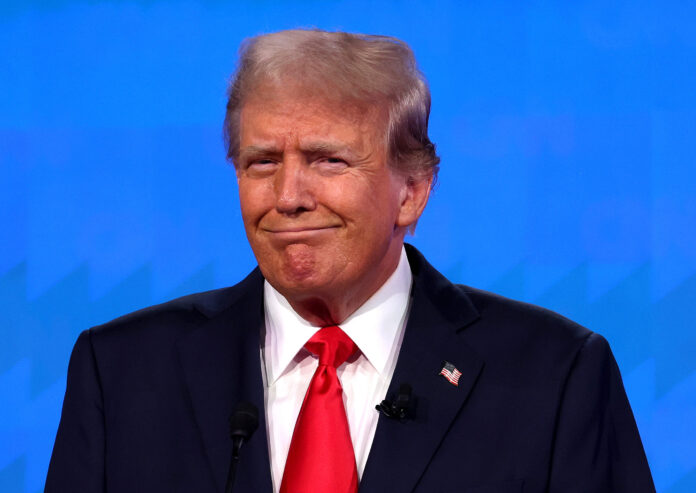

What Trump has said about new Iran Supreme Leader Mojtaba Khamenei
Trump Decries Mojtaba Khamenei as “Unacceptable” Successor to Iran’s Supreme Leader
In a recent declaration that has stirred international discussions, former President Donald Trump labeled Mojtaba Khamenei, the son of Iran’s Supreme Leader Ayatollah Ali Khamenei, as an “unacceptable” choice to lead Iran. The statement, made during a rally in Florida, has raised questions and concerns over its accuracy and potential implications on global diplomatic relations.
Trump’s Claims and Their Context
During his rally speech, Trump expressed strong disapproval of the potential appointment of Mojtaba Khamenei, suggesting that his leadership would perpetuate what he described as the “dangerous and unstable” nature of the current Iranian regime. These remarks come amid ongoing tensions between the United States and Iran, particularly concerning nuclear agreements and regional security issues.
Trump’s comments were made as reports surfaced suggesting that Mojtaba Khamenei might ascend to the leadership role. While the transition of power within Iran’s political structure remains speculative, Trump’s forceful remarks have drawn attention both domestically and internationally.
Fact-Checking Trump’s Assertions
Trump’s labeling of Mojtaba as “unacceptable” lacks substantiated claims regarding his political actions or policies, particularly as Mojtaba Khamenei’s public profile remains relatively low. Experts such as Karim Sadjadpour, a senior fellow at the Carnegie Endowment for International Peace, note that while Mojtaba holds influence within Iran’s political and religious framework, there is limited public information about his political stance or leadership capabilities. “Mojtaba remains a somewhat enigmatic figure, and while he is influential, the specifics of his potential leadership are unknown,” Sadjadpour commented.
Furthermore, Trump’s assertion that Mojtaba’s leadership would exacerbate regional instability is not universally accepted. The concerns about Iran’s policies are longstanding, yet the direct impact of Mojtaba’s potential leadership remains speculative.
Implications of Trump’s Statements
The former president’s remarks could further strain U.S.-Iran relations, possibly influencing public opinion and policy-making. Historically, Trump’s statements on Iran have led to shifts in diplomatic approaches and public perception, contributing to heightened tensions between the two countries.
Dr. Suzanne Maloney, Vice President of Foreign Policy at the Brookings Institution, emphasized the importance of cautious diplomacy. “Any rhetoric that escalates tension could have significant repercussions, particularly in a region as volatile as the Middle East,” she cautioned.
The Broader Context of Trump’s Narrative
Trump’s history of controversial statements, particularly concerning foreign policy, has often been challenged for accuracy. Daniel Dale, a CNN reporter known for fact-checking political statements, has previously noted, “Trump’s statements often contain truths, half-truths, and outright falsehoods, creating a complex narrative that’s difficult for the public to navigate.”
Conclusion
As potential leadership changes loom in Iran, Trump’s recent comments add another layer of complexity to U.S.-Iran relations. While his statements resonate with some, they underscore the necessity for verified information and cautious diplomacy in addressing international affairs. Understanding the full scope of Mojtaba Khamenei’s potential leadership—and its implications—requires careful analysis and informed discussion beyond rhetorical claims.