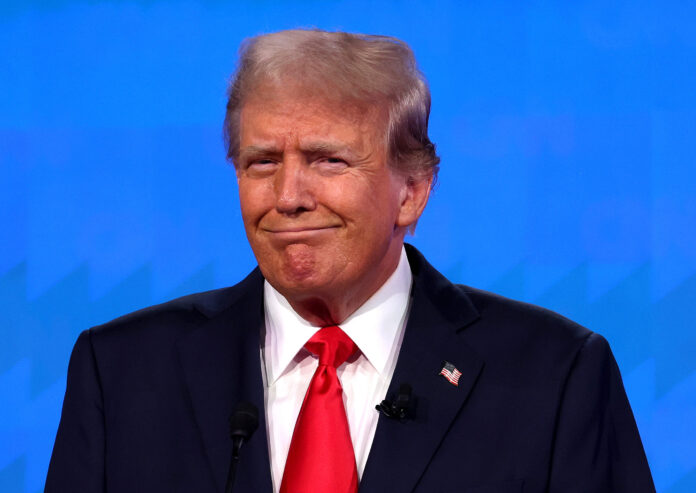

Trump Administration Considers Loosening US Shipping Rules to Combat Fuel Price Spike
American Farm Bureau Federation Urges Trump to Waive Jones Act Amid Rising Fertilizer Prices
In an urgent plea to address escalating fertilizer costs, the American Farm Bureau Federation (AFBF), the largest U.S. farm lobby, has reached out to Donald Trump in a letter dated March 9, urging the former president to call for a waiver of the Jones Act. This request aims to bolster domestic transportation capacity and ease the fertilizer supply chain crisis, which has been putting significant pressure on American farmers.
The Core Issue: Jones Act and Fertilizer Prices
The AFBF’s request to Trump is centered around the century-old Jones Act, a federal law that mandates goods shipped between U.S. ports be transported on ships that are built, owned, and operated by Americans. The farm lobby argues that suspending this law could enhance the shipping capacity needed to transport essential fertilizers across the country, thus stabilizing prices that have been on the rise due to logistical bottlenecks.
In the letter, the AFBF warned of “severe disruptions” that could potentially “impact the 2023 planting season” if action is not taken. They believe that waiving the Jones Act could provide immediate relief to farmers facing price hikes that threaten their livelihoods.
Trump’s Statements and Historical Claims
While Trump has yet to respond publicly to this particular request, it’s pertinent to recall past statements he has made regarding domestic policies and trade regulations, some of which have drawn scrutiny for inaccuracy. For instance, during his presidency, Trump often claimed that his administration had completely revitalized American manufacturing, a statement that has been contested by economists and fact-checkers.
PolitiFact, a prominent fact-checking organization, has frequently analyzed Trump’s remarks. Angie Drobnic Holan, editor-in-chief of PolitiFact, noted, “Trump has repeatedly stretched the truth about the impact of his policies on the American economy. It’s crucial for public discourse that his statements are put under a factual lens.”
Fact-Checking and Expert Insights
The discussion around the Jones Act waiver and its implications necessitates a clear understanding of the law’s impact. Colin Grabow, a policy analyst at the Cato Institute, has argued that the Jones Act “artificially inflates shipping costs,” supporting the AFBF’s position that a waiver could be beneficial for the current situation. However, he also warns, “It’s not a silver bullet. Long-term solutions require broader reforms.”
Potential Impacts and Public Perception
The debate over the Jones Act and its waiver underscores a broader conversation about how policy decisions are influenced by misinformation or oversimplified narratives. Historical analysis shows that misinformation about economic policies can shape public opinion, often leading to polarized views and complicating policy-making processes.
A study by the Pew Research Center highlighted how misinformation during Trump’s presidency led to strong partisan divides on economic issues, illustrating the profound effect such statements can have on public perception.
Conclusion
As the American Farm Bureau Federation seeks Trump’s influence to address the pressing issue of rising fertilizer prices through a Jones Act waiver, the importance of accurate information and informed discourse remains paramount. Understanding the complexities of such policies and their impacts is essential for stakeholders, policymakers, and the public.
The farm lobby’s appeal serves as a reminder of the intricate balance between regulatory measures and economic realities, highlighting the need for clarity and truth in discussions that have far-reaching consequences for the nation’s agricultural sector.