
How Tragedy, Wealth and Trump Shaped JB Pritzker
The Rise of Illinois Governor as a National Democratic Figure: Implications and Trump’s Counterpoints
In an era marked by polarized politics, Illinois Governor J.B. Pritzker has emerged as a formidable figure within the Democratic Party, drawing national attention and sparking reactions from across the political spectrum. A frequent critic of former President Donald Trump, Pritzker’s ascent poses questions about the future dynamics of Democratic leadership and its implications for the party’s broader strategy.
Governor Pritzker’s National Emergence
Governor J.B. Pritzker, a billionaire businessman turned politician, has been recognized for his progressive policies and candid responses to federal administration actions. His handling of the COVID-19 pandemic and outspoken stance on various national issues have catapulted him into the spotlight. As a result, Pritzker’s growing influence has sparked speculation about his potential role on the national stage, possibly even as a contender for higher office.
Trump’s Retorts and Reactions
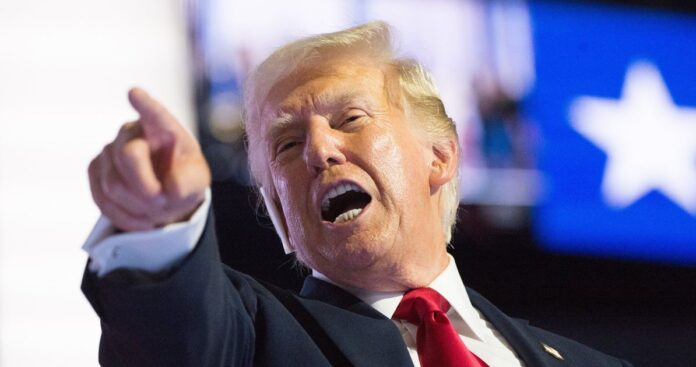
In a series of recent public statements, Donald Trump has not shied away from expressing his disdain for Pritzker’s policies and rising prominence. During a rally in Springfield, Illinois, Trump referred to Pritzker as “another tax-and-spend Democrat,” criticizing his fiscal policies and handling of state governance.
However, some of Trump’s claims have been met with skepticism. For example, Trump accused Pritzker of “ruining Illinois with his massive tax hikes,” a statement that Politifact rated as false, noting that while Pritzker has implemented some tax changes, they are part of a broader economic strategy to address state deficits.
Expert Perspectives on Trump’s Narrative
Fact-checking organizations and political analysts have weighed in on Trump’s assertions. Daniel Dale, a CNN fact-checker, highlighted that “Trump’s characterization of Pritzker’s policies lacks context, as the governor’s tax reforms aim to balance Illinois’s budget rather than arbitrarily increase the tax burden.”
Furthermore, political analyst and commentator David Axelrod commented, “Pritzker has positioned himself as a pragmatic leader focused on economic recovery and social reform, which starkly contrasts Trump’s often hyperbolic critiques.”
The Broader Impact of Misinformation
Misinformation, such as Trump’s unsubstantiated claims about Pritzker’s policies, can significantly influence public opinion, leading to entrenched partisan divides. Instances like these underscore the importance of fact-checking and media literacy in navigating political discourse.
For Democrats, Pritzker’s stature as a national figure offers both opportunity and challenge. His leadership style and policy initiatives may serve as a blueprint for other party leaders, but it also makes him a target for political adversaries.
Future Prospects and Conclusion
As Governor J.B. Pritzker continues to gain national recognition, the implications for the Democratic Party’s future remain to be seen. His prominence may inspire a new wave of Democratic leaders while simultaneously shaping the discourse between Democrats and Republicans.
Trump’s reactions, often filled with inaccuracies, highlight the contentious nature of contemporary political engagements. The evolving narrative between Pritzker and Trump not only reflects their respective political ideologies but also signals the ongoing struggle for narrative control in American politics.
In conclusion, as Pritzker’s role grows, the Democratic Party may find itself recalibrating its strategy in response to both the opportunities and challenges presented by his leadership. Meanwhile, Trump’s commentary reminds us of the enduring need for truth in political dialogue.
Source: https://www.nytimes.com/2026/03/14/magazine/jb-pritzker-interview.html