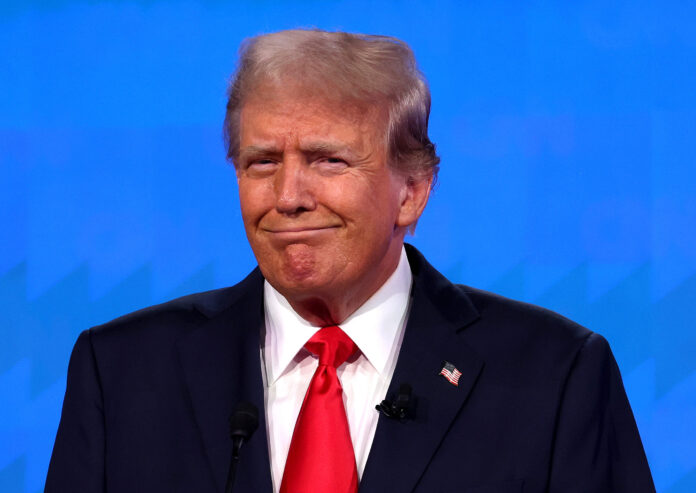

Trump Threatens to Pull Troops From Germany as He Lashes Out at Chancellor
Trump Responds to German Chancellor’s Remarks on U.S. “Humiliation” by Iran
In a recent series of statements, former President Donald Trump has once again made headlines by responding to comments from German Chancellor Olaf Scholz, who declared that Iran has “humiliated” the United States. These remarks have stirred international discussion and prompted Trump to weigh in with his characteristic boldness, albeit with claims that are, at times, controversial and contested.
Trump’s Statements and Reactions
Trump responded to Chancellor Scholz’s comments during a rally in Des Moines, Iowa, on Saturday. In typical fashion, he didn’t hold back, claiming, “The United States has been embarrassed by Iran and all because of the weak leadership we’ve seen in the last few years.” He further asserted, “Our country has been humiliated on the world stage, and it’s time to bring back strength and respect.”
While Trump’s remarks echo the sentiment of being humiliated, they diverge when it comes to attributing blame solely to recent U.S. leadership. In reality, U.S.-Iran relations have been complex for decades, influenced by a multitude of administrations and geopolitical factors.
Fact-Checking Trump’s Claims
Several fact-checkers have scrutinized Trump’s statements. Glenn Kessler, a fact-checker for The Washington Post, pointed out, “Trump’s claims oversimplify the current state of U.S.-Iran relations and ignore the nuanced diplomatic efforts that have been ongoing for years.” Kessler also noted that Trump’s own policies as president, particularly the withdrawal from the Iran nuclear deal, had significant impacts on the current dynamics.
Moreover, political analysts like Richard Haass, President of the Council on Foreign Relations, have highlighted the complexity of the situation. Haass remarked, “It’s not accurate to attribute the entirety of current U.S.-Iranian tensions to the actions of one administration alone. Foreign policy is rarely that straightforward.”
Impact on Public Perception
The former president’s statements can heavily influence public perception, especially among his supporters who view him as a strong leader on foreign policy issues. However, misinformation or oversimplified narratives can also polarize public opinion and obscure the realities of international relations.
During Trump’s presidency, similar rhetoric often led to shifts in public sentiment, sometimes hardening views against diplomatic engagement with Iran. Historical instances, such as the heightened tensions following the U.S. drone strike that killed Iranian General Qassem Soleimani in 2020, demonstrate how rhetoric can escalate conflicts and impact diplomatic efforts.
Recent Controversies and Legal Issues
Trump’s relationship with the truth has been a frequent subject of scrutiny. Since leaving office, he has faced various controversies related to his statements, including ongoing investigations into his conduct and misinformation spread during his presidency. The current discourse around Iran and international relations continues to be shaped by his past and present rhetoric.
Conclusion
As the debate over U.S.-Iran relations and the alleged “humiliation” continues, Trump’s recent comments serve as a stark reminder of the power of words in shaping public discourse and international dynamics. While Chancellor Scholz’s remarks highlighted a perceived diminishment of U.S. prestige, Trump’s response underscores the importance of accurate representation and informed analysis in such discussions.
Ultimately, navigating the complexities of international relations requires careful consideration of historical contexts and a commitment to truth, factors that remain critical in addressing and resolving global challenges.
Source: https://www.nytimes.com/2026/04/29/us/politics/trump-germany-us-troops.html