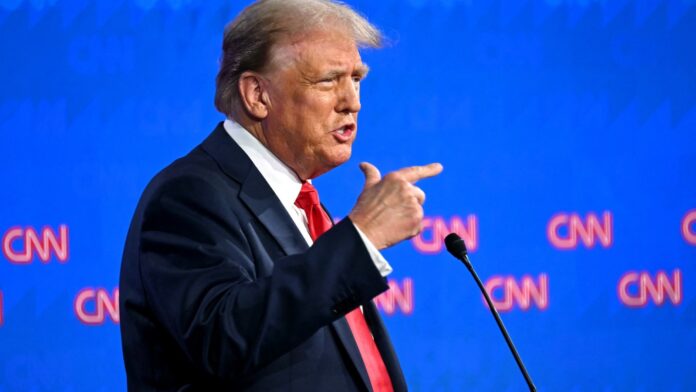

Trump brags about acing cognitive test…where he needed to identify a squirrel
Trump Proposes Cognitive Tests for Presidential Candidates at Monday’s Event
In a bold statement made during a public appearance on Monday, former President Donald Trump suggested a new qualification for those seeking the highest offices in the United States: passing a cognitive test. The proposal immediately captured public attention and sparked debate among political analysts and psychologists alike.
A Call for Cognitive Evaluations
Speaking at a rally in New Hampshire, Trump declared, “Anybody running for the office of President of the United States should take a cognitive test.” This call for cognitive testing is not entirely new for Trump, who has previously advocated for mental fitness evaluations for public officials, often in response to questions about his own mental acuity during his presidency.
However, the suggestion raised eyebrows and questions, particularly considering Trump’s past assertions of his own superior cognitive abilities. During his presidency, Trump frequently referenced an assessment he claimed to have aced, stating, “I took the [Montreal Cognitive Assessment] test and I aced it. I aced it.”
Fact-Checking Trump’s Claims
Fact-checkers have previously scrutinized Trump’s comments regarding cognitive tests. Angela Carusone, a fact-checker with FactCheck.org, highlighted that the test Trump often referenced is not an intelligence test but rather a screening tool for cognitive impairment. “The Montreal Cognitive Assessment is designed to identify early signs of dementia, not to gauge intelligence or cognitive prowess,” Carusone explained.
David Becker, a political analyst at the Center for Election Innovation & Research, further contextualized Trump’s statement by noting, “Trump’s frequent mentions of cognitive testing serve more as a political tool than a substantive policy proposal.”
Potential Implications and Public Reactions
The suggestion of mandatory cognitive testing has ignited discussions about the implications for democratic processes. Advocates argue it could ensure that only mentally fit individuals assume the presidency, while critics warn it could become a political weapon used to discredit opponents.
Historically, misinformation and unfounded claims have notably influenced public perception. Trump’s own allegations about election fraud, widely debunked by experts and officials, led to significant public skepticism about the electoral process. This context heightens concerns about the potential misuse of cognitive testing rhetoric.
Legal and Ethical Considerations
Trump’s latest proposition raises complex legal and ethical questions. Michael Waldman of the Brennan Center for Justice commented, “Mandating cognitive tests for candidates could face significant constitutional challenges, as it raises questions about equal access to running for public office.”
Moreover, the proposal coincides with ongoing legal issues Trump faces, including investigations into his business practices and previous statements about election integrity.
Conclusion
Trump’s call for cognitive testing of presidential candidates adds another layer to the conversation about the qualifications for the highest office in the land. While the proposal is framed as a means of ensuring capable leadership, its potential consequences and motivations remain subjects of intense debate. As political figures continue to navigate the complexities of public trust and accountability, the intersection of cognitive testing and electoral politics will likely remain a contentious issue.