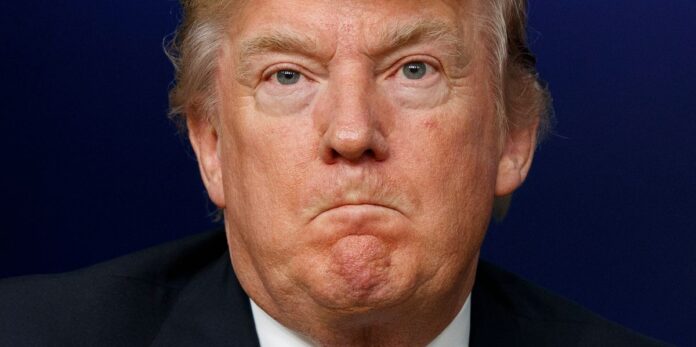

President Donald Trump said U.S. consumer confidence is ‘way up.’ Metrics don’t bear that out
PolitiFact – Rulings and Stories — 2026-05-06 16:50:00 — www.politifact.com
Assessing Trump’s Claim on Consumer Confidence at White House Summit
During a recent event at the White House, President Donald Trump asserted that "consumer confidence is way up," suggesting a robust economic outlook and satisfaction with his policies. However, this claim contrasts sharply with data from established economic indicators. At the White House small business summit on May 4, Trump’s optimistic statement about the economy was directly challenged by findings from the University of Michigan, the Conference Board, and aggregated public polling data, all of which indicate a decline in consumer confidence compared to the end of former President Joe Biden’s tenure.
Contradictory Economic Indicators
The University of Michigan’s consumer sentiment index, a long-standing measure of consumer confidence, recorded a score of 53.3 for March 2026, marking it as one of the lowest since the survey’s inception in 1978. Similarly, the Conference Board’s index showed a decrease in consumer confidence during Trump’s second term, with a score of 92.8 in April 2026, significantly lower than during Biden’s administration.
Public opinion polls further reflect this trend, with a notable decline in approval of Trump’s economic policies. A compilation by Silver Bulletin indicated that net approval for Trump’s economic management has significantly dropped, turning negative shortly after his second term began in January 2025.
Retail Sales: A Silver Lining?
In defense of Trump’s claims, the White House cited retail sales figures, which have shown resilience. Retail sales data indicated an average monthly increase of 3.75% during the first 14 months of Trump’s current term. However, experts argue that this metric, unadjusted for inflation, may not accurately reflect consumer confidence as it could be influenced by inflationary pressures, including those possibly stemming from tariffs.
How This Sits Against Accuracy, Norms, and Governing Rules
Truth and Evidence:
Trump’s assertion that consumer confidence is surging lacks support from the primary economic indicators traditionally used to gauge this sentiment. Reliable sources like the University of Michigan and the Conference Board show a decline, not an increase. Normally, such claims would require backing by independent data or corroborative reports from credible institutions, which in this case, contradict the president’s statement.
What the Excerpt Shows About Verifiable Lies:
Based on the data provided in the excerpt, Trump’s claim about rising consumer confidence is demonstrably false. The traditional metrics used to assess consumer confidence all indicate a decrease during his term compared to his predecessor’s. The assertion lacks factual support within the context of the provided economic indicators and public opinion trends.
In summary, while retail sales figures offer a more positive outlook, they do not directly correlate with consumer confidence, especially when inflation is considered. The broader economic indicators suggest that American consumers are less confident now than they were under the previous administration, directly contradicting President Trump’s claims at the White House summit.