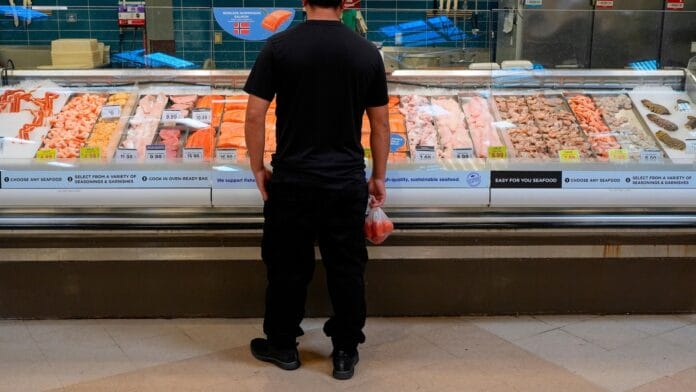

US grocery prices rose in April, but gas spikes weren’t the only reason
ABC News: Politics — 2026-05-13 04:21:00 — abcnews.com
Americans paid more for their groceries last month, with prices for food eaten at home rising 2.9% in April compared to the same month a year earlier. This increase marks the highest year-over-year inflation rate for this category since August 2023. Overall food prices, which include those at restaurants and fast-food chains, increased by 3.2% in the last year, according to the Labor Department’s consumer price index. Contributing to these rising costs are soaring fuel prices, exacerbated by the ongoing Iran war, which has disrupted shipping routes through the Strait of Hormuz, a critical corridor for global oil supplies. As of Tuesday, the average price per gallon of gasoline was up 61% from a year ago.
The impact of these rising energy costs is being felt across the food supply chain. Vendors supplying Sparrow Market, a small independent grocer in Ann Arbor, Michigan, have recently added fuel surcharges to their deliveries. Owner Raymond Campise noted that even small increases can significantly affect independent markets operating on narrow margins. Economists from Purdue University, Ken Foster and Bernhard Dalheimer, indicated that the full impact of these energy costs on retail grocery prices may not yet be reflected in stores, as it can take three to six months for increased production and transportation costs to reach consumers.
The consumer price index tracks changes in what people in U.S. cities pay for essential grocery items. Over the past 20 years, grocery prices have increased by an average of 2.6%. However, various factors, including U.S. trade policies and extreme weather, have also contributed to rising food prices. For instance, a 17% duty imposed by the Trump administration on fresh tomatoes imported from Mexico in July 2025 led to a 40% rise in consumer prices over the year leading up to April.
As food prices and inflation become focal points in the upcoming November midterm elections, they are likely to influence voter sentiment. During his 2024 campaign, President Donald Trump frequently highlighted the rising costs of groceries, including bacon, cereal, and crackers, as reasons for voters to support his return to the White House. Some food producers are currently struggling due to higher fuel costs, with the Southern Shrimp Alliance reporting that some shrimp boats have not left the dock this spring because they cannot catch enough shrimp to offset diesel costs.
Higher fuel prices are also affecting the costs of nonalcoholic beverages, as the petroleum derivatives used in plastic bottles contribute to price increases. Looking ahead, Americans may face further food price hikes due to rising fertilizer costs, as approximately 30% of the world’s fertilizer travels through the Strait of Hormuz. While U.S. farmers may not feel the immediate impact this year due to pre-existing fertilizer supplies, the situation could change if the conflict continues.
How this sits against verifiable accuracy
The excerpt indicates that food prices have risen significantly, with specific increases noted in various categories. It also highlights the role of the Iran war in exacerbating fuel prices, which in turn affects food costs. The statement that the average price per gallon of gasoline is up 61% from a year ago is supported by data from AAA. Additionally, the Purdue University economists’ assertion that the full impact of rising energy costs may not yet be reflected in retail prices aligns with the observed lag in price adjustments in the grocery sector.
How this compares to what he has said before
During his 2024 campaign, Trump frequently cited rising grocery prices as a key issue, emphasizing the costs of staple items like bacon and cereal. This focus on food prices aligns with the current context of rising grocery costs, suggesting a consistent concern for Trump regarding the economic pressures faced by American consumers. However, the excerpt does not provide specific statements from Trump that directly address the current inflation rates or the impact of the Iran war on fuel prices, leaving open the question of whether his previous remarks adequately reflect the complexities of the current situation.
Closing: The rising costs of groceries and the impact of fuel prices are critical issues as the midterm elections approach. The data presented highlights the multifaceted nature of inflation, influenced by both international conflicts and domestic policies. As voters consider these economic challenges, the statements made by Trump during his campaign may resonate with their experiences at the grocery store.
Source: https://abcnews.com/Politics/wireStory/us-grocery-prices-rose-april-gas-spikes-reason-132907559