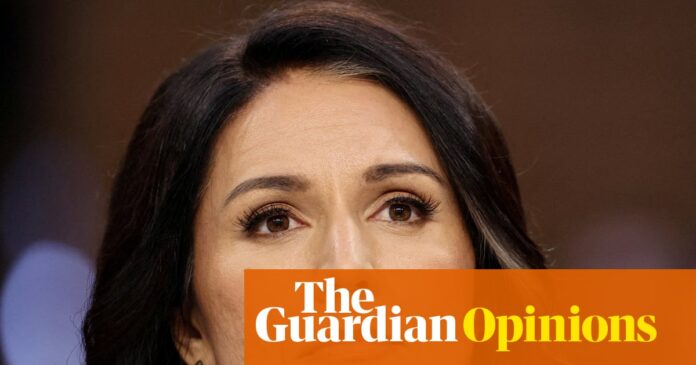

Tulsi Gabbard’s resistance to foreign wars amid Trump’s aggression was her undoing | Mohamad Bazzi
US politics | The Guardian — 2026-05-24 07:00:00 — www.theguardian.com
Tulsi Gabbard’s Resignation: A Complex Relationship with Trump
Tulsi Gabbard, the U.S. Director of National Intelligence, has been a figure of intrigue and controversy during her tenure under Donald Trump. Known for her loyalty to the president, Gabbard’s recent resignation has raised questions about her role and the dynamics within the Trump administration. Despite her efforts to align with Trump’s narrative, she ultimately found herself at odds with the administration’s foreign policy, particularly regarding military interventions and intelligence assessments.
Background: Loyalty and Controversy
Gabbard’s loyalty to Trump was evident in her public statements and actions. Last year, she accused former President Barack Obama and several of his national security officials of leading a “treasonous conspiracy” to highlight Russian interference in the 2016 presidential election. This claim echoed Trump’s own rhetoric, which often dismissed concerns about foreign interference as politically motivated.
In January, Gabbard made headlines by appearing at the scene of an FBI raid in Georgia, where officials were seeking ballots from the 2020 election. This was particularly notable given her primary focus on foreign intelligence, raising eyebrows about her involvement in domestic electoral issues.
Resignation Amidst Pressure
On Friday, Gabbard submitted her resignation, stating she would leave her post on June 30 to support her husband, who was recently diagnosed with cancer. However, reports soon emerged suggesting that the White House had pressured her to resign. The Guardian reported that Trump had privately inquired about replacing her, indicating a shift in the administration’s confidence in her capabilities.
Conflict Over Foreign Policy
Despite her attempts to align with Trump’s conspiracy theories about past elections, Gabbard’s resistance to U.S. foreign interventions ultimately led to her downfall. She faced criticism from Trump for her handling of intelligence related to Iran’s nuclear program. In June, after Trump supported Israel’s surprise attack on Tehran, he pressured Gabbard to alter her assessment of Iran’s nuclear capabilities. Gabbard’s reluctance to conform to the administration’s aggressive stance on Iran drew Trump’s ire.
In January, as Trump’s national security team devised plans to depose Venezuelan President Nicolás Maduro, Gabbard was notably excluded from the discussions, reportedly due to her anti-interventionist views. This sidelining became more pronounced as Trump escalated military actions against Iran, leading to a significant conflict that contradicted his earlier promises of peace.
Public Statements and Misinformation
Throughout her tenure, Gabbard was often caught in the crossfire of Trump’s contradictory statements regarding Iran. Trump claimed that Iran was “weeks away” from developing a nuclear weapon, stating, “If we didn’t hit within two weeks, they would’ve had a nuclear weapon.” However, these assertions were contradicted by U.S. intelligence assessments, which indicated that Iran was not actively pursuing a nuclear weapon.
In March 2025, Gabbard testified before Congress, stating that U.S. intelligence agencies assessed that Iran was not building a nuclear weapon. She emphasized that Ayatollah Ali Khamenei had not authorized a nuclear weapons program since it was suspended in 2003. This testimony aligned with the broader intelligence community’s view, which contradicted Trump’s narrative.
Conclusion: A Cautionary Tale of Loyalty
Gabbard’s resignation serves as a cautionary tale about the complexities of loyalty within the Trump administration. Despite her efforts to support Trump’s agenda, her anti-interventionist stance and commitment to factual intelligence ultimately led to her isolation and departure. As Trump continues to navigate a tumultuous political landscape, Gabbard’s experience highlights the challenges faced by those who attempt to balance loyalty with principled governance.
As the political landscape evolves, the implications of Gabbard’s resignation and the ongoing conflicts within the Trump administration remain to be seen, leaving many to ponder the future of U.S. foreign policy and the integrity of its intelligence assessments.
Source: https://www.theguardian.com/commentisfree/2026/may/24/tulsi-gabbard-foreign-wars-trump