
Trump Urges More Countries to Normalize Relations With Israel as Part of Iran Deal
NYT > U.S. > Politics — 2026-05-25 12:57:00 — www.nytimes.com
Trump Calls for Expansion of Abraham Accords Amid Uncertain Peace Prospects with Iran
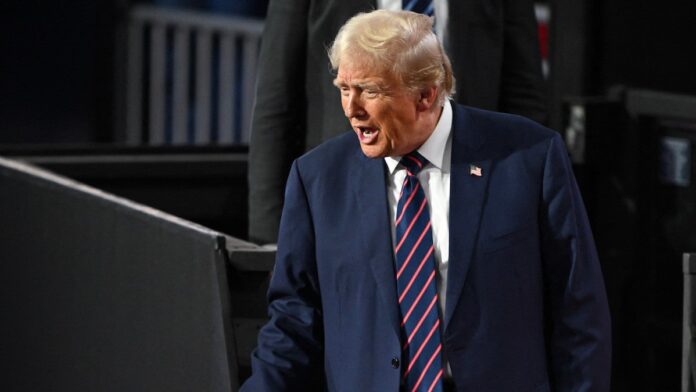
In a recent statement, Donald Trump urged Middle Eastern nations to join the Abraham Accords as part of a broader peace initiative aimed at addressing tensions with Iran. Speaking at a rally in Michigan, Trump claimed, “If we can get more countries to join the Abraham Accords, we can finally achieve peace in the Middle East and deal with Iran effectively.” However, analysts are skeptical about the feasibility of this proposal, citing the complex geopolitical landscape and ongoing hostilities in the region.
Context of the Statement
Trump’s remarks came during a rally on October 21, 2023, where he reiterated his administration’s efforts to normalize relations between Israel and several Arab nations, including the United Arab Emirates and Bahrain. The Abraham Accords, signed in 2020, marked a significant shift in Middle Eastern diplomacy, but the idea of expanding these agreements to include more countries as a means to address Iranian aggression has raised eyebrows among experts.
Analysts Skeptical of Feasibility
Political analysts have expressed doubts about the practicality of Trump’s proposal. “The Abraham Accords were groundbreaking, but they were also limited in scope and largely driven by mutual interests against Iran,” said Middle East expert Dr. Khaled Elgindy. “The notion that more countries would join simply to facilitate a peace deal with Iran overlooks the deep-seated animosities and strategic calculations at play.”
Moreover, the ongoing tensions between Iran and its regional adversaries complicate any potential for new agreements. The recent escalation of hostilities, including Iran’s support for proxy groups in the region, makes it unlikely that nations like Saudi Arabia or Qatar would be willing to align themselves with Israel under the current circumstances.
Inaccuracies and Misstatements
Trump’s assertion that expanding the Abraham Accords could lead to peace with Iran has been met with criticism for oversimplifying a complex issue. During his speech, he claimed, “Iran is on the verge of collapse, and they know it. They want to negotiate.” However, experts argue that Iran’s economy, while strained, is not on the brink of collapse, and the regime has shown resilience in the face of sanctions.
Additionally, Trump’s characterization of the Abraham Accords as a panacea for Middle Eastern conflicts has been challenged. “The Accords did not resolve the Israeli-Palestinian conflict, which remains a core issue in the region,” noted former U.S. Ambassador to Israel Dan Shapiro. “To suggest that they could somehow lead to a broader peace with Iran is misleading.”
Impact of Misinformation
Misinformation surrounding Trump’s statements can significantly influence public perception and policy discussions. For instance, his claims about Iran’s economic status have been echoed by supporters, potentially shaping a narrative that oversimplifies the complexities of U.S.-Iran relations. This can lead to misguided public support for aggressive policies that may not be in the best interest of U.S. foreign relations.
Furthermore, Trump’s disparagement of political opponents and critics during his speeches often detracts from substantive discussions about foreign policy. By framing dissenting views as “fake news” or “the enemy,” he undermines constructive dialogue and analysis, which are crucial for addressing the multifaceted challenges in the Middle East.
Conclusion
While Trump’s call for Middle Eastern nations to join the Abraham Accords as part of a peace deal with Iran may resonate with his base, the reality is far more complicated. Analysts remain skeptical about the likelihood of such an expansion, given the entrenched hostilities and geopolitical dynamics at play. As misinformation continues to shape public discourse, it is essential for citizens to critically evaluate these claims and consider the broader implications for U.S. foreign policy in the region.
Source: https://www.nytimes.com/2026/05/25/us/politics/trump-israel-iran-abraham-accords.html