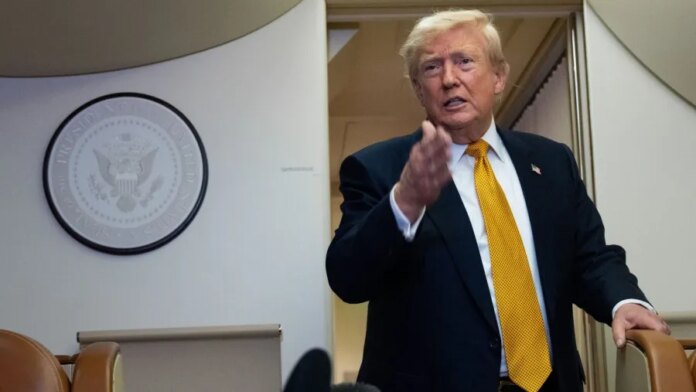

Live updates: Trump says US will resume Strait of Hormuz blockade; Graham's death scrambles Senate GOP's course
Administration News — 2026-07-13 10:14:00 — thehill.com
Trump Claims U.S. Will Blockade Strait of Hormuz and Impose 20% Charge on Cargo Amid Rising Tensions with Iran
President Trump on Monday announced that the U.S. military would resume its blockade of the Strait of Hormuz and impose a 20 percent rate “on all cargo shipped,” asserting that the United States is the “guardian” of the strategic waterway. As tensions and strikes escalated with Iran, Trump declared, “The Hormuz Strait is OPEN, and will remain OPEN, with or….”
Escalating Rhetoric and Unprecedented Claims
Trump’s statement marks a significant escalation in both rhetoric and policy regarding the Strait of Hormuz, a vital passage for global oil shipments. By declaring the U.S. military would enforce a blockade and levy a 20 percent charge on all cargo, Trump positioned the United States as the self-appointed overseer of international shipping through the strait.
Fact-Checking Trump’s Assertions
Within his remarks, Trump made several bold claims. He not only declared the U.S. to be the “guardian” of the waterway but also asserted unilateral authority to keep the strait open and to impose financial charges on all cargo passing through. These statements represent a dramatic departure from established international norms, as the Strait of Hormuz is recognized as an international waterway under the United Nations Convention on the Law of the Sea. No single nation has the legal authority to impose such a blockade or levy charges on all international shipping without broad international agreement.
Implications and Historical Context
Trump’s pronouncement comes at a time of heightened conflict with Iran, raising concerns about the potential for further destabilization in the region. The assertion that the U.S. can unilaterally control access to the strait and impose fees on global commerce is not supported by international law or precedent. Such claims risk inflaming tensions with both Iran and other nations that rely on the free flow of goods through the Strait of Hormuz.
Conclusion
President Trump’s declaration that the U.S. military will blockade the Strait of Hormuz and charge a 20 percent rate on all cargo represents a significant and controversial shift in American foreign policy. His assertion of U.S. authority over the waterway and its commerce is not grounded in established international law, and his statements risk further escalating an already volatile situation. As the world watches closely, the consequences of such rhetoric and policy moves could have far-reaching impacts on global security and economic stability.
Source: https://thehill.com/homenews/administration/5964919-senate-graham-death-succession/