
Trump says these documents prove his false claims of election fraud. Here’s what they really say
PBS News Hour – Politics — 2026-07-17 18:08:00 — www.pbs.org
Trump’s Election Fraud Claims Refuted by Newly Released Documents
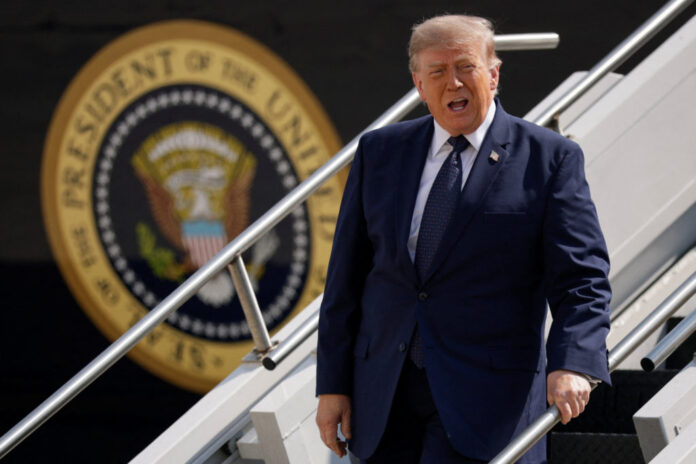
President Donald Trump, in a primetime address from the White House, claimed to reveal “shocking revelations” about the 2020 election, including allegations of Chinese meddling, a “deep state” cover-up, and widespread vulnerabilities in U.S. election systems. He asserted, “Americans were blatantly lied to about the security of our election infrastructure,” and described what he called the “largest compromise of election data in history,” alleging that China illicitly obtained 220 million U.S. voter files.
Fact-Check: No Evidence of Foreign Vote Manipulation
A review by The Associated Press of the documents released by Trump found no confirmation of these claims. The collection, which included declassified reports, investigation files, and intelligence analysis, was often so heavily redacted that findings were unclear. Where findings were available, they outlined vulnerabilities that have been well-documented for years, but did not provide evidence that China or any other foreign entity manipulated the vote in 2020 or any other year.
While it is established that China collects large volumes of data on Americans, there is no evidence that this information was used to influence or alter election outcomes. Public versions of voter files are widely available and legally bought and sold by campaigns and political parties. Intelligence community assessments after the 2020 election found no direct Chinese interference in voting, and the documents released do not refute that conclusion.
Noncitizen Voter Claims Lack Verification
Trump also touted a Department of Homeland Security investigation that he said identified approximately 278,000 noncitizens registered to vote in federal elections. However, the report did not allege that any of these individuals actually voted, and the data has not been verified. The database used to identify noncitizens has been criticized for errors, including misclassifying naturalized citizens, and a federal judge has barred its use over concerns of wrongful voter purges. Studies consistently find that noncitizen voting is extremely rare.
Russian Election Interference: Contradictory Claims
Trump has repeatedly criticized U.S. intelligence assessments that Russia interfered in the 2016 election to help him win. Yet, one declassified document from 2020 found Russia had tried the most to penetrate American election systems, but in an effort to defeat Joe Biden. The same document stated that China and Iran wanted Trump to lose, but only Russia was found to have engaged in targeting or manipulating election-related systems.
Election System Vulnerabilities and Trump’s Actions
Trump claimed the documents revealed “shocking vulnerabilities” in election infrastructure. While some reports did list breaches—mostly by Russia—these risks have been acknowledged for years and are mitigated by safeguards such as paper ballot backups and audits. The administration’s actions, including ousting members of a bipartisan federal election commission and cutting funding to the Cybersecurity and Infrastructure Security Agency, have raised concerns about the federal response to election security.
Conclusion: Claims Not Supported by Evidence
Despite Trump’s dramatic assertions, the documents released do not support his allegations of mass voter fraud or foreign manipulation of the 2020 election. The evidence continues to show that while vulnerabilities exist, there is no proof of widespread fraud or successful foreign interference in the outcome of U.S. elections. Trump’s claims remain unsubstantiated by the very materials he presented as proof.