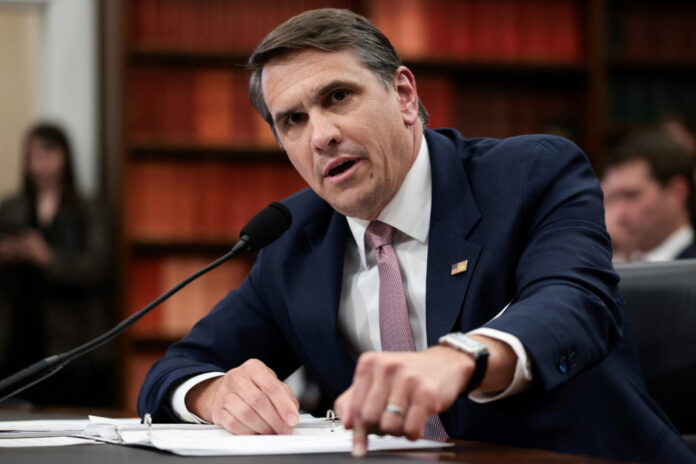

Blanche rescinds ‘anti-weaponization fund’ for Trump allies after GOP senators threaten to block his AG bid
PBS News Hour – Politics — 2026-08-03 08:42:00 — www.pbs.org
Trump Continues to Back Disputed $1.8 Billion Fund for Political Allies Despite DOJ Termination
Donald Trump has repeatedly expressed support for a controversial $1.8 billion “anti-weaponization fund” intended to compensate his political allies, even as the Justice Department has now formally terminated the initiative following bipartisan backlash.
Trump’s Persistent Support for the Fund
Throughout weeks of negotiations over the fund, Trump maintained that it should move forward. He threatened to advance the proposal if his nominee for attorney general, Todd Blanche, was not confirmed. After a Senate Judiciary Committee vote on Blanche’s nomination was delayed, Trump stated on social media that he might withdraw Blanche’s nomination and resubmit it after certain senators left office next year.
On Sunday evening, Trump defended the fund, saying that people who had faced charges from the January 6, 2021, attack on the Capitol had “their lives destroyed.” He described the fund as “a reimbursement for the pain that they suffered,” and claimed, “A lot of people like it.”
DOJ and Congressional Pushback
The Justice Department, under Acting Attorney General Blanche, issued a formal order ending the fund, clarifying that no members had been appointed, no funds transferred, no claims process established, and no claims paid. The DOJ stated, “This order establishes, beyond any doubt, that there is no Fund.”
Republican Senators John Cornyn and Thom Tillis, who had blocked Blanche’s nomination, demanded written confirmation that the fund would not proceed, citing concerns that violent rioters from January 6 could be eligible for payments. The DOJ’s order also limited a related provision that would have granted Trump and his family broad immunity from tax audits, specifying that it applied only retroactively.
Legal and Ethical Questions
Trump’s attorneys have notified a court that they will appeal a judge’s ruling that characterized the IRS settlement related to the fund as improper self-dealing. The judge criticized Blanche’s involvement in the settlement, given his prior representation of Trump, and referred one of Trump’s attorneys for potential disciplinary action.
Conclusion
Despite the Justice Department’s clear termination of the “anti-weaponization fund,” Trump continues to advocate for compensating those charged in connection with the January 6 attack, framing them as victims. The episode highlights Trump’s ongoing efforts to support his political allies, even in the face of bipartisan opposition and legal scrutiny. The DOJ’s actions and the Senate’s resistance underscore the deep divisions and controversies surrounding Trump’s approach to wielding executive power for personal and political ends.