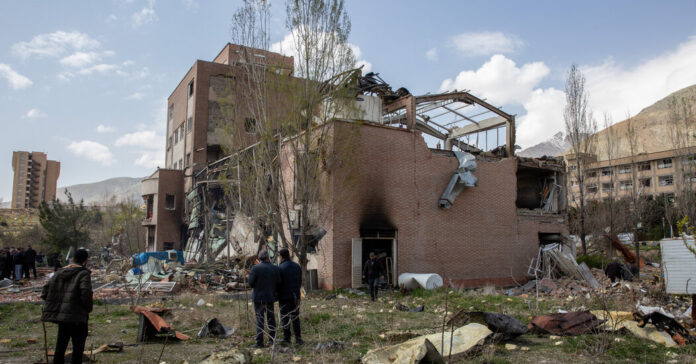

The U.S. Is Burning Through Weapons in Iran. Russia and China Are Taking Note.
NYT > U.S. > Politics — 2026-08-08 11:59:00 — www.nytimes.com
Trump Downplays U.S. Munitions Crisis as Iran War Depletes Stockpiles
President Trump has repeatedly downplayed or denied the severity of U.S. weapons shortages, even as his war against Iran has left American and allied forces more vulnerable to threats from Russia, China, and North Korea, according to senior officials and defense experts.
Trump’s Public Stance vs. Private Alarm
Despite warnings from military leaders, including Gen. Dan Caine, the chairman of the Joint Chiefs of Staff, about the risks of further depleting already strained stockpiles, Trump pressed ahead with the Iran campaign, believing it would end quickly. After launching attacks on Iran alongside Israel on February 28, Trump repeatedly promised a swift victory. More than five months later, the conflict continues, with the U.S. unable to force Iran to capitulate or find a way to end the war.
Privately, Trump has expressed anger over news reports highlighting the munitions shortage, ordering a widespread leak investigation and demanding criminal prosecutions. He has told advisers that public discussion of the crisis signals weakness to America’s enemies. In public, Trump continues to downplay the issue, deny its existence, or blame his predecessor, President Joseph R. Biden Jr.
Fact-Checking Trump’s Claims
When asked by a reporter about Ukrainian President Volodymyr Zelensky’s plea for more air-defense missiles, Trump responded, “We want missiles too.” On social media, he insisted that the United States had “massive amounts of ‘munitions,’ especially of certain types.” While it is true that the U.S. maintains a large arsenal of less advanced munitions, experts note that many of these require close-range deployment, putting American aircraft at greater risk. Crucially, the U.S. military has largely exhausted its stocks of certain long-range missiles—such as Army Tactical Missile Systems (ATACMS) and Precision Strike Missiles—during the Iran war, leaving the country less prepared for potential conflicts with Russia or China.
Impact on U.S. and Allies
The depletion of air-defense missiles has forced the Pentagon to divert resources from Asia and Europe to the Middle East, eroding American firepower in those regions and delaying deliveries to allied nations. This has led to growing concerns among U.S. military and intelligence officials, as well as among allies who now question America’s ability to provide nonnuclear defense. Some fear that countries like South Korea and Japan may seek their own nuclear deterrents as a result.
The shortage is also having immediate consequences in Ukraine, where Zelensky reported a threefold drop in the number of air-defense missiles provided by Western allies this year. On a recent day, Ukraine failed to intercept any of the 28 missiles fired by Russia, resulting in at least 17 deaths. Experts attribute this shortfall in part to the diversion of munitions to the Iran conflict.
Conclusion
Despite President Trump’s public denials and efforts to shift blame, the facts on the ground reveal a significant and growing munitions crisis that is undermining U.S. and allied security. As experts warn, replenishing depleted stockpiles could take years, leaving a window of vulnerability that adversaries like Russia and China may seek to exploit. The long-term consequences of Trump’s decisions in the Iran war are likely to shape global security for years to come.
Source: https://www.nytimes.com/2026/08/08/us/politics/pentagon-weapons-stockpiles-china-russia.html