
Hegseth Cut Civilian Protections Over Objection of Top Commanders — ProPublica
ProPublica — 2026-08-25 10:05:00 — www.propublica.org
The Trump Administration’s Civilian Harm Program Cuts Spark Military Pushback and Global Outcry
A rare internal revolt has emerged within the Department of Defense, as top military commanders pushed back against the Trump administration’s dismantling of a program designed to protect civilians during U.S. military operations. The episode underscores the administration’s broader posture—one that, under President Donald Trump and Defense Secretary Pete Hegseth, has prioritized “maximum lethality” over civilian safeguards, despite repeated warnings from military leaders about the strategic and moral costs.
Trump Administration’s Stance: “No More Politically Correct and Overbearing Rules”
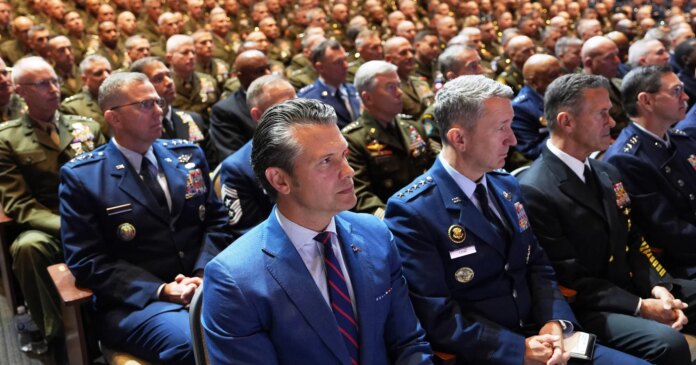
The excerpt details how, shortly after taking office, Defense Secretary Hegseth—serving under President Trump—sought to gut the Civilian Harm Mitigation and Response (CHMR) program. Hegseth’s approach, described as “Bombs away!” by one official, was rooted in the belief that focusing on civilian security was “woke” and incompatible with the administration’s vision of a reimagined “Department of War.” Hegseth later told a gathering of generals and admirals, “No more politically correct and overbearing rules of engagement,” a sentiment that reflected the administration’s broader attitude.
Military Leaders Rebuke Cuts, Cite Risks
Despite Hegseth’s expectations, every top commander polled in early 2025 rejected the idea of eliminating the civilian protection program. Instead, they argued that CHMR enhanced operational effectiveness and precision, with leaders at U.S. Central Command warning that scaling back the effort would “result in decreased efficiency of U.S. lethal operations due to an increased risk of target misidentification and reduced battlespace awareness.” These warnings went unheeded, and the program was slashed from nearly 200 staff to just a handful, even as new U.S. campaigns began in Somalia, Yemen, and Iran.
Civilian Casualties and Congressional Backlash
The consequences were swift and severe. In the spring of 2025, a U.S. air campaign in Yemen killed 153 civilians and wounded 243 others, with the Pentagon’s own annual report confirming the toll. The following year, a U.S. airstrike on a school in Iran killed more than 100 children, drawing international outrage. Democratic senators and humanitarian groups directly linked the tragedy to the administration’s cuts, writing that the attacks reflected “the administration’s broader disregard for the strategic, legal, and moral imperative to minimize civilian harm.”
A Reluctant Reversal Amid Mounting Pressure
Facing mounting pressure from Congress and within the military, the Defense Department has begun to backtrack, considering a partial restoration of the civilian protection program. This about-face marks a rare reversal in a department that, the excerpt notes, “hasn’t tolerated dissent under Hegseth and President Donald Trump.”
Conclusion: Strategic and Moral Costs
The Trump administration’s approach to civilian harm mitigation—marked by dismissals of “politically correct” safeguards and the gutting of established programs—has drawn sharp criticism from military leaders, Congress, and international observers alike. The episode highlights a fundamental divide between the administration’s rhetoric of “maximum lethality” and the military’s own assessment that protecting civilians is both a strategic and moral imperative. As the Pentagon moves to partially revive the program, the legacy of these decisions—and their human cost—remains under scrutiny.