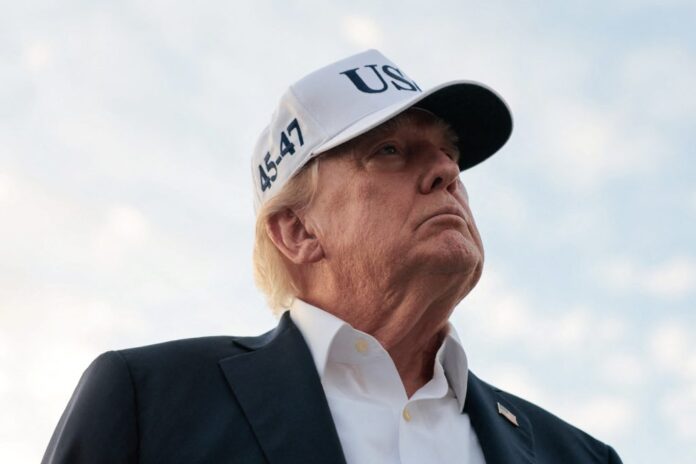

Trump downplays the need to check AI development and says he doesn’t want to cede edge to China
PBS News Hour – Politics — 2026-09-13 17:08:00 — www.pbs.org
Trump Downplays AI Regulation, Cites “Negative Forces” and Focuses on Beating China
President Donald Trump on Sunday minimized the need for his administration to regulate artificial intelligence, expressing concern that increased oversight could undermine America’s competitive edge against China. Speaking to reporters in Ireland, Trump said, “We can put guardrails, we can do this and that, but I think you have a lot of negative forces that are bringing it up that … shouldn’t be bringing it up, and they’re bringing up things that won’t happen.” He added, “But whoever wins with AI wins.”
Despite acknowledging that some regulation may be necessary, Trump did not offer any specific proposals or details about what rules might be put in place. Instead, he dismissed concerns about the rapid, unregulated development of AI—concerns that have been raised by industry leaders such as Dario Amodei of Anthropic, Elon Musk, and Sam Altman of OpenAI—as being promoted by unspecified “negative forces.”
When asked directly if the industry should slow down or face regulation, Trump reiterated his priority was maintaining the U.S. lead over China in AI, saying, “frankly, I want to keep it that way because whoever wins AI wins.”
Trump’s comments stand in contrast to calls from technology executives and some lawmakers who have urged a pause or stronger guardrails to allow safety measures to catch up with the technology’s rapid advancement. While Trump has continued to support the expansion of data centers—a key infrastructure for AI—even as bipartisan opposition grows in communities across the country, he has not addressed the specific risks or regulatory needs highlighted by experts.
By attributing warnings about AI’s risks to vague “negative forces” and failing to identify any concrete steps for oversight, Trump has downplayed the urgency of the issue. This approach leaves the U.S. without a clear strategy for managing the potential dangers of artificial intelligence, even as the technology becomes a central topic in the global competition with China and a growing concern for American communities.
Conclusion
Trump’s reluctance to specify regulatory measures for artificial intelligence, coupled with his dismissal of expert warnings as the work of “negative forces,” underscores a pattern of minimizing or deflecting concerns about emerging technologies. As the debate over AI safety intensifies, Trump’s stance leaves key questions unanswered about how the U.S. will address the risks and responsibilities that come with leading the world in AI development.