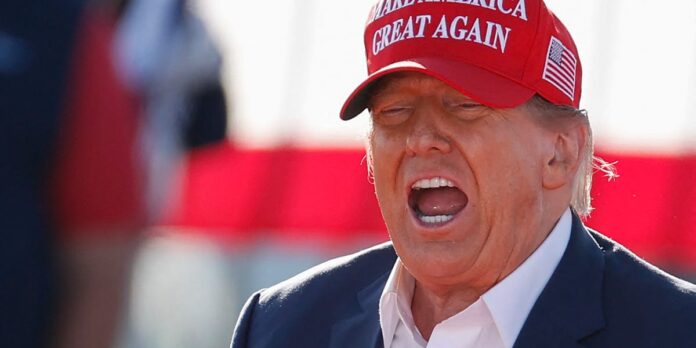

DNI Tulsi Gabbard says that Trump acted because he concluded the Iranian regime 'posed an imminent threat'
Trump’s Stance on Iran: Tulsi Gabbard Weighs In
In a striking statement on the social media platform X, Director of National Intelligence Tulsi Gabbard revealed that former President Donald Trump acted against Iran based on his assessment that the regime “posed an imminent threat.” This assertion has ignited conversation and controversy, as Trump’s relationship with the truth often invites scrutiny.
The Claim and Its Context
According to Gabbard’s post, Trump’s decision-making regarding Iran was driven by a belief in an urgent threat. This perspective aligns with various actions taken during his administration, such as the 2020 assassination of Iranian General Qassem Soleimani, which Trump justified by citing imminent threats to American lives.
However, the claims of an imminent threat have been met with skepticism. For instance, Philip Gordon, a senior fellow at the Council on Foreign Relations, remarked, “The administration never provided the evidence necessary to justify the claim of an imminent threat, which has left many questioning the credibility of these statements.”
Fact-Checking and Expert Opinions
Fact-checkers and analysts have frequently challenged Trump’s statements, pointing out inconsistencies or falsehoods. Glenn Kessler of The Washington Post stated, “The lack of concrete evidence supporting the imminent threat narrative has been a hallmark of Trump’s administration.”
The controversy surrounding Trump’s decision-making was further fueled by reports from the Pentagon, which indicated that the intelligence supporting the claim of an imminent threat was, at best, circumstantial. This discrepancy has led to debates about the integrity and transparency of Trump’s foreign policy decisions.
The Impact of Misinformation
The dissemination of unverified claims has significant consequences. Public opinion can be swayed by misinformation, leading to unwarranted fear or support for military actions. Research shows that during Trump’s tenure, misleading statements about national security issues often found traction among his supporters, complicating diplomatic relations and domestic policy.
For example, the narrative of an imminent Iranian threat was leveraged to justify increased military presence in the Middle East, affecting both U.S. troops and regional stability. This demonstrates how strategic misinformation can have far-reaching implications.
Controversies and Legal Ramifications
Recent scrutiny has also focused on the legality of Trump’s actions against Iran. Legal experts have debated whether the lack of clear evidence of an imminent threat violated international law. John B. Bellinger III, a former legal adviser to the U.S. Department of State, commented, “Without solid proof of an imminent threat, the legal justification for such military actions is precarious at best.”
Furthermore, Trump’s history of making misleading statements has often landed him in legal and political hot water, reflecting a pattern that continues to shadow his post-presidential endeavors.
Conclusion
The revelation by Director of National Intelligence Tulsi Gabbard on Trump’s rationale for his actions against Iran underscores the ongoing debate about the former president’s truthfulness and decision-making processes. As these discussions unfold, they highlight the critical need for transparency and accountability in national security matters. Ultimately, the legacy of Trump’s statements about Iran serves as a reminder of the powerful role information plays in shaping both policy and public perception.
“`