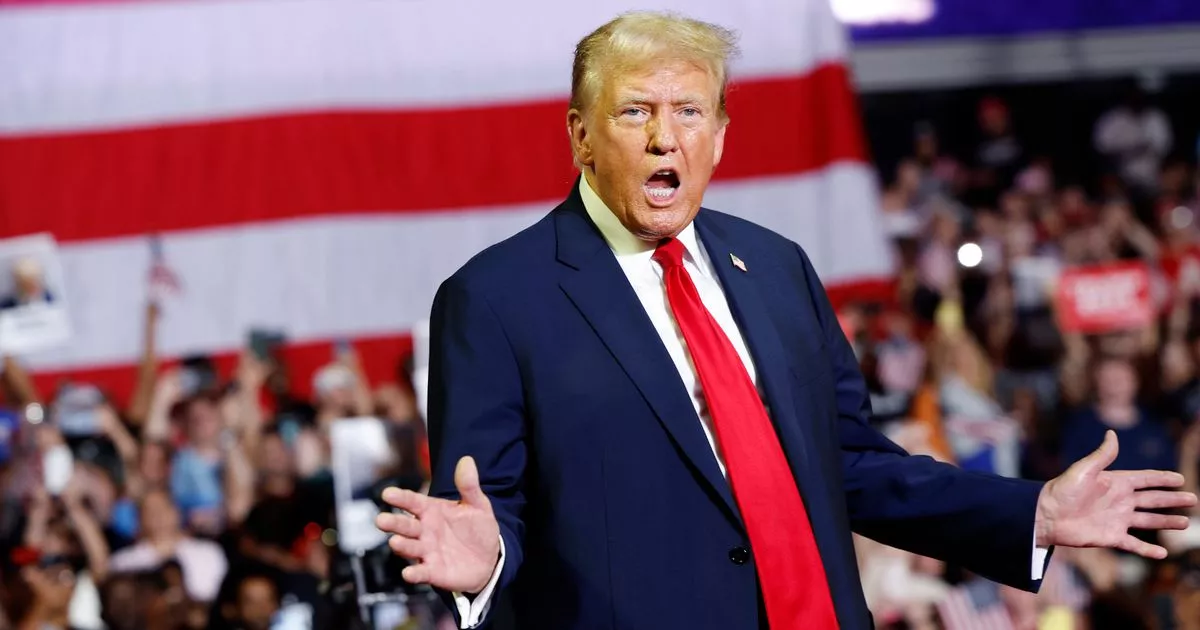

Fund-raising Email Features Trump at Ritual for Soldiers Killed in Iran War
Email from ‘Never Surrender’ Solicits Donations for Exclusive Trump Briefings
In a bold fundraising move, the group “Never Surrender” has sent out emails seeking donations for former President Donald Trump, promising contributors exclusive access to “private national security briefings” from him. As this intriguing offer circulates among potential donors, it raises questions about the legitimacy and implications of such briefings, given Trump’s history of controversial statements and legal challenges.
Trump’s Claims and the Quest for Donations
The email from “Never Surrender” invites supporters to contribute financially in exchange for what it describes as unique insights into national security issues, directly from the former president. This approach is part of a larger strategy to galvanize Trump’s base, yet it also brings his track record of controversial statements into the spotlight.
Throughout his presidency and beyond, Trump has been known for making unsubstantiated claims. For instance, he once suggested that he had “done more for national security than any president in history,” a claim that has been widely disputed by experts. In response, Thomas Rid, a professor of strategic studies at Johns Hopkins University, commented, “Trump’s assertions are often not grounded in factual reality and can mislead those who trust him.”
Fact-Checking the Claims
Fact-checkers have frequently disputed Trump’s claims. According to Glenn Kessler of The Washington Post, “Trump’s statements often contain elements of truth mixed with exaggeration, which makes them particularly hard to debunk for the general public.” This characteristic has made it challenging to separate fact from fiction in Trump’s rhetoric, especially when presented in politically charged contexts like fundraising.
Legal and Ethical Considerations
Offering “private national security briefings” raises significant legal and ethical questions. While Trump, as a private citizen, no longer has access to classified intelligence, the suggestion of such briefings could imply otherwise to potential donors. National security analyst Juliette Kayyem has highlighted this concern, stating, “If Trump is indeed offering sensitive information in exchange for donations, it would not only be unethical but potentially illegal.”
The Impact of Misinformation
The proliferation of misinformation has been a persistent issue, with Trump’s statements often at the center of controversy. The suggestion that donors might receive exclusive insights into national security could influence public perception and behavior, potentially leading to misguided beliefs about Trump’s access to sensitive information.
The email campaign by “Never Surrender” serves as a reminder of the broader issue of misinformation in political fundraising. The blending of fact and fiction has the potential to sway opinions and deepen divisions among the electorate.
Conclusion: A Closer Look at Accountability
The solicitation of donations for access to “private national security briefings” from Trump highlights the ongoing challenges of misinformation and accountability in political discourse. As this narrative unfolds, it underscores the importance of scrutinizing claims, especially from figures with a history of controversial statements. Moving forward, ensuring an informed public will require a concerted effort to separate fact from fiction in political communications.
Source: https://www.nytimes.com/2026/03/14/us/politics/fund-raising-email-trump-ritual.html