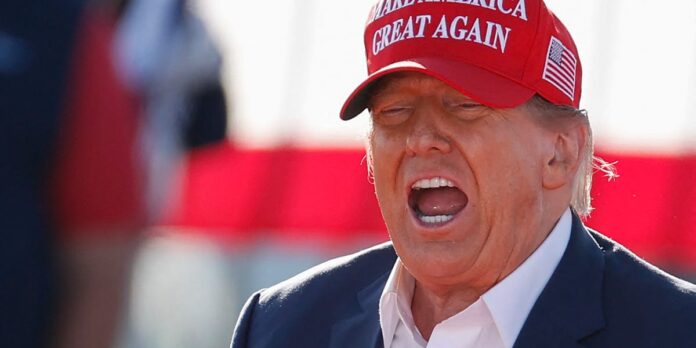

Judge Halts Trump Administration Move to Restrict Immigration Appeals
Trump’s Statements Stir Controversy in Ongoing Judiciary vs. Executive Branch Dispute
The complex and contentious relationship between the independent federal judiciary and the executive branch’s immigration court system entered a new chapter this week, with former President Donald Trump at the center of the controversy. Trump’s recent statements, marked by inaccuracies and unsubstantiated claims, have sparked debate about the implications of this broader legal dispute.
Dispute Background: Judiciary vs. Executive Branch
The federal judiciary and the executive branch have long been at odds over immigration court authority. This dispute centers on the independence of immigration judges and the extent of executive control over their decisions. Tensions have escalated following a ruling that challenges the executive branch’s attempts to assert greater control over the immigration court system.
Trump’s Contentious Statements
In a rally held in Des Moines last week, Trump claimed, “The judges are not letting us do our job; they’re blocking everything we do on immigration.” Critics quickly pointed out the misleading nature of this statement. According to legal analyst and fact-checker Daniel Dale, “Trump’s assertion that federal judges are universally obstructing immigration policies is a gross oversimplification and misrepresentation of the nuanced legal battles occurring across the nation.”
Fact-Checking Trump’s Claims
The American Bar Association has noted that while there have been rulings against certain policies, many others have been upheld or are pending. Stephen Yale-Loehr, a professor of immigration law at Cornell Law School, explained, “The judiciary’s role is not to block policy arbitrarily but to uphold the Constitution and ensure that executive actions comply with the law.” This perspective directly contradicts Trump’s portrayal of an unyielding judiciary.
Impact of Misinformation on Public Opinion
Misinformation about judicial proceedings can significantly influence public opinion, often eroding trust in the judiciary. When Trump suggests that judges are “blocking everything,” it fosters a narrative of judicial overreach, which can undermine public confidence in the legal system’s impartiality and independence. Recent surveys indicate that misinformation could lead to increased polarization and cynicism about the judicial process.
Expert Perspectives on Trump’s Assertions
Ben Johnson, Executive Director of the American Immigration Lawyers Association, commented on the potential ramifications of such statements: “By mischaracterizing the judiciary’s role, leaders contribute to a dangerous misunderstanding of how our checks and balances are designed to function.” This viewpoint emphasizes the importance of maintaining informed and respectful discourse about the roles of different government branches.
Conclusion: Navigating the Complex Legal Landscape
As the judiciary and executive branch continue to navigate their complex relationship, Trump’s statements highlight the challenges of maintaining accurate and responsible dialogue about immigration law. The ongoing legal disputes and misinformation underscore the critical need for public figures to engage with facts and respect the judiciary’s role in safeguarding constitutional principles. Readers are reminded of the importance of scrutinizing claims and seeking truth in an era where misinformation can quickly spread and shape public perception.
Source: https://www.nytimes.com/2026/03/09/us/politics/judge-trump-immigration-appeals.html