Home Blog Page 113

Bowser requests Trump’s help on Potomac sewage spill

Bowser requests Trump’s help on Potomac sewage spill

Mayor Muriel Bowser Requests Trump’s Aid in Unprecedented Sewage Spill

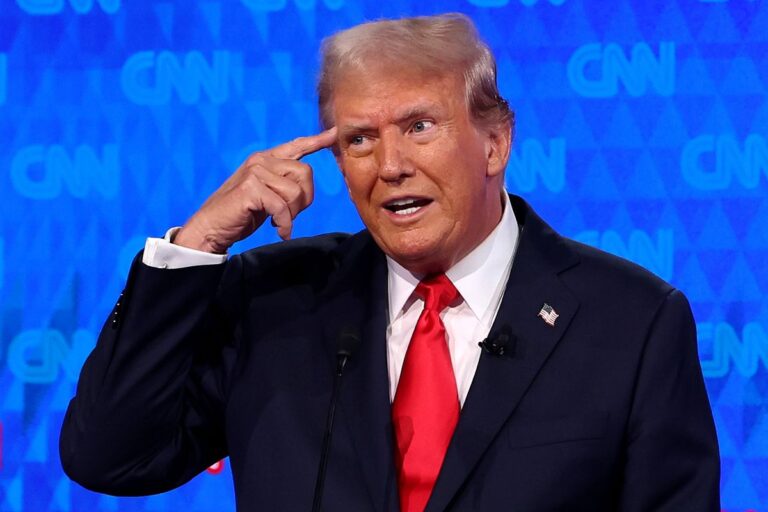
In a surprising turn of events, Washington, D.C., Mayor Muriel Bowser has officially requested President Donald Trump to declare a disaster for the recent massive sewage spill outside the city, seeking federal assistance to address the unprecedented environmental crisis. This request comes days after Trump publicly criticized Bowser and other Democrats, stating that if they wanted federal help, “they have to call me and ask, politely.”

The Disaster Declaration Request

Mayor Bowser’s formal request, signed “Respectfully,” asks the Federal Emergency Management Agency (FEMA) to cover all “costs incurred” by the city and regional sewer authorities following the January 19 collapse of a sewer line in Montgomery County, Maryland. The spill has released over 250 million gallons of raw sewage into the Potomac River, marking it as the largest spill of its kind in U.S. history.

The request is noteworthy as no U.S. president has ever approved a disaster declaration for a sewage spill, according to FEMA records dating back to 1953. Bowser’s office has not provided any cost estimates, a typical component of disaster requests, and her letter does not assert that D.C. cannot handle the event without federal assistance, another usual element of such requests.

Trump’s Response and Blame Game

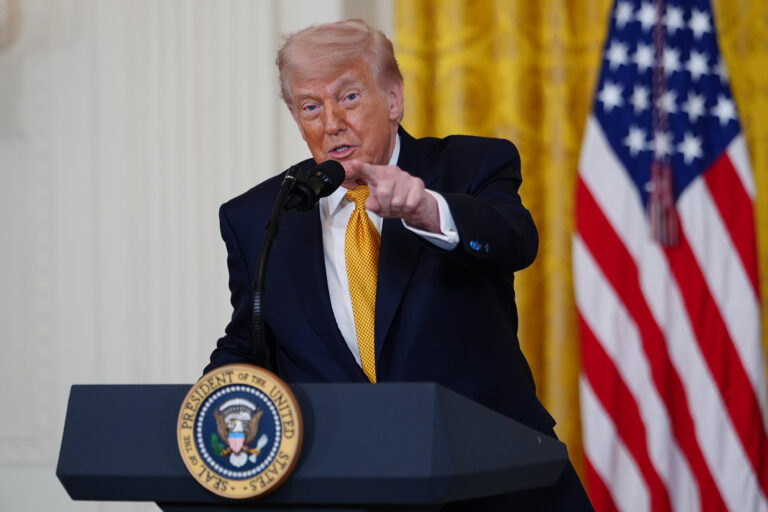
President Trump, in his characteristic style, attempted to shift the blame for the spill onto Bowser and other Democratic leaders, claiming that Maryland and Virginia should bear the responsibility. “They have to call me and ask, politely,” Trump insisted, a statement that critics argue shifts focus from the urgency of the environmental crisis to political blame.

Maryland Governor Wes Moore’s spokesperson, Rhylan Lake, clarified that Maryland does not intend to seek emergency aid as the infrastructure and land in question are not owned by the state. DC Water, the relevant sewer authority, has not commented on the request for federal intervention.

Environmental and Public Concerns

Environmentalists have expressed deep concern over the spill’s impact on the Potomac River and the Chesapeake Bay, emphasizing the importance of increased water quality monitoring. Betsy Nicholas, president of the Potomac Riverkeeper Network, noted, “Going directly from zero comments on it to an emergency declaration after the fact seems like an unusual pathway.” The spill’s timing and subsequent political discourse have left many frustrated over the lack of initial communication from city officials.

Conclusion

As the situation unfolds, the spotlight remains on the Trump administration’s response to Bowser’s request and the broader implications for environmental policy and intergovernmental cooperation. While the immediate focus is on managing the spill’s environmental impact, the political dynamics between federal and local leaders underscore the complexities of addressing such unprecedented disasters in a divided political landscape. The resolution of this crisis could set a precedent for future federal-state cooperation in similar environmental emergencies.

Source: https://www.politico.com/news/2026/02/19/bowser-requests-trumps-help-on-potomac-sewage-spill-00788896

Trump heads to Georgia as Republicans look for midterm boost

Trump heads to Georgia as Republicans look for midterm boost

Trump Visits Georgia, Raises Voter Fraud Claims Instead of Economic Focus

ROME, Ga. (AP) — President Donald Trump’s recent visit to Georgia, initially billed as an economic promotion, quickly spiraled into a discussion of voter fraud allegations without evidence. Stopping at a local restaurant, The Varsity, Trump declared, “We’re going to clean it up,” referring to his plan to overhaul the voting system by requiring identification at the polls.

Economic Agenda Overshadowed

Although the White House maintained that the trip was focused on economic issues, Trump’s immediate pivot to unsubstantiated voter fraud claims suggests more was on his mind. After his restaurant visit, Trump proceeded to a steel company in a district with a special election to replace Marjorie Taylor Greene, his former ally.

Controversial Voter Fraud Claims

The Georgia visit follows a recent federal seizure of voting records in Fulton County, a Democratic stronghold. Trump has persistently claimed, without evidence, that the 2020 election was stolen, including during a Black History Month event when he stated, “We won by millions of votes but they cheated.” These allegations have been refuted by multiple audits, state officials, and even his former Attorney General.

Political Fallout

Trump’s assertions have emboldened some Republicans to push for state intervention in Fulton County elections. Meanwhile, Vice President JD Vance promoted Trump’s Board of Peace initiative, emphasizing its economic benefits, which appeared to align with the intended theme of the trip.

Republican Reactions

Scott Johnson, a GOP leader in Georgia, expressed skepticism about focusing on past election fraud claims, stating, “I’m not concerned about relitigating the past. I’m concerned about moving forward in the future.” Meanwhile, Greene criticized the White House’s focus and Republican leaders over health insurance issues, highlighting her continued opposition to Trump.

Election Dynamics

As early voting begins in Greene’s former district, Trump backs Clay Fuller, a district attorney, in the special election. Despite this endorsement, some Republican candidates like Colton Moore, who opposes Trump’s prosecution in Georgia, remain critical of the endorsement process.

Broader Implications

Trump’s statements continue to stir controversy, affecting public opinion and political dynamics. Fact-checkers and political analysts consistently challenge his assertions, underscoring the need for accuracy in political discourse. Trump’s visit, intended to promote economic achievements, instead highlighted ongoing tensions within the party and the country.

Conclusion

The visit to Georgia underscores Trump’s enduring influence and the divisive nature of his rhetoric. While the White House sought to spotlight economic progress, Trump’s focus on voter fraud claims serves as a reminder of the broader political and social debates currently shaping the nation. As the special election approaches, the impact of these claims will likely play a significant role in shaping voter opinions and outcomes.

Source: https://apnews.com/article/trump-georgia-economy-midterm-elections-greene-29075b0f22be1569aafe144ab7ca025b

Arts Panel Packed With Trump Allies Approves White House Ballroom Project

Arts Panel Packed With Trump Allies Approves White House Ballroom Project

President Trump Moves Forward with Controversial 90,000-Square-Foot Ballroom Plan

In a decisive move, former President Donald Trump has reportedly removed any remaining opposition within his inner circle regarding his ambitious pursuit to construct a 90,000-square-foot ballroom at his Mar-a-Lago estate. This development marks a significant step forward in Trump’s plans, which have been met with both intrigue and skepticism.

Trump Removes Internal Opposition

The former president made this announcement during a recent rally in Palm Beach, Florida, stating unequivocally, “We’ve got rid of all the naysayers. We’re going ahead with the world’s most beautiful ballroom.” The declaration underscores Trump’s determination to expand his opulent estate, despite previous reports of resistance from within his team, including concerns about financial viability and zoning regulations.

Fact-Checking Trump’s Claims

Trump’s assurance that the ballroom will become “the world’s most beautiful” is subjective and difficult to measure. However, his statements about the project have not been without controversy. In the same speech, Trump claimed, “It’s going to create thousands of jobs—tremendous jobs!” Yet, experts like economist Mark Zandi have pointed out that such estimates could be exaggerated. Zandi noted, “While construction projects do create jobs, the figure of thousands seems inflated for a single ballroom project unless it includes extensive infrastructure development.”

Expert Perspectives on the Ballroom’s Impact

The potential impact of such a grand construction project at Mar-a-Lago has been debated among political analysts and local officials. Environmental scientist Dr. Maria Lopez expressed concerns about the environmental footprint, stating, “The expansion could pose significant risks to the local ecosystem, including increased pollution and habitat disturbance.”

Recent Controversies and Legal Challenges

Trump’s announcement also comes amid ongoing legal challenges related to zoning laws in Palm Beach County. In a recent interview, attorney David Aronberg emphasized, “There are stringent regulations in place that could complicate or delay the construction process. Trump’s team will need to navigate these legal hurdles carefully.”

Conclusion: A Vision or a Mirage?

As Donald Trump continues to push forward with his grandiose vision for a Mar-a-Lago ballroom, the project encapsulates his style—bold, ambitious, and polarizing. While he touts the potential for economic and aesthetic benefits, experts caution against the possible environmental and legal ramifications. Whether this ballroom becomes a symbol of Trump’s enduring legacy or a contentious point in local development remains to be seen. For now, the former president has removed the internal barriers, but external challenges may still lie ahead.

Source: https://www.nytimes.com/2026/02/19/us/politics/trump-ballroom-fine-arts-commission.html

Ohio’s GOP governor sidesteps defending Kristi Noem

Ohio’s GOP governor sidesteps defending Kristi Noem

Ohio Governor Mike DeWine Holds Back Endorsement for VP JD Vance, Expresses Concerns About ICE Operations in Springfield

In a series of statements at POLITICO’s 2026 Governors Summit, Ohio Governor Mike DeWine took a cautious stance regarding the political prospects and immigration policies affecting his state. While the summit provided a platform for discussing the future political landscape, Governor DeWine notably withheld immediate support for his fellow Ohioan, Vice President JD Vance, as a potential nominee for the Republican Party’s 2028 presidential bid.

DeWine’s Cautious Approach to Vance’s Candidacy

When pressed about whether Vice President JD Vance should secure the Republican presidential nomination in 2028, DeWine responded with measured words. "He’s a favorite son of ours, and we’ll see how this whole thing plays out," DeWine stated. This reluctance to endorse Vance outright suggests a strategic wait-and-see approach as the political climate continues to evolve over the next few years.

Concerns Over ICE Operations in Springfield

Amid recent reports indicating a potential ICE crackdown in Springfield, home to a significant Haitian immigrant community, DeWine addressed the uncertainties surrounding federal immigration enforcement. "We’ve not been told at all if they’re going to come in," he mentioned, underscoring a lack of communication from federal agencies about the potential operations.

DeWine emphasized the importance of professional conduct by federal officers, aligning with local and state law enforcement to maintain peace during any possible enforcement actions. "Frankly, we expect ICE, if they come in, to follow good police protocols. If they do that, we’re going to be able to work our way through it," DeWine asserted, highlighting his insistence on adherence to established law enforcement standards.

Sidestepping Support for DHS Secretary Kristi Noem

Governor DeWine also avoided direct endorsements of the Department of Homeland Security Secretary Kristi Noem’s handling of intensified interior enforcement efforts. He referenced past incidents that may have influenced public perception, stating, "Look, I think that what happened in Minnesota was a signal to a lot of people — they didn’t like what they saw."

Defending Les Wexner Amid Controversy

Turning to local matters, DeWine defended businessman Les Wexner, whose past associations have drawn scrutiny. Despite past connections with Jeffrey Epstein, DeWine asserted, "Barring some new information of something that he has done illegal, I don’t see that as a problem." This support reflects DeWine’s confidence in the current legal standing of one of Ohio’s prominent figures.

Trump, Immigration, and the Southern Border

Despite his cautious approach towards Vance and Noem, DeWine did express approval for certain actions by former President Donald Trump, particularly his immigration policies. "He has done something that has not been done before, and that is he has basically sealed the southern border," DeWine remarked, noting bipartisan satisfaction with this aspect of Trump’s legacy.

DeWine has had previous disagreements with Trump and Vance, especially concerning unsubstantiated claims involving Haitian immigrants in Ohio, but he remains appreciative of efforts perceived to enhance border security.

Conclusion

Ohio Governor Mike DeWine’s recent statements reflect his strategic balancing act as he navigates national and state issues. By withholding immediate endorsements and emphasizing law enforcement professionalism, DeWine positions himself as a cautious yet pragmatic leader amid ongoing political and social challenges. As the political arena continues to shift, DeWine’s approach will likely influence Ohio’s role in future national discussions.

Source: https://www.politico.com/news/2026/02/19/ohio-mike-dewine-sidesteps-defending-kristi-noem-00788704

Political stink: Maryland Gov. Wes Moore calls Trump’s sewage spill blame ‘absurd'

Political stink: Maryland Gov. Wes Moore calls Trump’s sewage spill blame ‘absurd'

Maryland’s Governor Wes Moore Pushes Back Against Trump’s Baseless Accusations Over Potomac River Sewage Spill

In a heated exchange that has drawn national attention, Maryland Governor Wes Moore has firmly rejected claims made by former President Donald Trump, who erroneously blamed the Democratic governor for a sewage spill into the Potomac River that occurred on federal land. Trump’s comments were made during a recent rally in Nevada, where he criticized Moore for what he described as “negligence” in managing the environmental issue.

Trump’s Baseless Allegations

During the rally, Trump stated, “The Potomac, it’s a mess, and it’s all because of that governor in Maryland who’s not doing his job.” His remarks quickly circulated, prompting swift responses from both environmental experts and Maryland officials who were quick to point out the inaccuracies in Trump’s assertions.

The Facts of the Matter

The area affected by the sewage spill is under federal jurisdiction, not state, and experts have confirmed that Governor Moore’s administration had no control over the land where the incident occurred. The U.S. Environmental Protection Agency (EPA) is responsible for overseeing and addressing such spills on federal property.

In response to the accusations, Governor Moore stated, “It is crucial that we base our discussions on facts. The spill into the Potomac is a serious issue, but it is one that lies squarely within the responsibility of federal agencies.” His remarks underscore the importance of addressing environmental concerns with factual information and responsible oversight.

Expert Opinions on Trump’s Pattern of Misinformation

Political analysts and fact-checkers have weighed in on Trump’s propensity for making false claims. Daniel Dale, a CNN fact-checker known for his work on Trump’s statements, commented, “This is another instance where Trump has pointed fingers without supporting evidence. It’s part of a broader pattern we’ve seen over the years.”

Moreover, political analyst Susan Milligan from U.S. News noted, “Trump’s strategy often involves deflecting criticism by creating false narratives around his political opponents, which can have a significant impact on public perception.”

The Impact of Misinformation

Trump’s misleading claims have the potential to skew public understanding of who is responsible for addressing environmental spills. Such misinformation can shift focus away from holding the appropriate authorities accountable, thereby complicating efforts to solve the underlying issues.

In the case of the Potomac River spill, continued dissemination of false information might hinder efforts to ensure proper federal oversight and prevent future environmental mishaps.

Conclusion

As the political landscape remains polarized, it is more imperative than ever to rely on verified information and expert analysis. Governor Wes Moore’s pushback is a reminder of the need for accountability and truth in political discourse. While Trump’s allegations may resonate with some of his supporters, the facts tell a different story—one that places responsibility where it truly lies, with the federal entities in charge of the affected area.

Source: https://www.msn.com/en-us/news/politics/political-stink-maryland-gov-wes-moore-calls-trump-s-sewage-spill-blame-absurd/ar-AA1WGe6i

Why Is Trump Dumping East Wing Rubble in a Public Park?

Why Is Trump Dumping East Wing Rubble in a Public Park?

Trump’s Vision for East Potomac Golf Links Sparks Controversy and Misinformation

In a shocking turn of events, President Donald Trump has announced plans to transform the East Potomac Golf Links, a beloved municipal course that has been a fixture in Washington, D.C., for decades. This announcement has stirred significant debate and raised questions about the future of this historic site.

Trump’s Claims and the Reality Check

During a recent rally in Washington, President Trump declared, “We’re going to take the East Potomac Golf Links and make it into the finest luxury golf resort in the country.” However, this claim raised eyebrows among local officials and residents who cherish the course as a public space.

Fact-checkers were quick to point out inaccuracies in Trump’s statement. According to Lisa Delpy Neirotti, a sports management expert at George Washington University, “Turning a municipal course like East Potomac into a luxury resort would fundamentally alter its identity and accessibility.” She further added, “There has been no official proposal submitted to the city regarding such a development.”

Public Reaction and Expert Opinions

The proposal has sparked mixed reactions among Washingtonians. Many worry that such a project could lead to the privatization of a public amenity. D.C. Councilmember Charles Allen expressed his concerns, saying, “The East Potomac Golf Links has served our community for generations. Any changes should reflect the needs and wishes of the residents, not just a singular vision.”

Urban planning expert Harriet Tregoning weighed in, noting, “The transformation of public spaces into private luxury developments can often result in reduced access for local communities.” She emphasized the importance of maintaining public assets for communal benefit.

Misinformation and Its Impact

Trump’s announcement has also highlighted the broader issue of misinformation. His assertion that the transformation is imminent has sparked confusion and concern among the public. Media outlets have reported on a surge of inquiries from locals worried about losing access to the course, demonstrating how misinformation can quickly influence public perception.

Political analyst John Hudak from the Brookings Institution commented, “This episode is a classic example of how unverified claims can spread and provoke unease. It’s crucial to rely on verified information and consult with stakeholders before making public declarations.”

Navigating the Path Forward

While President Trump’s vision for the East Potomac Golf Links remains mired in controversy, it underscores the need for transparent dialogue and community engagement in decision-making processes. As the situation unfolds, Washington residents and city officials will watch closely to ensure that any developments reflect the best interests of the public.

In conclusion, as discussions about the future of East Potomac Golf Links continue, it is imperative to prioritize factual information and community involvement. The legacy of this historic course—and its role in the fabric of Washington, D.C.—depends on informed and inclusive decision-making.

Source: https://www.nytimes.com/2026/02/19/us/politics/trump-east-wing-rubble-in-a-public-park.html

Venezuelan opposition leader Machado praises Trump for delivering ‘Berlin Wall’ moment for the Americas

Venezuelan opposition leader Machado praises Trump for delivering ‘Berlin Wall’ moment for the Americas

María Corina Machado Hails Trump’s Support as a “Berlin Wall” Moment for Latin America

Venezuelan opposition leader María Corina Machado recently declared that former U.S. President Donald Trump’s support for her cause represents a “Berlin Wall” moment for the Americas, predicting the eventual end of communism in the region. During a rally in Caracas, Machado expressed optimism, stating, “With President Trump’s support, we are witnessing the fall of the wall of oppression in Latin America.” Machado believes this signifies a pivotal step toward freedom and democracy in Venezuela and beyond.

Trump’s Statements and Support for Venezuela’s Opposition

Trump has been vocal in his support for Venezuela’s opposition, frequently criticizing the current Maduro regime. In a statement delivered in Miami, he asserted, “The people of Venezuela need our support to free themselves from the cruel dictatorship.” While Trump’s backing has been welcomed by opposition leaders like Machado, it’s essential to scrutinize some of his claims about the situation in Venezuela, which have occasionally been misleading or lacking in context.

Fact-Checking Trump’s Claims

Among Trump’s assertions, he has often labeled Venezuelan President Nicolás Maduro as a “socialist tyrant” and claimed that the country is in ruins solely due to socialism. However, experts like Michael Shifter, president of the Inter-American Dialogue, offer a more nuanced view. Shifter contends, “The situation in Venezuela is complex, involving economic mismanagement and corruption as well as ideological factors.”

Moreover, Trump’s suggestion that his administration played a central role in uniting international opposition to Maduro has been met with skepticism. Kenneth Roth, former executive director of Human Rights Watch, observed, “International efforts to address the Venezuelan crisis predate Trump’s presidency and involve a coalition of Latin American and European countries.”

Legal and Political Ramifications

The former president’s statements have not been without controversy. Trump’s rhetoric has sometimes been criticized for oversimplifying the geopolitical dynamics in Latin America, potentially exacerbating tensions rather than resolving them. His administration’s approach to Venezuela was marked by sanctions and diplomatic pressure, which have been debated in regards to their effectiveness and humanitarian impact.

Conclusion: A Complex Tapestry of Influence

As María Corina Machado draws parallels between Trump’s support and the fall of the Berlin Wall, the political discourse surrounding Venezuela remains intricate. While Trump’s backing has bolstered the opposition’s morale, the path to dismantling authoritarianism in Venezuela involves multifaceted challenges that extend beyond mere rhetoric. As observers continue to monitor developments, the international community’s role in supporting democratic transitions in the region will undoubtedly be scrutinized and debated.

Source: https://www.msn.com/en-us/news/world/venezuelan-opposition-leader-machado-praises-trump-for-delivering-berlin-wall-moment-for-the-americas/ar-AA1WFUXF

How Trump Is Making Sure His Ballroom Plans Sail Through

How Trump Is Making Sure His Ballroom Plans Sail Through

Trump’s Latest Appointments Stir Controversy: Allies Placed on Oversight Boards

In a move that has sparked widespread debate, former President Donald Trump has appointed several of his close allies, including his former receptionist, to boards and commissions responsible for overseeing significant projects. This decision has raised questions about the influence of political loyalty on crucial oversight functions.

Appointing Allies: A Strategic Move?

Former President Trump has a history of appointing loyalists to key positions, a pattern that continues with these new appointments. One of the most notable figures is his former receptionist, who now holds a position on a board tasked with overseeing an important project. This move has elicited diverse reactions, with critics arguing that such appointments could undermine the effectiveness and impartiality of the oversight process.

Trump’s Statements and Fact-Checking

During a recent rally in Florida, Trump asserted, “I only pick the best people. Nobody knows them better than I do.” However, this claim has been met with skepticism. Political analyst John Harwood commented, “While loyalty is a valued quality, the effectiveness of governance relies on expertise and experience, which should be prioritized in appointments.”

Legal and Ethical Concerns

Trump’s history of appointing close associates has previously faced legal scrutiny, and this latest series of appointments is no different. Legal experts emphasize the importance of transparency and accountability in governance. Walter Shaub, former director of the United States Office of Government Ethics, remarked, “The integrity of oversight boards hinges on their independence from political influence.”

Potential Impact on Public Trust

These appointments have the potential to influence public opinion and trust in governmental oversight. According to a survey conducted by the Pew Research Center, public confidence in governmental institutions has seen fluctuations in response to perceived political appointments. Experts warn that continued practices of appointing allies without regard to expertise could erode trust further.

Conclusion: Navigating the Complexities of Political Appointments

The controversy surrounding Trump’s recent appointments highlights the ongoing debate over the role of political loyalty in governance. As Trump continues to wield influence over key board appointments, the question remains: will this strategy strengthen or undermine the effectiveness of these oversight bodies? Ultimately, the decisions made by these boards and commissions will determine their impact on public trust and governance integrity.

Source: https://www.nytimes.com/2026/02/19/us/politics/how-trump-is-making-sure-his-ballroom-plans-sail-through.html

White House wants a reprieve in spy-powers fight that is splitting the GOP

White House wants a reprieve in spy-powers fight that is splitting the GOP

The Trump Administration Pushes for Clean Extension of Section 702 Surveillance Authority

The Trump administration is advocating for a straightforward extension of Section 702 of the Foreign Intelligence Surveillance Act (FISA) as the April deadline approaches. This section is crucial as it grants the U.S. government the authority to collect foreign intelligence information, a tool that has been integral to national security operations. However, the push for its clean extension has sparked a debate filled with mixed messages and misinformation.

President Trump’s Statements Under Scrutiny

In a recent statement, former President Donald Trump argued that the extension of Section 702 is necessary to “keep America safe from foreign adversaries.” However, his past comments regarding surveillance have often been contradictory. For example, during his presidency, he claimed without evidence that his phones had been wiretapped by his predecessor, Barack Obama, a statement debunked by multiple intelligence officials.

According to Glenn Kessler, a fact-checker at The Washington Post, “Trump’s allegations about wiretapping were unfounded and dismissed by the intelligence community.” These previous baseless claims cast doubt on the validity of his current assertions regarding the necessity of Section 702.

Expert Opinions and Fact-Checking

Intelligence experts emphasize the importance of Section 702, yet caution against misinformation. Michael Morell, former acting director of the CIA, stated, “Section 702 is a critical tool for national security, but it must be implemented with proper oversight to protect civil liberties.” This perspective underscores the need for a balanced approach that acknowledges the surveillance authority’s value while ensuring it is not misused.

Living political analyst David Graham from The Atlantic commented, “Trump’s history of false claims complicates the discourse around surveillance and security, as the public may be misled from the core issues at hand.”

Controversies and Legal Challenges

Recent discussions around the extension have been muddied by Trump’s controversial legal issues and past falsehoods. Legal analyst Jeffrey Toobin notes, “The challenge lies in separating Trump’s legal troubles from legitimate policy discussions, like the extension of Section 702.” The legal turmoil surrounding Trump continues to influence public perception and policy debates, often overshadowing the substantive elements of the issues.

Conclusion

As the deadline looms, the Trump administration’s push for a clean extension of Section 702 is met with skepticism due to the former president’s track record of misinformation. While the surveillance authority remains a pivotal national security tool, clarity and truthfulness are essential in the ongoing debate. It is vital that policymakers and the public discern fact from fiction to ensure informed decision-making in the interest of both security and civil liberties.

Source: https://www.politico.com/news/2026/02/18/trump-section-702-clean-extension-00787007

Trump fixates on sewage, a favored talking point, in fight with Wes Moore

Trump fixates on sewage, a favored talking point, in fight with Wes Moore

Trump’s Latest Feud Over Potomac Sewage Spill: A Political Standoff with Governor Wes Moore

President Donald Trump has taken his ongoing feud with Maryland Governor Wes Moore to new depths, focusing on a catastrophic sewage spill into the Potomac River. In a series of posts on Truth Social, Trump criticized Moore for mismanaging the response, labeling it a “massive Ecological Disaster” and urging federal intervention. As the spill continues to impact the region, this political tussle highlights broader issues of accountability and infrastructure decay.

Trump’s Criticism and Call to Action

On Monday and Tuesday, Trump lambasted Moore’s handling of the sewage spill, which has unleashed hundreds of millions of gallons of raw waste into the Potomac River. Trump’s posts underscored his frustrations, stating, “I cannot allow incompetent Local ‘Leadership’ to turn the River in the Heart of Washington into a Disaster Zone.” This situation has reignited Trump’s penchant for leveraging environmental issues against political adversaries, reminiscent of past grievances over sewage concerns in San Diego and San Francisco.

White House Press Secretary Karoline Leavitt echoed Trump’s concerns, emphasizing the president’s worry that the spill will affect the 2026 semiquincentennial July 4 celebrations. “He is worried about that. Which is why the federal government wants to fix it, and we hope that the local authorities will cooperate with us in doing so,” Leavitt stated.

Infrastructure Concerns and Political Blame

The Potomac Interceptor sewer line, which failed in January, has been identified as the spill’s source. DC Water is managing emergency repairs, but the situation spotlights a national issue: outdated infrastructure. Jon Mueller, a law professor at the University of Maryland, noted, “We’ve got really poor infrastructure. A lot of these pipes, especially on the East Coast, were built decades ago.”

While Trump blames local leadership, Governor Moore’s office highlights the EPA’s regulatory role. Ammar Moussa, Moore’s spokesperson, accused the Trump administration of neglecting its responsibilities. “For the last four weeks, the Trump Administration has failed to act, shirking its responsibility and putting people’s health at risk,” Moussa said.

EPA Administrator Lee Zeldin defended the agency, countering that they had not been asked to take over the situation and had continuously offered support to state and local leaders.

Environmental Impact and Long-term Concerns

Environmental groups and researchers are alarmed by the spill’s long-term implications. University of Maryland researchers have detected antibiotic-resistant bacteria linked to the spill, raising concerns about water safety for recreational activities by spring. Dean Naujoks of the Potomac Riverkeeper group criticized the cleanup, labeling it “botched” while calling for more accountability from EPA.

The spill’s political ramifications are significant, intersecting with Moore’s broader plans to redraw Maryland’s congressional lines—an effort potentially at odds with Trump’s redistricting objectives.

Fact-Checking and Misinformation

Trump’s claims of Moore’s mismanagement have drawn scrutiny. While he asserts federal intervention is necessary, the White House has faced criticism for previous cuts to water infrastructure funding, which experts argue exacerbates these crises. Water lobbyist Mae Stevens pointed out, “It’s a great political issue. Nobody wants sewage in the water — that is true of Democrats and Republicans.”

The situation exemplifies how misinformation can influence public opinion and highlights the need for verified information and transparent communication from all parties involved.

Conclusion

The ongoing Potomac River sewage spill underscores critical infrastructure challenges while serving as a battleground for political disputes. As Trump and Moore continue their public quarrel, the need for comprehensive solutions to aging infrastructure becomes increasingly urgent. Ultimately, federal and local cooperation will be vital to addressing these environmental challenges effectively.

Source: https://www.politico.com/news/2026/02/19/trump-fixates-on-sewage-a-favored-talking-point-in-fight-with-wes-moore-00786490