Home Blog Page 53

Trump has a proposal to expand fertility benefits. Here’s how that would work

Trump has a proposal to expand fertility benefits. Here’s how that would work

PBS NewsHour – Politics — 2026-05-12 09:36:00 — www.pbs.org

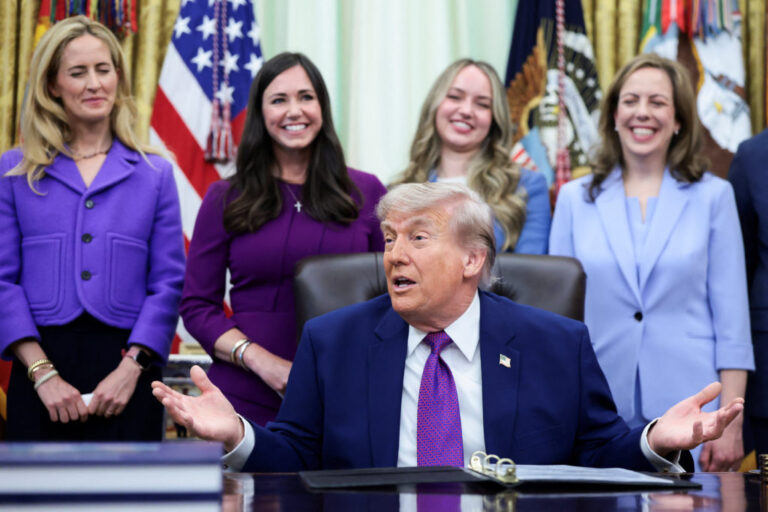
President Donald Trump announced a new proposed rule Monday that would allow employers to provide standalone health insurance coverage for fertility benefits. The rule aims to create a supplemental insurance option for in vitro fertilization (IVF) services and other fertility treatments, similar to vision or dental insurance. Currently, most health insurance plans do not cover IVF or related benefits.

“This will hopefully reduce the number of couples who ultimately need to resort to IVF because challenges can be identified and addressed very early in the process,” Trump said during an Oval Office event.

The rule, jointly announced by the Departments of Labor, Health and Human Services, and Treasury, follows a February executive order calling for policy recommendations to reduce the cost of IVF treatment. Trump had previously promised to pay or mandate insurance coverage for IVF treatment during his 2024 campaign. While the proposed rule does not go as far as a full mandate, it aims to drive down costs associated with fertility treatments, which can be prohibitively expensive.

Health Secretary Robert F. Kennedy Jr. highlighted the urgency of the situation, stating that the U.S. is facing a “fertility crisis,” which he described as “a threat not only to our economy, to our national security.” U.S. birth rates have been declining for years.

Once the proposed rule is published in the Federal Register, the public will have 60 days to comment before it is finalized. However, it may take months before patients can access these benefits, according to Sean Tipton, chief advocacy and policy officer for the American Society for Reproductive Medicine.

### What would the proposed rule cover?
The supplemental insurance would cover care related to diagnosing, mitigating, or treating infertility, including lab tests, medications, genetic testing, and IVF. The rule also mentions treatment for conditions that may affect fertility, such as polycystic ovary syndrome and endometriosis.

Care covered under the rule would have a lifetime cap of $120,000 for the participant and their beneficiaries, adjusted for inflation for plans starting in 2028. Tipton remarked, “That’s enough to offer some real treatment.” On average, a single cycle of IVF costs between $15,000 to $20,000, and patients may require multiple rounds before achieving pregnancy.

In February, the Trump administration launched TrumpRX, a website aimed at providing Americans with discounted prescription drugs, including select IVF medicines at reduced prices.

### How would fertility-related supplemental insurance work?
Under the proposed rule, employers would not be required to offer supplemental insurance. Tipton noted that it remains unclear what incentives employers would have to provide this benefit. Currently, about a quarter of large companies voluntarily cover IVF for employees, and at least a dozen states mandate private insurance coverage for fertility care, though the specifics vary by state.

The proposed rule’s fertility care would fall under what’s known as a limited excepted benefit, which allows coverage that is not connected to major medical insurance. These plans do not have to adhere to certain restrictions that general health care plans are required to follow. The administration argues that this flexibility could allow companies to offer plans more nimbly and potentially at a lower cost.

However, the lack of regulations could lead to uneven access, as employers might tailor benefits to higher-income professionals.

### Would supplemental insurance reduce the cost of fertility treatment?
The situation is complex and uncertain. Many patients cite high costs as the primary reason they do not pursue fertility treatment. Usha Ranji, associate director with KFF’s Women’s Health Policy Program, stated, “Any assistance with the out of pocket costs can be helpful.” Yet, supplemental policies are often not subsidized by employers, which could result in high costs for employees.

Sabrina Corlette, co-director of Georgetown University’s Center on Health Insurance Reforms, explained that without employer subsidization, many individuals might find it more economical to pay out of pocket for IVF services. Additionally, some employers who currently cover fertility care under their general health insurance may choose to stop offering that coverage if they can provide it separately.

### Can the Trump administration propose this rule without congressional oversight?
The proposed rule’s framework is based on a decades-old federal law regarding excepted benefits, meaning that amending these benefits to include fertility care would not require congressional approval. Tipton noted that this aspect is appealing to the administration. His organization advocates for Congress to pass a bill mandating all health insurance to cover IVF, including for those enrolled under the Affordable Care Act, but the current proposed rule does not apply to that group.

### How this sits against verifiable accuracy
Trump’s statements imply that the proposed rule will significantly improve access to fertility treatments and reduce the financial burden on couples seeking IVF. However, the effectiveness of this rule in achieving those goals remains uncertain, as it does not mandate coverage and relies on employer participation, which may not be incentivized. The proposed rule’s limitations and the potential for uneven access raise questions about its overall impact on fertility treatment costs and availability.

In summary, while the proposed rule aims to address a pressing issue, its implementation and effectiveness will depend on various factors, including employer participation and the regulatory environment surrounding fertility care.

Source: https://www.pbs.org/newshour/health/trump-has-a-proposal-to-expand-fertility-benefits-heres-how-that-would-work

Majorities unsure if attempts on Trump were staged or real : NPR

Majorities unsure if attempts on Trump were staged or real : NPR

NPR Topics: Politics — 2026-05-11 16:17:00 — www.npr.org

At a time of historically high political violence in the U.S., a substantial number of Americans doubt the legitimacy of recent attempts against President Trump’s life. Trump has been the subject of three assassination attempts over the last two years; however, a NewsGuard/YouGov poll released Monday finds that 30% of Americans think at least one of those incidents was staged. The findings come just weeks after a gunman allegedly attempted to storm the White House Correspondents’ Dinner, where Trump was in attendance, but was stopped at a security checkpoint by law enforcement before reaching the main ballroom. In the weeks since, a wave of misinformation around the event has spread online.

The poll surveyed 1,000 Americans between April 28 through May 4 and asked about the shooting at the correspondents’ dinner, the assassination attempt against Trump in Butler, Penn. in July of 2024, and the attempt on his life that fall while golfing in West Palm Beach. When given the options of “true,” “false,” or “not sure,” and asked whether each of the incidents “was staged,” a majority of respondents said they thought each event was either staged or said they were unsure. A plurality—roughly 45%—said each was a “real attempt.”

One in four respondents believed the attempted attack at the correspondents’ dinner was staged, according to the poll. The same was true for Butler, where 24% of respondents believed the attack was staged. Sixteen percent felt the same about the foiled plot in West Palm Beach. Those views came despite numerous witnesses in Butler and Washington, D.C., and detailed federal indictments against the suspects in the Florida plot and the shooting at the dinner. A Senate committee investigated the attack in Butler after a Secret Service sniper killed the perpetrator and put out an exhaustive report detailing security failures at the rally.

Sofia Rubinson is a senior editor at NewsGuard, which tracks false claims that spread online. Claims posted on X within the week after the dinner garnered over 90 million views, she said. “There’s really not a lot of evidence that these social media users are citing or relying on,” she said. “It’s really just this belief and this distrust that the government is acting honestly and is giving us accurate information.”

During an interview with 60 Minutes the day after the dinner, Trump dismissed claims that the incident was staged. “I think they’re more sick than they are con people,” Trump said, alluding to individuals pushing such conspiracy theories. “But there’s a lot of con in there too.”

The new poll finds that doubts about the assassination attempts are far more concentrated among younger Americans and Democrats. According to the poll, Americans 18-29 were the most likely of any generation to believe all three events were staged. It’s a sentiment also more pronounced on the left, with 21% of Democrats feeling that way, seven times more than Republicans. When asked about all three incidents, larger shares of Democrats say each event was staged, with 34% saying that about the correspondents’ dinner, 42% about Butler, and 26% about Trump’s golf club.

Though Republicans were less likely to think the events were fabricated, Rubinson notes a striking increase in the number of GOP voters who think the shooting at the dinner was staged—13%—compared to the events at Butler (7%) and Trump’s golf club (7%). “Still [a] much smaller percentage than Democrats. But we’re seeing that Republicans are increasingly more likely to believe this, ‘staged,’ narrative,” she said. Rubinson acknowledged that while it’s difficult to definitively explain that increase, it could be because of a “splintering” within Trump’s movement over issues like the administration’s handling of the Epstein files as well as the war with Iran. “A lot of the traditional MAGA base is … maybe growing increasingly discontent with the Trump administration and more prone to believing these types of conspiracies.”

### How this sits against verifiable accuracy
Trump’s statements in the excerpt imply that he believes the claims of staged assassination attempts are unfounded and that those promoting such theories are “sick.” He characterizes the individuals pushing these conspiracy theories as having a mix of sickness and deceit. This reflects a broader context of misinformation surrounding recent events, particularly the assassination attempts against him.

### What the excerpt shows about verifiable lies
Trump stated, “I think they’re more sick than they are con people,” referring to those who claim the assassination attempts were staged. This statement suggests a dismissal of the validity of those claims, but does not provide evidence to support his assertion that the claims are unfounded.

### Targets and tone
Trump’s remarks target individuals who propagate conspiracy theories regarding the assassination attempts against him. He describes them in a derogatory manner, labeling them as “sick” and implying they are deceitful.

In summary, the excerpt highlights the ongoing debate surrounding the legitimacy of assassination attempts against Trump and the misinformation that has proliferated in the aftermath. It underscores the division in public perception, particularly along generational and partisan lines.

Source: https://www.npr.org/2026/05/11/nx-s1-5818557/poll-trump-assassination-attempts-conspiracy-theories

Trump nominates Cameron Hamilton to run FEMA : NPR

Trump nominates Cameron Hamilton to run FEMA : NPR

NPR Topics: Politics — 2026-05-11 19:59:00 — www.npr.org

President Trump has nominated Cameron Hamilton to lead the Federal Emergency Management Agency (FEMA), approximately one year after Hamilton was removed from the same position by the Trump administration. Hamilton previously served as the agency’s acting leader and is a former Navy Seal with experience in emergency planning for terrorism events. If confirmed by the Senate, he will take charge of FEMA as it prepares for the Atlantic hurricane season.

Hamilton’s removal in 2025 followed a public disagreement with top administration officials regarding the future of FEMA. Former Department of Homeland Security Secretary Kristi Noem stated, “President Trump has been very clear since the beginning that he believes that FEMA and its response in many, many circumstances has failed the American people, and that FEMA as it exists today should be eliminated.” In contrast, Hamilton testified before Congress, asserting, “I do not believe it is in the best interest of the American people to eliminate the Federal Emergency Management Agency.” Following his testimony, he was replaced and later described his relationship with DHS officials as “very hostile.”

Since his removal, Hamilton has criticized the Trump administration’s handling of disaster response, highlighting inefficiencies under his successor. He noted that new bureaucratic policies were delaying assistance to disaster survivors, stating that these changes could be seen as “lying” about FEMA’s efficiency. As Hamilton faces Senate confirmation hearings, lawmakers from both parties have expressed frustration over the prolonged wait times for disaster assistance and federal grant money.

### How this sits against verifiable accuracy
The excerpt indicates that President Trump believes FEMA has failed the American people and should be eliminated, as stated by Kristi Noem. Hamilton’s counter-argument during his Congressional testimony suggests a significant disagreement regarding the agency’s future and effectiveness. The excerpt does not provide any direct statements from Trump himself but reflects the administration’s stance through Noem’s comments.

### What the excerpt shows about verifiable lies
No verifiable lies are presented in the excerpt.

### Targets and tone
The excerpt shows President Trump, through Kristi Noem, expressing a critical view of FEMA, suggesting it has failed the American people and should be eliminated. This reflects a hostile stance towards the agency’s current operations.

In summary, the nomination of Cameron Hamilton to lead FEMA comes amid ongoing debates about the agency’s effectiveness and the Trump administration’s approach to disaster management. The tensions highlighted in the excerpt underscore the challenges Hamilton may face if confirmed.

Source: https://www.npr.org/2026/05/11/nx-s1-5818675/trump-fema-disaster-emergency-hamilton-nominate

WATCH: Trump compares imprisonment of Jimmy Lai to James Comey, but says he’ll bring it up to Xi

WATCH: Trump compares imprisonment of Jimmy Lai to James Comey, but says he’ll bring it up to Xi

PBS NewsHour – Politics — 2026-05-11 14:44:00 — www.pbs.org


President Donald Trump likened Jimmy Lai to former FBI director James Comey on Monday as he plans to discuss the case with Chinese leader Xi Jinping.
Watch the clip in the video player above.
The U.S. president said he’ll bring up the Lai’s plight in China this week, but he compared the pro-democracy activist to one of his most detested foes.
WATCH: ‘He has suffered enough,’ Jimmy Lai’s daughter says after his conviction in Hong Kong
“Jimmy Lai, you know, he caused a lot of bedlam,” Trump told reporters Monday. “It’s like saying to me, ‘if Comey ever went to jail, would you let him out?’ That might be a hard one for me.”
Trump fired Comey in 2017 over his handling of the investigation into Russian interference in the 2016 elections. The Justice Department is now prosecuting Comey on charges of making threats against the president. Its first indictment of Comey was dismissed.

“Jimmy Lai, he caused lots of turmoil in China. He tried to do the right thing. He wasn’t successful, went to jail, and people would like him out,” Trump said. “And I’d like to see him get out too.”

A free press is a cornerstone of a healthy democracy.

Support trusted journalism and civil dialogue.

Donate now

President Donald Trump recently drew a controversial parallel between pro-democracy activist Jimmy Lai and former FBI director James Comey, as he prepares to discuss Lai’s situation with Chinese leader Xi Jinping. In remarks made to reporters, Trump stated, “Jimmy Lai, you know, he caused a lot of bedlam,” likening the activist’s plight to that of Comey, a figure he has long criticized. This comparison raises significant questions about Trump’s framing of Lai’s struggle for democracy in Hong Kong, especially given the context of his own contentious history with Comey.

Trump’s comments come in the wake of Lai’s conviction in Hong Kong, where he has been imprisoned for his activism. While Trump expressed a desire to see Lai released, his comparison to Comey—a figure he has publicly disparaged—casts a shadow over the sincerity of his support. This juxtaposition not only trivializes Lai’s fight for freedom but also reflects Trump’s tendency to frame political discourse in terms of personal grievances rather than substantive issues.

How this sits against verifiable accuracy

Trump’s assertion that Jimmy Lai “caused a lot of bedlam” in China implies a direct connection between Lai’s activism and unrest in the region. To substantiate such claims, one would typically require evidence linking Lai’s actions to specific incidents of turmoil, ideally from credible sources or official reports. However, the excerpt does not provide any external verification or context to support Trump’s characterization of Lai’s impact. Instead, it presents a narrative that lacks the necessary factual grounding to be considered well-supported.

Moreover, the excerpt does not include any corrections or denials regarding Trump’s statements, leaving readers without a clear understanding of the broader implications of Lai’s activism or the accuracy of Trump’s claims. Without additional context or evidence, the assertions made by Trump remain unverified and potentially misleading.

What the excerpt shows about verifiable lies

The excerpt does not present any statements from Trump that are explicitly false or retracted. However, it does highlight the problematic nature of his comparison between Jimmy Lai and James Comey, suggesting a lack of nuance in understanding the political realities faced by Lai. The absence of supporting evidence for Trump’s claims about Lai’s role in causing turmoil indicates that readers would need further information to assess the veracity of his statements fully.

Additionally, while Trump did not directly insult or demean Lai, his framing of the activist’s situation through the lens of his animosity toward Comey raises concerns about the seriousness with which he approaches the issue of human rights in China. This rhetorical choice could be seen as diminishing the gravity of Lai’s plight.

In conclusion, Trump’s remarks about Jimmy Lai, while expressing a desire for his release, are overshadowed by a troubling comparison to Comey that lacks factual support. Readers should be cautious about accepting such statements at face value, as they reflect a broader pattern of political rhetoric that prioritizes personal vendettas over substantive discourse on critical issues like democracy and human rights. The excerpt leaves many questions unanswered, particularly regarding the implications of Lai’s activism and the accuracy of Trump’s claims.

Source: https://www.pbs.org/newshour/world/watch-trump-compares-imprisonment-of-jimmy-lai-to-james-comey-but-says-hell-bring-it-up-to-xi

Definition of ‘86’ at the Heart of Comey Indictment

Definition of ‘86’ at the Heart of Comey Indictment

FactCheck.org — 2026-04-30 15:14:00 — www.factcheck.org

A federal indictment against former FBI Director James Comey hinges on the meaning of “86.” The Department of Justice said it indicates a threat of physical harm, while the more common dictionary definition is to throw out or get rid of something. 

Legal experts have said the ambiguity of the meaning will make this a difficult case for the DOJ.

In May 2025, while walking on the beach in North Carolina, Comey said he came across shells arranged to spell out “86 47” — Donald Trump is the 47th president — and he shared the image on Instagram.

According to the online Merriam-Webster dictionary, “eighty-six” is a slang term most commonly used to mean “to throw out,” “to get rid of” or “to refuse service to.” More recently, though, and sparsely, Merriam-Webster says, it has also come to mean “to kill.” And that’s the definition the Department of Justice relies upon.

According to a two-page indictment announced on April 28, Comey “did knowingly and willfully make a threat to take the life of, and to inflict bodily harm upon, the President of the United States” by posting the image of the shells that “a reasonable recipient who is familiar with the circumstances would interpret as a serious expression of an intent to do harm to the President of the United States.”

The indictment includes two charges: threatening the president and “transmitting a threat in interstate commerce” (via Instagram). Combined, the charges carry a maximum penalty of 10 years in prison.

“Threatening the life of the president of the United States will never be tolerated by the Department of Justice,” acting Attorney General Todd Blanche said at a press conference announcing the indictment.

“James Comey disgracefully encouraged a threat on President Trump’s life and posted it on Instagram for the world to see,” FBI Director Kash Patel said in a press release. In the press conference, Patel said the grand jury was presented with the fact that “shortly after posting that threat, he deleted that threat and then issued an apology.”

It’s true that the same day he posted the photo to Instagram, Comey took it down. But he did not apologize.

“I posted earlier a picture of some shells I saw today on a beach walk, which I assumed were a political message,” Comey wrote in a new Instagram message on May 15, 2025. “I didn’t realize some folks associate those numbers with violence. It never occurred to me but I oppose violence of any kind so I took the post down.”

A screenshot of Comey’s original Instagram post, which he subsequently removed.

In an interview on MSNBC on May 20, 2025, Comey insisted there was “no dark intention on my part” and that while he regretted the controversy around his post, “it’s hard to have regret about something that, even in hindsight, looks to me to be totally innocent.”

Comey said he thought it was just “a silly picture of shells that I thought was a clever way to express a political viewpoint. And actually I still think it is. I don’t see it the way some people are still saying it is, but again, I don’t want any part of any violence. I’ve never been associated with violence, and so that’s why I took it down.” 

Trump wasn’t buying it.

“He knew exactly what that meant. A child knows what that meant,” Trump said on Fox News on May 16, 2025. “If you’re the FBI director, and you don’t know what that meant, that meant assassination, and it says it loud and clear.”

After the indictment, Trump commented on April 29, “If anybody knows anything about crime, they know 86. … It’s a mob term for kill him. You know, you ever see the movies? ’86’ the mobster says to one of his wonderful associates. ’86 him.’ That means kill him. … People think of it as something having to do with disappearing, but the mob uses that term to say when they want to kill somebody, they say, ’86 the son of a gun.’”

As we said, the Merriam-Webster dictionary says the term “eighty-six” is “slang meaning ‘to throw out,’ ‘to get rid’ of, or ‘to refuse service to.’ It comes from 1930s soda-counter slang meaning that an item was sold out. There is varying anecdotal evidence about why the term eighty-six was used, but the most common theory is that it is rhyming slang for nix.”

“In the 1950s the word underwent some functional shift, and began to be used as a verb,” Merriam-Webster says. “The initial meaning as a verb was ‘to refuse to serve a customer,’ and later took on the slightly extended meaning of ‘to get rid of; to throw out.’ The word was especially used in reference to refusing further bar service to inebriates.”

Merriam-Webster notes, “Among the most recent senses adopted is a logical extension of the previous ones, with the meaning of ‘to kill.’ We do not enter this sense, due to its relative recency and sparseness of use.”

The Oxford English Dictionary also says of the U.S. slang term, “In restaurants and bars, an expression indicating that the supply of an item is exhausted, or that a customer is not to be served.” The OED doesn’t include a definition meaning “to kill.”

When the controversy over Comey’s post first erupted last year, Jesse Sheidlower, adjunct assistant professor in Columbia University’s writing program and formerly editor at large for the Oxford English Dictionary, told the Associated Press, “The original sense is, we are out of an item. But there are a bunch of obvious metaphorical extensions for this. 86 is something that’s not there, something that shouldn’t be there like an undesirable customer. Then it’s a verb, meaning to throw someone out. These are fairly obvious and clear semantic development from the idea of being out of something.”

There are some uses of the phrase as a euphemism for killing someone, he said, but that usage is more rare.

“Yes, it can mean ‘to murder,’” Sheidlower told the New York Times last year. “But without any very specific indication that that’s the intended meaning, you’d never assume that. The notion that Comey was suggesting this is completely preposterous.”

Some legal experts say prosecutors will have a hard time proving Comey “knowingly and willfully” posted the photo as a violent threat.

“Posting numbers constitute a threat? I just don’t accept that,” Jimmy Gurulé, a University of Notre Dame law professor and former federal prosecutor, told the Washington Post. “They are going to have to prove that to a jury — beyond a reasonable doubt. … I don’t think they are going to be able to satisfy that legal threshold.”

“I think this indictment is deeply flawed. I think it’s probably fatally flawed. And here’s why,” CNN legal analyst Elie Honig said on April 28. “The law that Justice Department prosecutors have chosen to charge here requires an intent to kill or physically injure the president of the United States. And I think if you look at this communication, these seashells, it’s just way too ambiguous.

“What does 86 mean? Yes, there have been instances in pop culture and elsewhere where people have used 86 to mean kill, but there have been plenty of other instances, apparently far more instances where it simply means to remove or to cross off a list,” Honig said. “And that ambiguity is going to be a major problem for prosecutors because I will tell you, ambiguity is always the enemy of the prosecutors because you have to prove your case not just by 51% or 75%, you have to prove your case beyond a reasonable doubt. And I don’t see any realistic way prosecutors are going to be able to do that here.”

John Keller, a former senior Justice Department official who led a task force to prosecute violent threats against election workers, told the AP that he agreed the term “86” posted by Comey was “ambiguous — it doesn’t necessarily threaten violence and the fact that it was the FBI Director posting this openly and notoriously on a public social media site suggests that he didn’t intend to convey a threat of violence.”

Fox News legal analyst Jonathan Turley wrote in an opinion piece that despite being “one of Comey’s most vocal and consistent critics,” he believes the indictment is “facially unconstitutional absent some unknown new facts.” In order to convict Comey, he said, “the Justice Department will have to show that his adolescent picture was a ‘true threat’” according to the law. “It is not,” Turley wrote.

At the indictment press conference, Blanche was asked how he intended to prove intent when Comey has said he did not associate “86” with doing physical harm.

Blanche said that over the last year, the Department of Justice has done “a tremendous amount of investigation. And how do you prove intent in any case? You prove intent with witnesses, with documents, with the defendant himself, to the extent is appropriate, and that’s how we’ll prove intent in this case.”

This is the second time Trump’s Justice Department has sought criminal charges against Comey. In September, Comey was indicted on two criminal counts alleging he made a false statement to Congress in 2020 and obstructed a congressional proceeding. In November, a federal judge threw out the case, ruling that Lindsey Halligan, the prosecutor who secured the indictment, was unlawfully appointed to her role. The Justice Department has appealed.

On April 28, Comey released a video message on Substack responding to the latest indictment: “Well, they’re back. This time about a picture of seashells on a North Carolina beach a year ago. And this won’t be the end of it. But nothing has changed with me. I’m still innocent. I’m still not afraid, and I still believe in the independent federal judiciary. So let’s go.”

Editor’s note: FactCheck.org does not accept advertising. We rely on grants and individual donations from people like you. Please consider a donation. Credit card donations may be made through our “Donate” page. If you prefer to give by check, send to: FactCheck.org, Annenberg Public Policy Center, P.O. Box 58100, Philadelphia, PA 19102. 

How this sits against verifiable accuracy

The federal indictment against James Comey revolves around the interpretation of the term “86.” The Department of Justice claims that Comey’s Instagram post, which featured shells arranged to spell “86 47,” constitutes a threat against President Trump, suggesting an intent to inflict bodily harm. However, the common understanding of “eighty-six” is to discard or eliminate something, which complicates the prosecution’s case. Legal experts have indicated that the ambiguity surrounding the term will pose significant challenges for the Department of Justice in proving intent beyond a reasonable doubt.

Comey has maintained that his post was innocuous, asserting that he did not associate the numbers with violence. He described the image as a “silly picture of shells” intended to express a political viewpoint. This defense is crucial as it highlights the lack of clarity in the indictment’s claims about his intentions. The legal framework requires a clear demonstration of intent to harm, which may be difficult to establish given the varied interpretations of the term “86.”

What the excerpt shows about verifiable lies

The excerpt does not present any verifiable lies regarding Trump’s statements. Instead, it outlines the context of the indictment against Comey and the differing interpretations of the term “86.” While Trump asserts that Comey’s post was a clear threat, the evidence provided does not confirm this claim as a definitive fact. The legal discourse surrounding the indictment emphasizes the ambiguity of the term and the challenges in proving intent, suggesting that Trump’s interpretation may not align with the legal standards required for conviction.

Targets and tone

In the excerpt, Trump is portrayed as directly challenging Comey’s intentions, stating that he “knew exactly what that meant” and implying that it signified assassination. This language reflects a hostile tone toward Comey, as Trump accuses him of encouraging a threat against his life. However, the excerpt does not contain any other disparaging remarks directed at specific individuals or groups beyond this context. Overall, while Trump’s comments are critical, they do not constitute broad or generalized hostility but rather focus on Comey’s actions and their implications.

The key takeaway from this situation is the ongoing legal battle surrounding Comey’s indictment, which hinges on the interpretation of language and intent. The ambiguity of the term “86” raises significant questions about the prosecution’s ability to establish a clear threat, leaving readers to consider the complexities of legal definitions and the implications of political rhetoric.

Source: https://www.factcheck.org/2026/04/definition-of-86-at-the-heart-of-comey-indictment/
Lawsuit challenges Trump’s Reflecting Pool project as projected costs soar

Lawsuit challenges Trump’s Reflecting Pool project as projected costs soar

PBS NewsHour – Politics — 2026-05-11 17:30:00 — www.pbs.org

A non-profit group suing to stop President Trump’s Reflecting Pool renovation on the National Mall claims the project breaks federal law. Last month, the president announced the pool would be repainted blue. The New York Times is also reporting that its initial cost of less than two million dollars has now ballooned to seven times that figure. Amna Nawaz discussed more with David Fahrenthold.

Amna Nawaz:
A nonprofit group trying to stop President Trump’s reflecting pool renovation on the National Mall claims the project breaks federal law.The Cultural Landscape Foundation filed a lawsuit today, saying the National Park Service violated an historic preservation act by repainting the pool — quote — “American flag blue.” The complaint says the new color — quote — “will fundamentally alter the visual and experiential character of the pool.”The president announced the project last month and drove through the pool’s construction site just last week. The New York Times is also reporting that its initial cost of less than $2 million has now ballooned to seven times that figure.For more on the project, I’m joined now by one of the reporters covering that story. That’s David Fahrenthold of The New York Times.David, welcome back.Let’s begin with your reporting on this that shows that initial cost estimate from the president of $1.8 million now up to $13.1 million. What happened there?
David Fahrenthold, The New York Times:
Well, the — President Trump has said multiple times that this project is only going to cost $1.8 million or less than $2 million. That’s never been right.From the beginning, the federal government had expected to pay $6.9 million for this contract. And then, on Friday, that cost jumped again by another 88 percent. So now we’re talking about $13.1 million.
Amna Nawaz:
And the contractor for this project, your reporting also showed, had no previous federal contracts. How unusual is that for a renovation like this?
David Fahrenthold:
It’s quite unusual for a renovation of this size and this sort of importance.Remember, this is not a swimming pool. This is a pool that’s about 2,000 feet long. It’s been around since the 1920s. It has a lot of complicated problems that come from both its age and its size. And the contractor they chose to do it, not only is this their first federal contract, but it’s not clear this is a swimming pool contractor at all.Their Web site is more about lining pipes and culverts and fuel tanks. It’s clear this is a very different project than the ones that they appear to be used to.
Amna Nawaz:
So folks will remember the images from last week that showed the president and his motorcade driving through that pool area. When we saw those, I know a lot of folks had the same question was, is that going to impact the pool in any way? What does your reporting show you on that?
David Fahrenthold:
Well, from folks we have talked to, it will not probably make the pool look any different in terms of reflectivity. If you’re standing on the steps of the Lincoln Memorial, you’re standing at the World War II Monument on the other end, and you’re looking across the pond at a low angle, it’ll probably still be reflective.The difference, though, may come when you see it from a higher angle, from an airplane or the top of the Washington Monument. This is a space that’s meant to sort of be invisible. It’s supposed to reflect back the gray stone and the trees all around it.If what you see instead is kind of an artificial blue, like a — the water hazard at a mini golf course, that could stand out in a very jarring way on the National Mall.
Amna Nawaz:
We know that the president has framed some of these renovations as part of a broader beautification effort ahead of those America 250 celebrations. What do we know about what that means about who’s paying for much of this?
David Fahrenthold:
Well, in the cases — in this case and in the case we wrote about recently about changes to the fountains around D.C., the government is paying for it.It’s not private donors. And the money they’re using in this case is coming from people that go to national parks. If you go to a national park and pay an entrance fee, some of that money goes to the Park Service to pay for renovations. And that’s the fund they’re using here.
Amna Nawaz:
I know as we reported earlier that at least one nonprofit is trying to block this project. But this is one of several renovation projects that we know the Trump administration is looking to at least partially fund with taxpayer money.We have seen the Kennedy Center renovation, the White House ballroom, and others. As you track this, as ethics watchdogs and other track this, what are some of the concerns that are coming up here?
David Fahrenthold:
One of the biggest concerns about this project and others around the area is that these are no-bid contracts. The government is supposed to let multiple vendors bid on jobs like this so the taxpayers get their best bang for the buck.In this case, the Trump administration used sort of a special power to block out all competition and hand this job directly to a firm that President Trump says is close to him. He says, this is a company that worked on the swimming pools at his golf club in Northern Virginia.And so what happens when you give a contract directly to somebody with no competition, you don’t really know you’re getting the best deal. You don’t know that you’re getting the best person for the job. And so it raises questions about why they’re circumventing the normal contracting process and what we’re losing in the process in terms of quality or maybe overpaying.
Amna Nawaz:
David, in the 45 seconds or so I have left, I know you track the money often when it comes to the president’s decisions around things like this. Where does this latest project fit into the broader pattern?
David Fahrenthold:
Well, we have been looking at the way President Trump has been doing two things with these projects around D.C., both using no-bid contracts to direct money to firms that are close to him, and also circumventing the historic review process that’s supposed to keep the Washington core, the monuments of Washington looking consistent and preserved.And what we’re seeing here is that he evaded both those systems here and just sort of went around them all to have the reflecting pool painted blue because that’s what he wanted.
Amna Nawaz:
David Fahrenthold of The New York Times, always good to talk to you. Thank you so much.
David Fahrenthold:
Thank you.

How this sits against verifiable accuracy

The ongoing controversy surrounding President Trump’s renovation of the Reflecting Pool on the National Mall has raised significant legal and financial questions. A nonprofit group, the Cultural Landscape Foundation, is suing to halt the project, claiming it violates federal law by altering the pool’s historic character with a new color described as “American flag blue.” The lawsuit argues that this change will “fundamentally alter the visual and experiential character of the pool.”

Initially, Trump stated that the renovation would cost less than $2 million, but reports indicate that the actual cost has skyrocketed to $13.1 million, a figure that is over seven times the original estimate. This discrepancy raises concerns about transparency and accountability in government spending, particularly as the project is funded through taxpayer money collected from national park entrance fees.

What the excerpt shows about verifiable lies

The excerpt highlights a significant inaccuracy in President Trump’s claims regarding the cost of the Reflecting Pool renovation. Trump has repeatedly asserted that the project would cost $1.8 million or less, which has been contradicted by reports indicating that the expected cost was actually $6.9 million from the outset and has now increased to $13.1 million. This misrepresentation of the project’s financials is a clear example of a statement that does not align with the facts presented in the reporting.

Targets and tone

The excerpt does not contain any disparaging or hostile remarks made by Trump toward specific individuals or groups. Instead, it focuses on the legal and financial implications of the renovation project. Trump’s statements regarding the cost of the project are presented as part of the broader discussion about accountability and transparency in government spending, without any personal attacks or derogatory language directed at others.

In summary, the situation surrounding the Reflecting Pool renovation underscores the importance of accurate information in public projects, particularly when taxpayer money is involved. The discrepancies in Trump’s statements about the project’s costs raise serious questions about accountability that remain unresolved in the current discourse.

Source: https://www.pbs.org/newshour/show/lawsuit-challenges-trumps-reflecting-pool-project-as-projected-costs-soar

‘A bad look’: Republicans want more details on ballroom security funding request

‘A bad look’: Republicans want more details on ballroom security funding request

Donald Trump — 2026-05-11 19:07:00 — www.politico.com


The $1 billion line item in a party-line bill otherwise focused on immigration enforcement is causing political heartburn.
The political landscape is once again roiled by a contentious $1 billion line item in a party-line bill focused on immigration enforcement. This provision is stirring significant political heartburn, raising questions about the implications of such funding and the rhetoric surrounding it. As the debate unfolds, accountability remains crucial, particularly in scrutinizing the claims and statements made by political figures, including Donald Trump.

How this sits against verifiable accuracy

The excerpt highlights a $1 billion allocation within a bill primarily aimed at immigration enforcement, which has become a focal point of political contention. To assess the validity of claims surrounding this funding, one would typically require clear evidence of its intended use, the context of its introduction, and the potential impacts on immigration policy. However, the excerpt does not provide any specific corrections, denials, or counter-evidence regarding the claims made about this funding, leaving a gap in verifiable information.

What the excerpt shows about verifiable lies

Based solely on the provided excerpt, there are no statements attributed to Trump that are explicitly shown to be false or misleading. The text does not contain any retractions or corrections related to his claims. For a thorough evaluation, readers would need additional context or evidence regarding the implications of the $1 billion funding and any statements made by Trump that could be verified or disputed.

Targets and tone

The excerpt does not indicate any specific instances of Trump singling out, insulting, or demeaning individuals or groups. There is no evidence of hostile rhetoric directed at any identifiable targets within the text. The focus remains on the political implications of the funding line item rather than personal attacks or disparagement.

In conclusion, while the excerpt raises significant political issues surrounding immigration enforcement funding, it lacks concrete details necessary for accountability regarding Trump’s statements or actions. As the situation develops, it is essential for readers to remain vigilant about the claims made and the context in which they are presented, as many questions remain unanswered.

Source: https://www.politico.com/news/2026/05/11/republicans-ballroom-security-funding-request-00915574

For hantavirus infections, doctors provide supportive care. Evidence doesn’t support ivermectin use

For hantavirus infections, doctors provide supportive care. Evidence doesn’t support ivermectin use

PolitiFact – Rulings and Stories — 2026-05-11 17:52:00 — www.politifact.com

With a fatal hantavirus outbreak setting off public health alarms, could ivermectin be a solution? 
As 18 people who were aboard a hantavirus-stricken cruise ship prepared for their May 11 return to the United States, some on social media said the antiparasitic drug ivermectin could be an effective treatment for hantavirus. 
Only it’s not. We spoke with four doctors who told us there are no specific drugs or cures for hantavirus, which is spread primarily by rodents. But doctors treat hantavirus patients’ symptoms with supportive care, including providing supplemental oxygen or administering blood pressure medication.
One of the U.S.-based passengers tested positive outside the U.S. but isn’t currently experiencing symptoms; another person is displaying some hantavirus symptoms without a clear cause, health officials said. Most of the 18 people were taken to a quarantine unit at the University of Nebraska Medical Center; two people were moved to a biocontainment unit at Atlanta’s Emory University. 
U.S. health officials plan to assess passengers for a few days; they will be monitored for 42 days total, either at home or in one of these medical facilities. Nine other people who’d already disembarked from the MV Hondius or been exposed to a confirmed hantavirus case on an international flight are also being monitored across six states.  

American passengers from the cruise ship, MV Hondius that was stricken with hantavirus, arrived in Omaha, Nebraska after flying from Tenerife, Spain, May 11, 2026. (AP)
Q: Is there a treatment for hantavirus infections? 
No, there are no specific treatments for hantavirus infections. 
There are at least 24 types of hantavirus that cause disease in humans, but most of those cannot be transmitted by humans. The Andes hantavirus linked to the cruise ship outbreak is the only strain known to spread from person to person. It belongs to a group of hantaviruses endemic to the Americas.
Its early symptoms include fever, headache, muscle aches and gastrointestinal symptoms. Andes hantaviruses typically affect the heart and lungs, through a condition called hantavirus cardiopulmonary syndrome. Symptoms progress to include cough, shortness of breath, accumulation of fluid in the lungs and shock.
Some research supports using the antiviral drug ribavirin to treat other types of hantavirus infections that can cause kidney failure, but that’s not the kind found aboard the cruise ship. Ribavirin hasn’t been proven effective for viruses that affect the heart and lungs, Harvard Health reported. 
“Some treatments have been studied for different species of hantavirus, but there are no treatments with sufficient evidence to my knowledge at this time,” said Dr. Emily Abdoler, a University of Michigan Medical School clinical medicine professor. 
That’s partly because it’s a rare infection. 
Annually, there are about 300 hantavirus cases across North and South America, which make it difficult to conduct studies that would establish effective treatments, Abdoler said. 
Q: Is there anything doctors can do to help someone with hantavirus?
Yes. We spoke with four physicians who said treatments focus on addressing the complications caused by the illness. 
Doctors can’t cure the infection, but they can often support “normal body functions until the immune response controls and then resolves the viral infection,” said Dr. Anna Wald, a University of Washington School of Medicine professor. 
During severe hantavirus infections, she said, patients might not be able to maintain normal blood pressure or their lungs might stop delivering oxygen to the body. 
“The only treatment we have available is what we call supportive care, such as providing oxygen, monitoring the respiratory status and even intubating the patient if needed,” said Dr. Monica Gandhi, a University of California San Francisco professor of medicine. 
If someone’s blood pressure drops — which can happen when shock sets in — Abdoler said doctors might prescribe medications called vasopressors, which constrict blood vessels. 
The speed and quality of care people receive will affect their survival, said Dr. Peter Chin-Hong, a University of California San Francisco professor of medicine.
In some cases, patients with severe illness might need advanced life support such as ECMO or extracorporeal membrane oxygenation, which involves pumping blood into a machine outside the body that removes carbon dioxide before sending the newly oxygenated blood back into the person’s body. 
Researchers are also investigating experimental therapies including antivirals, convalescent plasma or monoclonal antibodies, Chin-Hong said. 
Q: Why can’t ivermectin work as a hantavirus treatment, as some people claimed online? 
All four doctors told PolitiFact they knew of no evidence showing that ivermectin would be effective against hantavirus. 
“Ivermectin is an excellent medication for parasitic infections but there is no clinical data that it works against viral infections, including hantavirus,” Wald said. 
Chin-Hong said some people have theorized that ivermectin could have antiviral uses because it blocks a specific protein that some viruses must bring into the nucleus to reproduce there.
“This is not relevant for hantavirus, which can reproduce in other ways, not involving the nucleus,” such as in a cell’s cytoplasm, he said. 
Ivermectin has shown some promising activity in test tubes — not clinical trials — against viruses such as SARS-CoV-2, but not hantaviruses; it hasn’t been studied against hantavirus in any setting, Chin-Hong said.
“I would worry that promoting these messages may lead to false hope and delay access to care,” he said. “In hantavirus, timeliness in receiving care is crucial.” 
RELATED: What is hantavirus? What we know about the fatal cruise ship outbreak 

With a fatal hantavirus outbreak setting off public health alarms, could ivermectin be a solution? As 18 people who were aboard a hantavirus-stricken cruise ship prepared for their May 11 return to the United States, some on social media said the antiparasitic drug ivermectin could be an effective treatment for hantavirus. Only it’s not. We spoke with four doctors who told us there are no specific drugs or cures for hantavirus, which is spread primarily by rodents. But doctors treat hantavirus patients’ symptoms with supportive care, including providing supplemental oxygen or administering blood pressure medication.

One of the U.S.-based passengers tested positive outside the U.S. but isn’t currently experiencing symptoms; another person is displaying some hantavirus symptoms without a clear cause, health officials said. Most of the 18 people were taken to a quarantine unit at the University of Nebraska Medical Center; two people were moved to a biocontainment unit at Atlanta’s Emory University. U.S. health officials plan to assess passengers for a few days; they will be monitored for 42 days total, either at home or in one of these medical facilities. Nine other people who’d already disembarked from the MV Hondius or been exposed to a confirmed hantavirus case on an international flight are also being monitored across six states.

American passengers from the cruise ship, MV Hondius that was stricken with hantavirus, arrived in Omaha, Nebraska after flying from Tenerife, Spain, May 11, 2026. (AP)

How this sits against verifiable accuracy

The claims surrounding ivermectin as a treatment for hantavirus have been firmly debunked by medical professionals. The report indicates that there are no specific treatments for hantavirus infections, which primarily affect the heart and lungs and can lead to severe complications. Doctors emphasize that supportive care is the only available option, which includes monitoring and managing symptoms rather than curing the infection itself. The Andes hantavirus, linked to the recent outbreak, is the only strain known to spread from person to person, and its treatment options remain limited.

The excerpt highlights the rarity of hantavirus infections, with only about 300 cases reported annually across North and South America, making it challenging to conduct studies that could lead to effective treatments. The medical consensus is clear: ivermectin is not effective against viral infections like hantavirus, and promoting it as a treatment could mislead patients and delay necessary medical care.

What the excerpt shows about verifiable lies

The excerpt does not present any statements from Donald Trump or any claims attributed to him that can be classified as false or misleading. Instead, it focuses on the misinformation circulating on social media regarding ivermectin as a treatment for hantavirus. The medical professionals consulted in the report provide a clear counter to these claims, stating that there is no clinical data supporting the use of ivermectin for viral infections, including hantavirus.

The report underscores the importance of relying on verified medical advice and the potential dangers of misinformation, particularly in the context of a public health crisis.

Targets and tone

The excerpt does not show Donald Trump singling out, insulting, or speaking in a hostile way about any specific individuals or groups. Instead, it focuses on the medical community’s response to misinformation regarding treatment options for hantavirus. There is no disparaging language or hostile rhetoric directed at any person or group within the provided text.

In summary, readers should understand that the claims about ivermectin as a treatment for hantavirus are unfounded and unsupported by medical evidence. The excerpt emphasizes the critical need for accurate information during health emergencies and the potential risks associated with misinformation.

Source: https://www.politifact.com/article/2026/may/11/hantavirus-outbreak-treatments-ivermectin/

Comey says he's not going to stop criticizing Trump ahead of criminal trial

Comey says he's not going to stop criticizing Trump ahead of criminal trial

Administration News — 2026-05-11 19:41:00 — thehill.com


Former FBI Director James Comey said Monday that he won’t stop criticizing President Trump ahead of a criminal trial against him over charges of threatening the president. “I’m not going to be quiet. I’m going to continue to speak about what I believe,” Comey told MS NOW’s Nicolle Wallace. ” … Donald Trump has a…
Former FBI Director James Comey has made it clear that he will not hold back in his criticism of Donald Trump, especially as the former president faces a criminal trial related to charges of threatening him. In an interview with Nicolle Wallace on MS NOW, Comey stated, “I’m not going to be quiet. I’m going to continue to speak about what I believe.” This declaration underscores the ongoing tension surrounding Trump’s legal challenges and the broader implications for accountability in political discourse.

How this sits against verifiable accuracy

The excerpt does not provide specific claims made by Trump that can be assessed for accuracy. Instead, it focuses on Comey’s commitment to speaking out against Trump. To evaluate any claims made by Trump, one would need direct statements or assertions from him that could be fact-checked. The excerpt does not include any corrections or denials regarding Trump’s statements, leaving readers without a clear understanding of the factual landscape surrounding the allegations against him.

What the excerpt shows about verifiable lies

There are no statements from Trump included in the excerpt that can be classified as false or misleading. Without specific claims from Trump to analyze, there is no evidence of lies or inaccuracies presented. For a thorough examination, readers would need to reference direct quotes or assertions made by Trump that are not present in this snippet.

Targets and tone

The excerpt does not indicate that Trump has singled out or insulted any specific individuals or groups. Instead, it centers on Comey’s resolve to continue speaking out against Trump. There is no evidence of disparaging or hostile rhetoric from Trump within the provided text, which focuses primarily on Comey’s perspective.

In summary, this excerpt highlights Comey’s determination to voice his beliefs regarding Trump amid ongoing legal issues. However, it lacks specific claims from Trump that could be scrutinized for accuracy or accountability. As the situation evolves, the need for clear, verifiable statements from Trump remains crucial for understanding the broader implications of his actions and rhetoric.

Source: https://thehill.com/regulation/court-battles/5873291-comey-wont-stop-trump-criticism/

A nonprofit sues the feds over plans to paint the Lincoln Memorial Reflecting Pool blue : NPR

A nonprofit sues the feds over plans to paint the Lincoln Memorial Reflecting Pool blue : NPR

NPR Topics: Politics — 2026-05-11 19:10:00 — www.npr.org

With a blue sky above the Lincoln Memorial, people walk along the reflection pool in Washington, D.C., on June 9, 2023.

Jose Luis Magana/AP

hide caption

toggle caption

Jose Luis Magana/AP

A nonprofit is suing the National Park Service, the Department of the Interior and Interior Secretary Doug Burgum over the decision to resurface the Lincoln Memorial Reflecting Pool at Washington D.C.’s National Mall, and to paint the pool’s basin blue. The suit was filed Monday in U.S. District Court for the District of Columbia by The Cultural Landscape Foundation (TCLF), an education and advocacy organization. In the suit, TCLF is asking a federal judge to halt the project, saying that the Trump administration failed to have the project reviewed federally, as is dictated by the National Historic Preservation Act.

President Trump revealed his plans for the pool do-over last month in “American flag blue,” saying that the project would take one week and $2 million, and that it would be completed in time for the 250th anniversary of the Declaration of Independence on July 4. A few days later on Truth Social, the president posted a fake image of himself and several of his administration officials in swimsuits, along with an unidentified woman in a gingham bikini, lounging in the water with the Washington National Monument at the rear. (Swimming in the reflecting pool is prohibited by federal law.)

In a YouTube video posted by the White House on April 23, Trump called the pool “filthy dirty” and said it “leaked like a sieve.” In that video, Trump said he was going to call three companies that he has worked with in the past – “all they do is swimming pools” – and say, “Give me a good price.” The New York Times reported last Friday that the contract for the reflecting pool’s resurfacing was awarded in a $6.9 million no-bid contract to a company called Atlantic Industrial Coatings, which previously has never held any federal contracts. An employee at the Atlantic Industrial Coatings confirmed in a telephone call on Monday that it has been contracted for this project, but referred all other questions to the Department of the Interior.

The Times reported on Monday that the final cost of the project could be upward of $13 million, per documents it says it has obtained. The Department of the Interior did not confirm the cost of the project, but wrote: “The contract price reflects the effort necessary to expedite the timeline of completing the leak prevention coating project—more people, more materials, more equipment and longer hours ahead of our 250th.” In an unsigned statement emailed to NPR Monday afternoon, the Interior Department wrote: “The National Park Service chose the best company to expedite the repair of the iconic Reflecting Pool ahead of our 250 celebrations. The choice of American Flag Blue will enhance the visitor experience by making the pool reflect the grand Lincoln Memorial and Washington Monument. NPS is also investing in a state-of-the-art ozone nanobubbler filtration system and will now have a dedicated crew who will maintain the grounds’ from wildlife. The Department is proud of the work being carried out by our Park Service to ensure this magical spot can be enjoyed for not only our 250th, but for many generations to come.” Critics of the project, including TCLF, don’t share that vision – and are taking particular umbrage at the color. “The reflecting pool should not be viewed in isolation; it is part of the larger ensemble of designed landscapes that comprise the National Mall,” Charles A. Birnbaum, the president and CEO of TCLF, said in a statement emailed to NPR Monday. “The design intent, to create a reflective surface that is subordinate, is fundamental to the solemn and hallowed visual and spatial connection between the Washington Monument and the Lincoln Memorial. A blue-tinted basin is more appropriate to a resort or theme park.” The National Park Service regularly cleans out algae, goose droppings and other detritus from the reflecting pool. The last major renovation of the reflecting pool, which included the installation of a new circulation and filtration system, took place during the Obama administration at a reported cost of $34 million.

Before founding TCLF in 2008, Birnbaum served for 15 years as the coordinator of the Historic Landscape Initiative for the National Park Service.

TCLF has another open lawsuit against the federal administration: it is one of eight cultural and architecture groups currently suing President Trump and the Kennedy Center board over the planned renovations of the complex, which are planned to start in July.

A nonprofit is suing the National Park Service, the Department of the Interior, and Interior Secretary Doug Burgum over the decision to resurface the Lincoln Memorial Reflecting Pool in Washington, D.C., and to paint the pool’s basin blue. The Cultural Landscape Foundation (TCLF) filed the suit in U.S. District Court for the District of Columbia, claiming that the Trump administration failed to have the project federally reviewed as required by the National Historic Preservation Act.

President Trump announced plans for the pool renovation last month, stating it would be completed in “American flag blue” within a week and at a cost of $2 million, aiming for the project to be finished by the 250th anniversary of the Declaration of Independence on July 4. Shortly after, he posted a digitally altered image on Truth Social showing himself and several administration officials in swimsuits, which is particularly notable as swimming in the reflecting pool is prohibited by federal law. In a video released by the White House, Trump described the pool as “filthy dirty” and claimed it “leaked like a sieve,” expressing his intent to contact companies he had previously worked with to get a good price for the renovation.

The New York Times reported that the resurfacing contract was awarded as a $6.9 million no-bid contract to Atlantic Industrial Coatings, a company with no prior federal contracts. The final cost of the project could exceed $13 million, according to documents obtained by the Times. The Department of the Interior has not confirmed this cost but stated that the contract price reflects the necessary efforts to expedite the project. Critics, including TCLF, have expressed strong opposition to the color choice, arguing that it detracts from the solemnity of the National Mall’s landscape.

How this sits against verifiable accuracy

The claims made by Trump regarding the renovation of the Lincoln Memorial Reflecting Pool suggest a quick and cost-effective solution to a longstanding issue. However, the lawsuit filed by TCLF raises questions about the legality of the process followed by the Trump administration, specifically regarding the lack of federal review mandated by the National Historic Preservation Act. For these claims to be well-supported, one would typically expect documentation confirming the project’s compliance with federal regulations, as well as transparency regarding the bidding process for the contract awarded to Atlantic Industrial Coatings.

The excerpt does not provide any outside verification of Trump’s statements about the pool’s condition or the timeline and cost of the renovation. Instead, it highlights the controversy surrounding the project and the opposition from TCLF, which argues that the proposed changes undermine the historical significance of the reflecting pool.

What the excerpt shows about verifiable lies

The excerpt does not explicitly identify any statements made by Trump as false or misleading. However, it does highlight the controversy surrounding the project, particularly the legal challenges posed by TCLF regarding the administration’s failure to follow proper review procedures. The claims about the pool being “filthy dirty” and “leaking like a sieve” are presented as Trump’s opinions, and there is no evidence within the excerpt to confirm or refute these assertions. Readers would need additional documentation or expert analysis to assess the accuracy of Trump’s statements about the pool’s condition.

Targets and tone

The excerpt does not show Trump singling out or insulting specific individuals or groups. Instead, it focuses on the legal and administrative aspects of the renovation project and the criticisms from TCLF regarding the proposed changes. Trump’s comments about the pool’s condition do not contain disparaging language directed at any identifiable targets. The tone remains factual and centered on the implications of the project rather than personal attacks.

In summary, this item underscores the ongoing legal disputes surrounding the renovation of the Lincoln Memorial Reflecting Pool, highlighting the potential missteps of the Trump administration in handling the project. While Trump’s statements about the pool’s condition are noted, the excerpt does not provide definitive evidence to classify them as false or misleading. The controversy over the project’s execution and its implications for the National Mall’s historical integrity remains a significant point of contention.

Source: https://www.npr.org/2026/05/11/g-s1-121548/a-nonprofit-has-sued-the-federal-government-over-its-plans-to-paint-the-lincoln-memorial-reflecting-pool-blue