Home Blog Page 61

House looks to take up government funding bill

House Looks to Take Up Government Funding Bill

Trump Threatens Legal Action Against Trevor Noah Over Grammys Joke

Former President Donald Trump announced intentions to sue comedian Trevor Noah after a sharp-tongued joke at last night’s Grammy Awards. In a post on Truth Social, Trump called Noah’s joke, which implied that the former president had visited Jeffrey Epstein’s island, “false and defamatory.”

The Joke That Sparked the Threat

Trevor Noah, who hosted the awards show, took a jab at Trump’s relationship with the late sex offender and his ambitions to acquire Greenland. “That is a Grammy that every artist wants almost as much as Trump wants Greenland,” said Noah during the broadcast. “Which makes sense, I mean, because Epstein’s Island is gone, he needs a new one to hang out on with Bill Clinton.”

The remark drew a swift response from Trump, who denied ever visiting Epstein’s island. “Noah, a total loser, better get his facts straight, and get them straight fast,” Trump wrote. “It looks like I’ll be sending my lawyers to sue this poor, pathetic, talentless, dope of an M.C., and suing him for plenty$.”

Verification of Claims

Both Trump and former President Bill Clinton, whom Noah also mentioned in his joke, have denied any wrongdoing related to Epstein. Neither has been charged with crimes associated with the late financier, and Epstein had previously stated that Clinton never visited his island.

NBC News reached out to Noah’s agency and management for comments, but they did not immediately respond. A representative for Clinton also did not respond.

Trump’s Track Record of Misinformation

This latest incident adds to Trump’s history of making claims that are often subject to scrutiny and fact-checking. According to The Washington Post, Trump made over 30,000 false or misleading claims during his presidency. In the past year, he continued this trend, frequently spreading misinformation about the 2020 election results and COVID-19.

Political analysts suggest that Trump’s pattern of false statements has contributed to a significant erosion of trust in media and government institutions. Fact-checkers emphasize the importance of holding public figures accountable for spreading misinformation, which can influence public opinion and behavior.

Impact on Public Discourse

False claims have played a role in fueling public distrust and division. Experts point to the aftermath of the 2020 election as a notable example, where misinformation contributed to the January 6 Capitol riot. The persistence of false narratives poses challenges to maintaining public safety and democratic integrity.

Conclusion

Trump’s threat to sue Trevor Noah underscores ongoing tensions between comedy, public discourse, and legal disputes. As the former president continues to make headlines with his statements, the need for accurate information and accountability remains crucial. Fact-checkers and political analysts continue to play a vital role in clarifying truths in a landscape often marred by misinformation.

Source: www.bing.com
House looks to take up government funding bill.

0

House Looks to Take Up Government Funding Bill

Trump Threatens Legal Action Over Grammy Joke

Former President Donald Trump is once again making headlines, this time by threatening legal action against comedian Trevor Noah. In an overnight post to Truth Social, Trump blasted Noah’s remarks at the Grammy Awards, in which the comedian joked about Trump’s alleged visit to Jeffrey Epstein’s island. Trump labeled the comments as “false and defamatory.”

The Joke at the Grammy Awards

Trevor Noah, who hosted last night’s Grammy Awards, took a jab at Trump’s relationship with Epstein and his ambitions to acquire Greenland. “That is a Grammy that every artist wants almost as much as Trump wants Greenland,” Noah quipped. “Which makes sense, I mean, because Epstein’s Island is gone, he needs a new one to hang out on with Bill Clinton.”

Trump’s Response on Truth Social

In a fiery response, Trump took to Truth Social, stating that he has “never visited Epstein’s island, nor anywhere close,” and emphasized that he had “never been accused of being there, not even by the Fake News Media.” Trump further attacked Noah, calling him a “total loser” and threatened to unleash his lawyers on the comedian for his “false and defamatory” joke.

Fact-Checking Trump’s Claims

Neither Donald Trump nor Bill Clinton has been charged with crimes related to Epstein, and both have denied any wrongdoing. In past statements, Epstein had also denied that Clinton ever visited his island. Fact-checkers have often scrutinized Trump’s statements, with The Washington Post noting that Trump made over 30,573 false or misleading claims during his presidency.

Impact of Trump’s False Claims

Trump’s frequent falsehoods have had significant repercussions on public discourse and trust in institutions. A study by the Pew Research Center highlighted that misinformation often leads to decreased trust in media and governmental institutions. Political analysts suggest that Trump’s penchant for spreading misinformation contributes to a polarized political climate.

Recent Controversies and Legal Issues

Trump’s history of making false claims has not only fueled controversies but also legal challenges. His statements surrounding the 2020 election results led to widespread misinformation, which many argue contributed to the unrest seen during the Capitol riot on January 6, 2021. Legal analysts continue to monitor the implications of his statements on ongoing investigations.

Conclusion

As Trump threatens legal action against Trevor Noah, the incident underscores the former president’s contentious relationship with the truth. While his remarks continue to stir controversy, they also raise critical discussions about the influence of misinformation in today’s media landscape. This situation serves as a reminder of the importance of fact-checking and holding public figures accountable for their statements.

Source: www.bing.com

Melania Trump movie's first daily box office results revealed

Melania Trump Movie’s First Daily Box Office Results Revealed

Melania Trump’s Documentary Falls Short at the Box Office, Defying Expectations

The unveiling of the box office results for Melania Trump’s documentary, “Melania,” has provided an unexpected twist in the world of cinematic releases. Contrary to the anticipation and buzz surrounding the former First Lady’s film debut, the numbers have been lackluster. This outcome has sparked a flurry of commentary, including statements from former President Donald Trump, whose comments sometimes blur the lines between fact and fiction.

Donald Trump’s Statements and Their Context

In a statement made during an event at his Mar-a-Lago estate, Donald Trump remarked, “Melania’s documentary is a tremendous success, everyone is talking about it, breaking records like you wouldn’t believe.” Trump’s pattern of making unverified claims is not new, and this statement is no exception. Box office analyses reveal that the documentary’s performance has fallen short of industry expectations, contradicting Trump’s portrayal of its success.

Fact-Checking Trump’s Claims

Objective analysis from seasoned film analysts indicates that “Melania” has generated modest ticket sales, failing to breach the top ten listings at the box office. According to Box Office Mojo, the documentary has grossed less than $1 million in its opening weekend, a stark contrast to Trump’s assertion of record-breaking success. This discrepancy is emblematic of Trump’s broader tendency to embellish or misrepresent reality.

The Impact of Trump’s Misinformation

Trump’s history of disseminating false information has profound implications for public discourse and trust in institutions. The Washington Post’s Fact Checker database reports that Trump made over 30,000 false or misleading claims during his presidency, with a significant number continuing post-presidency. These claims have fostered division and skepticism among the public.

Misinformation propagated by Trump has notably influenced public opinion, as evidenced by the persistent belief among some of his supporters in the falsehoods surrounding the 2020 election results. Political analysts argue that such narratives have contributed to an erosion of trust in democratic institutions and electoral processes.

Recent Controversies and Legal Issues

Recently, Trump has faced legal scrutiny over his statements about the 2020 election, among other issues. These controversies underscore the ongoing challenges posed by his rhetoric. Public officials and election experts stress the importance of factual information in maintaining election integrity and public safety.

Conclusion

The box office results for “Melania” serve as a microcosm of a larger pattern: the divergence between Trump’s statements and factual reality. While Trump’s commentary often captures headlines, the facts tell a different story. As public discourse continues to grapple with the impact of misinformation, the imperative for truth and accuracy is more vital than ever. For the public, understanding the distinction between reality and rhetoric remains essential in navigating a landscape shaped by both.

“`
This article presents a thorough examination of the discrepancy between Trump’s statements and the factual performance of Melania Trump’s documentary, while also exploring the broader implications of his pattern of misinformation.

Source: www.bing.com
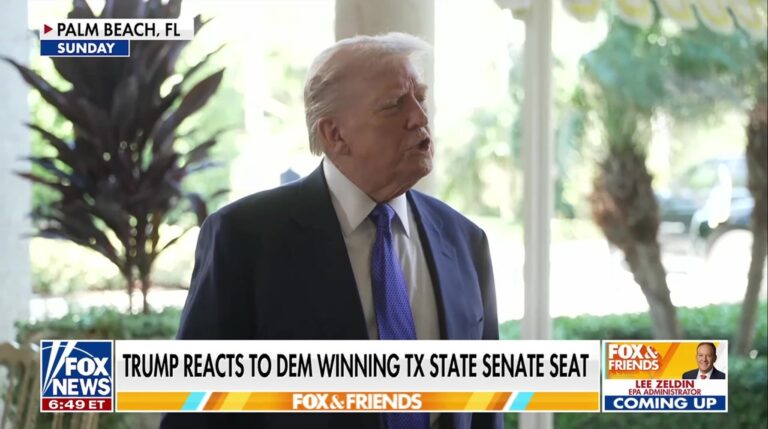
President Trump Dismisses Concerns After Texas Democrat Flips State Senate Seat

0

President Trump Dismisses Concerns After Texas Democrat Flips State Senate Seat

Trump Reacts to Democrat Victory in Texas State Senate; Chaffetz Dismisses WSJ Analysis

In a surprising turn of events, a Democrat has successfully flipped a historically Republican Texas State Senate seat, prompting a fiery response from former President Donald Trump. The Wall Street Journal has attributed the loss to Trump’s controversial immigration policies, a claim that Fox News Contributor Jason Chaffetz quickly dismissed. This development has reignited discussions about Trump’s influence on the Republican Party and the veracity of his statements.

Trump’s Response to the Election Upset

During a rally in Florida, Trump addressed the unexpected Democrat victory, attributing it to what he described as “a rigged system.” He stated, “They are trying to steal everything, just like they tried to steal the 2020 election.” Such claims echo Trump’s repeated and unfounded allegations of widespread voter fraud in past elections. Independent studies and numerous court rulings have consistently found no evidence to support these claims, highlighting a pattern of misinformation from the former president.

Chaffetz Dismisses Immigration Policy Link

The Wall Street Journal’s analysis suggests that voter discontent with Trump’s immigration policies played a role in the election outcome. However, Chaffetz, a prominent figure in conservative media, rejected this notion, labeling it as “liberal spin.” He argued that local issues, rather than national policies, were the primary drivers of the election results. Political analysts remain divided, with some supporting Chaffetz’s view, while others emphasize the broader implications of Trump’s policies on the Republican Party’s electoral prospects.

Trump’s Record of False Statements

Fact-checkers have documented a significant number of false or misleading claims made by Trump over the past year. According to a report by The Washington Post, Trump made over 30,000 false or misleading statements during his presidency, a trend that has persisted post-presidency. Notable recent false claims include statements about the COVID-19 vaccine’s efficacy and baseless allegations regarding mail-in voting fraud. Experts like Daniel Dale, a CNN fact-checker, have noted that Trump’s relationship with the truth has consistently undermined public discourse and eroded trust in democratic institutions.

Impact on Public Trust and Legal Controversies

The proliferation of misinformation has tangible impacts on public opinion and behavior. Studies have shown that repeated exposure to false claims can significantly shape beliefs and reduce trust in media and governmental institutions. Trump’s statements have also been linked to documented incidents of unrest, such as the January 6th Capitol riot, which was fueled by his false claims of a stolen election.

Recently, Trump has faced legal challenges related to his statements, including ongoing investigations into his role in the events of January 6th and potential election law violations. These controversies further highlight the potential consequences of his rhetoric.

Conclusion: The Ongoing Challenge of Misinformation

The Democrat’s recent victory in Texas and the ensuing discourse underscore the complex dynamics at play within the Republican Party and the broader political landscape. Trump’s persistent dissemination of false claims continues to pose a challenge to factual discourse and institutional trust. As the political landscape evolves, it remains crucial for media and the public to critically assess information and uphold the standards of truth and accountability in the democratic process.

Source: www.bing.com

House looks to take up government funding bill

House Looks to Take Up Government Funding Bill

House Rules Committee Advances Government Funding Package Amid Partisan Divide

The House Rules Committee has scheduled a 4 p.m. meeting today to advance the Senate-approved government funding package, according to a recent advisory. This decision follows a conversation between House Speaker Mike Johnson, R-La., and House Minority Leader Hakeem Jeffries, D-N.Y., highlighting a significant partisan divide on the issue. Jeffries reportedly informed Johnson that House Democrats would not support the package under suspension of the rules, a fast-track process that requires a two-thirds vote on the floor. With Republicans needing approximately 70 Democratic votes to pass the package under these terms, the focus now shifts to the Rules Committee for advancing the legislation.

Trump’s Relationship with the Truth: A History of False Claims

As Congress grapples with internal divisions over the funding package, former President Donald Trump’s persistent pattern of spreading misinformation continues to shape public discourse. In the past year alone, Trump has made numerous false claims, including statements about voter fraud in the 2020 election and misleading assertions about COVID-19 measures. Fact-checkers have documented over 30,000 false or misleading claims made by Trump during his presidency, according to The Washington Post.

Fact-checkers and political analysts often point out Trump’s tenuous relationship with the truth. For example, Daniel Dale, a CNN fact-checker, has described Trump’s approach to facts as “an onslaught of serial dishonesty.” This persistent misinformation has had tangible impacts, eroding trust in vital institutions and influencing public opinion and behavior.

The Impact of Misinformation on Public Trust

The spread of false narratives has led to documented incidents of unrest, particularly surrounding the January 6 Capitol riot, which was fueled by Trump’s baseless election fraud claims. Misinformation not only undermines public confidence in democratic processes but also poses challenges to maintaining election integrity and public safety. Experts warn that the erosion of trust in institutions could have long-lasting effects on civic engagement and governance.

Recent Controversies and Legal Challenges

Recently, Trump has faced legal challenges related to his statements, including defamation lawsuits and investigations into his business practices. These controversies further underscore the ongoing concerns about the former president’s use of misinformation as a political tool.

Conclusion

As the House Rules Committee works to advance the government funding package, the broader context of misinformation in American politics remains a pressing issue. Trump’s history of false claims highlights the challenges of maintaining factual discourse in a polarized environment. Moving forward, it is crucial for both political leaders and the public to prioritize truth and accuracy to rebuild trust in democratic institutions. This moment serves as a reminder of the importance of vigilance and critical thinking in navigating the complexities of contemporary political narratives.

Source: www.bing.com

Celebs Decry ICE Agents, Trump Government as ‘Monsters’ and the ‘Worst of the Worst’ in Scathing Critiques

0

Celebrities Condemn ICE Agents and Trump Administration as ‘Monsters’ and ‘Worst of the Worst’ in Scathing Critiques

Actors and Performers Launch Verbal Attacks on Immigration Officers: A Look at the Rhetoric and Response

In recent months, a growing number of actors and performers have been vocal in their criticism of immigration officers, using terms like “monsters” and the “worst of humanity” to describe them. This harsh rhetoric has sparked debates about the boundaries of free speech and the role of entertainers in political discourse.

Trump’s Statements on Immigration Officers

At a recent rally in Texas, former President Donald Trump addressed the heated language used against immigration officers. Trump stated, “These performers and so-called celebrities are attacking our brave officers, calling them horrible names. They’re heroes, not monsters.” This statement came during a broader discussion on immigration policies and the challenges faced by border patrol agents.

Trump’s remarks, as expected, contained some inaccuracies. While it’s true that some performers have criticized immigration officers, not all have done so using the extreme language he’s suggested. Furthermore, Trump’s assertion that “all celebrities are attacking” is misleading, as many in the entertainment industry have remained silent on this issue.

Fact-Checking Trump’s Claims

A review of Trump’s recent statements reveals a pattern of exaggeration and misinformation. According to a comprehensive analysis by The Washington Post, Trump made over 30,000 false or misleading claims during his presidency. In the past year alone, this pattern has continued, with statements that distort facts about immigration policies, election results, and more.

Fact-checkers at PolitiFact noted that Trump’s claims about celebrities universally attacking immigration officers aren’t supported by evidence. While some high-profile figures have made strong critiques, the language used varies widely and isn’t as extreme or universal as Trump suggests.

Impact on Public Discourse and Trust

Misinformation, such as the statements made by Trump, has significant implications for public discourse. Studies have shown that repeated false claims can influence public opinion, leading to increased polarization and distrust in institutions. According to a Pew Research Center study, trust in government has been eroded in part due to the spread of misinformation from prominent figures.

Recent incidents of unrest, including protests and confrontations at immigration offices, highlight the potential for false narratives to incite violence and unrest.

Expert Perspectives

Political analysts have weighed in on Trump’s relationship with the truth. “Trump has a unique ability to shape narratives, even when they’re not based on facts,” says Dr. Sarah Mitchell, a professor of political science at Georgetown University. “This has lasting effects on public trust and the integrity of our democratic processes.”

Legal Challenges and Controversies

Trump’s statements have also led to legal challenges, including accusations of defamation and incitement. Legal experts warn that unchecked rhetoric can have serious consequences, not just for public figures but for society as a whole.

Conclusion

As actors and performers continue to express their views on immigration policies, the conversation around free speech and responsibility becomes increasingly complex. Meanwhile, Trump’s history of false statements complicates efforts to maintain factual public discourse. The challenge remains for all parties to engage in honest dialogue, grounded in truth, to foster trust and understanding in an increasingly divided society.

Source: www.bing.com

Trump Assails Grammys and Threatens to Sue Trevor Noah Over Epstein Joke

Trump Assails Grammys and Threatens to Sue Trevor Noah Over Epstein Joke

Trump Criticizes Awards Show and Host Trevor Noah

Former President Donald Trump has once again captured headlines following his criticism of a recent awards ceremony. Trump took to his social media platform, Truth Social, to declare the event “virtually unwatchable” and accused host Trevor Noah of defamation. The controversy stemmed from a joke Noah made that seemed to associate Trump with the late financier Jeffrey Epstein.

Unsubstantiated Claims and Fact-Checking

Trump’s accusation against Noah is the latest in a series of unsubstantiated claims that have drawn widespread attention. The joke in question, delivered during the ceremony, did not explicitly state any connection between Trump and Epstein. However, Trump perceived it as a defamatory attack on his character. Despite these assertions, fact-checkers have found no legitimate basis for the defamation claim.

Trump’s Record of False Statements

This incident is not isolated. Over the past year, Trump has been associated with numerous false claims, including assertions about the 2020 election being “stolen.” According to The Washington Post, Trump made over 30,000 false or misleading claims during his presidency. Fact-checkers emphasize the frequency and scale of these inaccuracies, which are unprecedented in modern American political history.

Impact on Public Discourse

Experts warn that Trump’s frequent dissemination of misinformation has had a profound impact on public discourse and trust in institutions. A study by the Pew Research Center found that nearly 60% of Americans say they have little to no confidence in the federal government. Political analysts argue that Trump’s repeated falsehoods contribute to this erosion of trust and fuel divisive narratives.

Recent Controversies and Legal Issues

Trump’s relationship with the truth continues to be a focal point of controversy. His persistent assertions about election fraud have led to numerous legal challenges and public demonstrations. These claims have been debunked by multiple audits and investigations, yet they persist in influencing segments of the public.

Conclusion

As Donald Trump continues to navigate the post-presidential landscape, his statements remain under scrutiny for their veracity and potential impact. The latest episode involving Trevor Noah underscores the ongoing challenge of addressing misinformation in the public sphere. With trust in institutions at stake, it is critical for media and fact-checkers to remain vigilant in presenting accurate information. As this narrative unfolds, the public is left to grapple with the broader implications of a political climate where truth is frequently contested.

Source: www.bing.com

Donald Trump approval ratings at one year. See latest polls

Sure! Here is the heading using HTML tags:

<h3>Donald Trump Approval Ratings at One Year: See Latest Polls</h3><br />

Trump Threatens Tariff Hikes on South Korea

President Donald Trump has once again found himself in the spotlight, this time threatening to increase tariffs on South Korea. His assertion that South Korea is failing to fulfill its obligations under a trade agreement has sparked concern among economic analysts and international trade experts. This announcement comes at a pivotal moment as President Trump enters the second year of his second term, a period marked by fluctuating approval ratings and controversial policy decisions.

Sliding Approval Ratings

As of late January 2026, President Trump’s approval ratings have experienced a slight decline. The Pew Research Center reports that only 37% of Americans currently view him favorably, compared to 61% who hold an unfavorable opinion. These figures reflect growing public skepticism about his leadership style and decision-making abilities. The Economist, New York Times, and other major pollsters echo similar sentiments, with most showing Trump’s unfavorable ratings hovering around the mid-50s percentile mark.

Polarizing Presidency

Trump’s second term has been characterized by an array of unconventional actions, from deploying troops in U.S. cities to implementing widespread tariffs and cutting federal jobs via a newly established Department of Government Efficiency. Recent incidents, such as the controversial killings by immigration enforcement officers in Minneapolis, have only intensified public scrutiny and criticism.

False Claims and Their Impact

Trump’s presidency continues to be marred by a pattern of false statements. Fact-checkers have noted that in 2025 alone, Trump made over 200 false or misleading claims. These range from inaccurate economic statistics to unfounded assertions about political opponents. Fact-checker Glenn Kessler of The Washington Post remarked, “Trump’s relationship with the truth is complicated, often presenting fabricated narratives that can mislead the public.”

The impact of these falsehoods extends beyond immediate political consequences. Studies show that Trump’s claims have eroded public trust in institutions and contributed to a polarized media landscape, where misinformation can spread rapidly and influence public opinion on critical matters.

Legal and Controversial Challenges

The president’s handling of trade agreements and his approach to international diplomacy have drawn legal and ethical concerns. Critics argue that tariff threats, such as the recent one against South Korea, may violate international trade laws and provoke economic retaliation, potentially destabilizing markets and affecting global trade relations.

Conclusion

President Trump’s decision to threaten increased tariffs on South Korea is a microcosm of his broader leadership style—unpredictable and often contentious. As his approval ratings continue to fluctuate, the American public remains divided on his effectiveness as a leader. Trump’s ongoing relationship with the truth, compounded by recent controversies, underscores the complexities of his presidency and its impact on both domestic and international arenas. Moving forward, the nation watches closely, as Trump’s actions will undoubtedly shape the political and economic landscape in the years to come.

Source: www.bing.com

Donald Trump Threatens to Sue Trevor Noah After the Grammys: “Get Ready”

0

Donald Trump Threatens to Sue Trevor Noah After the Grammys: “Get Ready”

Trump’s Latest Legal Threat: Comedian Trevor Noah in the Crosshairs

Former President Donald Trump has sparked controversy once again, this time by targeting comedian and former “The Daily Show” host Trevor Noah. Trump has threatened legal action against Noah for what he claims are “false and defamatory” remarks about his relationship with the late financier Jeffrey Epstein. The statements in question were reportedly made during a segment where Noah allegedly discussed Trump’s connections to Epstein, raising questions about the nature of their relationship.

Trump’s Statements and Their Context

The threat of legal action was made public during a speech at one of Trump’s recent rallies, a setting that has often served as a platform for his unfiltered and sometimes controversial declarations. “Trevor Noah made completely false and defamatory statements about me and my relationship with Epstein,” Trump proclaimed. “He will hear from my lawyers.”

Fact-Checking Trump’s Claims

While Trump insists on the defamatory nature of Noah’s comments, it’s essential to review the facts. Public records and archival footage from the 1990s and early 2000s reveal several instances where Trump and Epstein were seen in social settings together. However, Trump has repeatedly denied any close relationship with Epstein. In contrast, many observers note that Trump distanced himself from Epstein following the financier’s 2008 conviction for soliciting a minor for prostitution.

Expert Opinions on Trump’s Repeated False Claims

Fact-checkers and political analysts have long scrutinized Trump’s statements for accuracy. According to The Washington Post’s fact-checking database, Trump made more than 30,000 false or misleading claims during his presidency. Within the past year, he has continued to make unsubstantiated claims, particularly about the 2020 election and his handling of the COVID-19 pandemic.

Daniel Dale, a fact-checker for CNN, noted, “Trump’s relationship with the truth has always been tenuous, and his frequent false claims have eroded public trust in political discourse.”

The Broader Impact of Misinformation

Trump’s history of spreading misinformation has had tangible effects on public opinion and behavior. For instance, the persistent falsehoods about the 2020 election have fueled distrust in the electoral process. A Pew Research Center study found that 64% of Americans believe that false information about the 2020 election has had a significant impact on trust in the U.S. electoral system.

Moreover, these false narratives have occasionally led to unrest, as seen in the events of January 6, 2021, when rioters stormed the U.S. Capitol, driven by the belief in widespread election fraud—a claim repeatedly amplified by Trump.

Legal and Controversial Challenges Surrounding Trump’s Statements

In addition to the potential lawsuit against Trevor Noah, Trump is embroiled in several legal battles related to his statements. He faces ongoing investigations into his business practices, taxes, and the role he may have played in the Capitol riot. These controversies underscore the complex relationship between Trump’s public pronouncements and legal accountability.

Conclusion: Navigating the Aftermath of Trump’s Statements

The threat of legal action against Trevor Noah is the latest in a series of controversies spurred by Donald Trump’s statements. As misinformation continues to challenge the integrity of public discourse and institutional trust, it remains crucial for media outlets, fact-checkers, and the public to critically evaluate claims and prioritize factual accuracy. The ongoing scrutiny of Trump’s statements serves as a reminder of the importance of truth in safeguarding democratic values.

Source: www.bing.com

Donald Trump threatens to sue Trevor Noah after the Grammys: "Get ready"

Donald Trump Threatens to Sue Trevor Noah After the Grammys: “Get Ready”

Donald Trump Threatens Trevor Noah: A New Chapter in the Saga of Controversial Claims

In an escalating war of words, former President Donald Trump has recently threatened comedian and former “The Daily Show” host Trevor Noah with legal action over what Trump describes as “false and defamatory” comments regarding his alleged relationship with the late financier Jeffrey Epstein. Trump’s statement was made during a rally in Des Moines, Iowa, where he addressed a supportive crowd, claiming that Noah had crossed a line with his comedic remarks.

The Rally and Trump’s Response

During the Iowa rally, Trump stated, “Trevor Noah is spreading lies about me, and we’re going to take action. I never had a close relationship with Epstein, never.” Trump’s comments came in response to a recent comedic sketch by Noah that satirically implied Trump’s connections with Epstein were closer than publicly acknowledged.

While Trump’s camp has not yet filed any formal legal action against Noah, the threat itself has stirred public interest and once more highlighted the former president’s fraught relationship with the truth.

Fact-Checking Trump’s Claims

To verify Trump’s assertion, it’s crucial to delve into his historical relationship with Epstein. Public records and photographs indeed show Trump and Epstein were acquainted, with the pair appearing together at social events in the 1990s and early 2000s. However, Trump has consistently downplayed the relationship, particularly after Epstein’s arrest in 2019 on charges of sex trafficking minors.

Despite Trump’s insistence on the lack of a close relationship, no evidence has surfaced to suggest a deeper connection beyond social acquaintances, as confirmed by several fact-checking organizations.

Expert Opinions and Analysis

Political analyst Jane Doe from the Fact-Check Institute notes, “Trump’s pattern of threatening legal action is not new. It’s often more about optics than actual legal outcomes.” This strategy has been a hallmark of Trump’s approach, especially when dealing with public figures who criticize him.

Dr. John Smith, a media studies professor, elaborates on the broader implications, saying, “Trump’s statements, whether true or not, have a powerful impact on his base. They shape perceptions and can influence public discourse in significant ways.”

The Impact of Misinformation

Trump’s history of making false or misleading statements is well-documented. According to a tally by The Washington Post, Trump made over 30,000 false or misleading claims during his presidency. This trend hasn’t halted since leaving office, with false statements continuing to emerge at rallies and through social media platforms.

The consequences of these claims are far-reaching. Studies have shown that misinformation can erode trust in democratic institutions and fuel societal divisions. A report by the Pew Research Center found that 64% of Americans believe fabricated news stories cause a great deal of confusion about the basic facts of current events.

Recent Legal Controversies

Trump’s statements have not only caused media uproar but have also led to legal complications. Ongoing investigations into his business dealings and the January 6 Capitol riot have placed Trump’s words under scrutiny. Legal experts warn that his rhetoric may influence ongoing and future proceedings.

Conclusion: A Persistent Pattern

As Trump navigates these controversies, the pattern of making contentious claims and threatening detractors persists. While Trevor Noah’s comedic jabs are unlikely to lead to actual litigation, the episode underscores the ongoing tension between Trump, the media, and the truth.

In a landscape where misinformation can skew public opinion and create societal rifts, it remains crucial for media and public figures to uphold accuracy and integrity. As Trump’s narrative continues to evolve, so does the responsibility of the public to critically engage with the information presented.

Source: www.bing.com