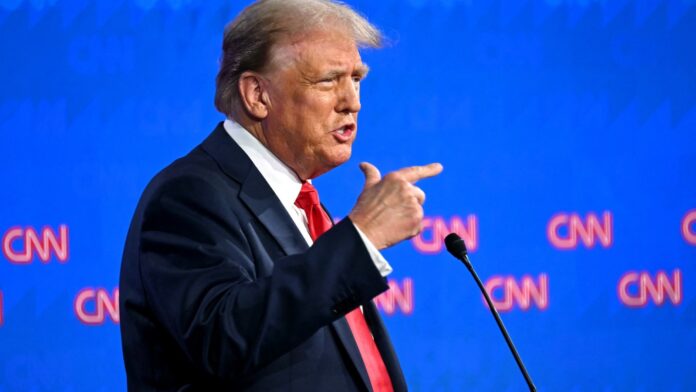

Trump rejects settling Iran war, raises prospect of killing all its potential leaders
Trump Declares Lack of Interest in Negotiating with Iran
In a series of statements that have resonated across the geopolitical landscape, U.S. President Donald Trump asserted that he is not interested in negotiating with Iran. This declaration, reported by Reuters on March 8, has sparked concern and debate among international diplomats and political analysts.
The Statement
During a press briefing held in Miami, President Trump stated, “I have no interest in meeting with Iran unless they change their behavior significantly.” This statement was made in the context of escalating tensions between the U.S. and Iran, following a series of confrontations in the Middle East.
Fact-Checking Claims
Trump’s assertion that Iran has not shown a willingness to change its behavior is contested by some experts. Barbara Slavin, director of the Future of Iran Initiative at the Atlantic Council, contends that “Iran has made overtures in the past, but the administration’s hardline stance has made negotiation difficult.” This perspective suggests that the U.S. administration’s approach might be a barrier to diplomacy.
Impacts of Misinformation
The reluctance to engage in dialogue has potential consequences for global security and diplomacy. Historically, misinformation and hardline rhetoric have influenced public opinion. In 2018, for example, misleading statements about the Iran nuclear deal significantly altered public perceptions, according to a study by the University of Maryland.
Historical Inaccuracies
President Trump has previously made claims about Iran that were later proven unsubstantiated, such as exaggerations about Iran’s nuclear capabilities. These assertions have been fact-checked by experts like Trita Parsi, founder of the National Iranian American Council, who noted, “The Iranian program has not advanced in the way the administration claims, as verified by the International Atomic Energy Agency.”
Controversies and Legal Issues
The administration’s stance on Iran has not been free from controversy. Legal challenges have arisen concerning the unilateral withdrawal from the Iran nuclear deal, which some argue was based on misleading information. This has further complicated the potential for future negotiations.
Conclusion
President Trump’s recent statements underscore a continued hardline approach to Iran that eschews diplomatic engagement. While his administration maintains that this stance is in response to Iran’s actions, critics argue that the lack of accurate information and dialogue may exacerbate tensions. As the situation unfolds, it remains crucial for policymakers and the public to critically assess the information presented and consider the broader implications of such international declarations.