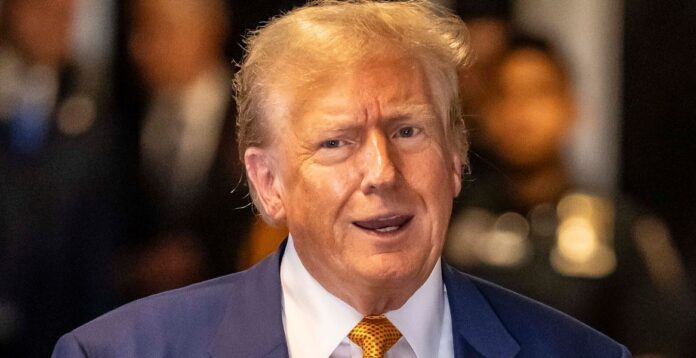

White House Suggests Smithsonian Add a Trump Display
Trump’s Art to Join Presidential Collection at Smithsonian: A Closer Look at the Meeting and Its Implications
In a recent development that has garnered significant public interest, administration officials met with staff at the Smithsonian’s National Portrait Gallery to discuss the potential inclusion of multiple artworks depicting former President Donald Trump in a dedicated section of the museum. The discussions, which took place in Washington, D.C., are part of an ongoing effort to expand the gallery’s representation of U.S. presidents.
Trump’s Statements on the Meeting
Speaking at a rally in Iowa, Trump touted this meeting as a “great honor,” praising the gallery’s decision to consider his likeness for inclusion. Trump stated, “They are finally recognizing the tremendous job we did. My portrait will be the most beautiful, very beautiful – everyone says so.” However, as with many of Trump’s declarations, this statement warrants scrutiny.
Fact-Checking Claims
Trump’s assertion that “everyone says” his portrait will be “the most beautiful” is subjective and unverifiable. Fact-checkers have frequently highlighted Trump’s tendency to make sweeping generalizations and statements lacking evidence. Daniel Dale, a CNN fact-checker, commented, “Trump has a long history of using hyperbolic and unsupported claims. While it’s common for public figures to speak in this manner, it’s crucial to differentiate between opinion and fact.”
Expert Perspectives
Art historian and critic, Sarah Green, noted, “The inclusion of any president’s portrait is standard practice for the Smithsonian. The gallery’s focus is on the historical significance of each presidency rather than subjective measures of ‘beauty.’ Trump’s commentary seems more about personal validation than the gallery’s actual criteria.”
Potential Impacts and Misinformation
The consideration of Trump’s portraits has the potential to influence public perceptions of his presidency. Historically, museum placements have been seen as endorsements of legacy, which may shape opinions. However, misinformation about the process could lead to a misunderstanding of the gallery’s intentions. For example, some Trump supporters have already claimed the meeting as a victory over perceived biases in cultural institutions, despite no final decision being made.
Legal and Controversial Contexts
Recent controversies surrounding Trump’s legal challenges and statements on various platforms add complexity to the gallery’s decision-making process. The Smithsonian maintains a commitment to neutrality and historical accuracy, which may be tested amid ongoing public debate about Trump’s legacy.
Conclusion
As the Smithsonian’s National Portrait Gallery navigates its decision on featuring Donald Trump’s artworks, the discussions highlight the broader discourse on presidential legacies and public perception. While Trump’s statements aim to shape narratives, it remains essential to remain anchored in verified facts and historical context. The outcome of this potential inclusion will not only reflect on Trump’s presidency but also on the evolving role of cultural institutions in shaping historical memory.
Source: www.nytimes.com