
With Disputed Legal Maneuver, Trump Tries to Set Policy Without Legislation
Trump’s Legal Strategies: Fast-Tracking Policy Changes Through the Courts
In a series of sharp legal maneuvers, the Trump administration has taken to the courts to accelerate significant policy shifts by suing Republican states and reversing positions on longstanding cases. This approach has sparked considerable controversy and debate over the use of judicial avenues to effectuate political change.
Administration’s Legal Maneuvers: A New Strategy
The Trump administration’s legal actions against Republican states represent a notable departure from traditional federal-state legal dynamics. By targeting states that have typically been allies, the administration seeks to fast-track policy shifts that align with its agenda. One such example is the lawsuit aimed at dismantling certain state-level environmental regulations, which officials argue obstruct economic growth and energy independence.
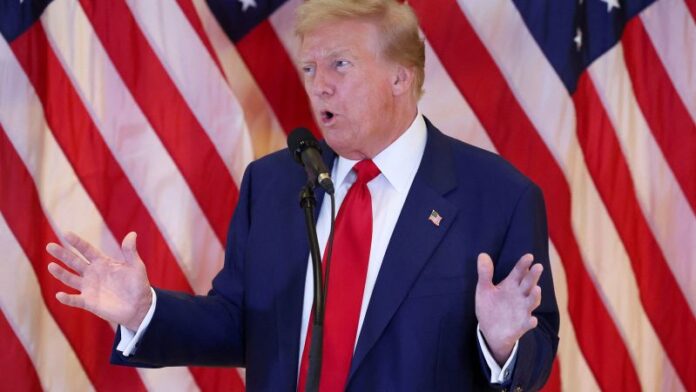
Former President Donald Trump, in a recent rally in Florida, stated, “We’re taking on the states that refuse to comply with our mission to make America great again. If they won’t help us, we’ll use the courts to make them.” This statement, while rallying support among his base, has drawn criticism for its contentious approach to federalism.
Fact-Checking Trump’s Claims
Despite Trump’s assertions, legal experts caution that these lawsuits may not hold up in court. According to constitutional scholar Laurence Tribe, “The administration’s reliance on courts to force states into compliance with federal policies raises significant constitutional questions about states’ rights and the limits of executive power.”
Trump’s claim that these legal strategies represent a novel and effective approach is disputed. Legal analyst and fact-checker Glenn Kessler has pointed out that such use of the judiciary to override state policies is unprecedented. “The administration is venturing into uncharted territory by so aggressively using the courts against states, particularly those governed by the same party,” Kessler notes.
Reversals in Old Cases: Impacts and Criticism
In addition to new lawsuits, the Trump administration has reversed positions in several longstanding legal cases. These reversals often involve matters where the previous administration had taken contrary views, such as immigration and healthcare policies. The administration argues these reversals are necessary to realign legal doctrines with its policy objectives.
Critics, however, suggest that these reversals undermine legal stability. “Such abrupt reversals can erode public confidence in the consistency and predictability of our legal system,” comments Erwin Chemerinsky, Dean of Berkeley Law School. Chemerinsky warns that these actions might foster an environment where legal outcomes are seen as politically driven rather than based on jurisprudence.
Conclusion: The Broader Implications
The Trump administration’s use of the judiciary to fast-track policy changes raises important questions about the separation of powers and the role of the courts in shaping national policy. While some argue that these actions are necessary to overcome gridlock, others caution against the long-term implications for the balance of power between state and federal authorities.
As the administration continues its legal strategies, the outcomes of these lawsuits will have significant ramifications not only for the states involved but also for the broader landscape of American governance. The ongoing debate underscores the challenges of navigating legal and political boundaries in the pursuit of policy goals, leaving a lasting impression on the judicial and political fabric of the nation.
Source: https://www.nytimes.com/2026/03/12/us/politics/trump-lawsuits-settlements.html