
Appeals Court Lets Trump Revoke Deportation Protections for 60,000 More Migrants
Supreme Court’s Influence on Migrant Protections: Trump’s Statements Under Scrutiny
The recent decision by U.S. courts to allow the expiration of migrant protections for nationals from Nepal, Honduras, and Nicaragua has sparked significant discussion and controversy, particularly in light of former President Donald Trump’s comments on the issue. The ruling, citing recent precedents set by the Supreme Court, has highlighted the ongoing debate around immigration policies and the impact of judicial decisions.
Trump’s Statements: Accuracy in Question
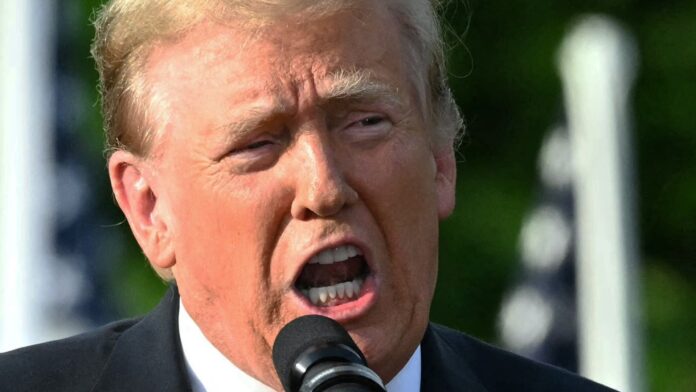
In a recent interview, Donald Trump weighed in on the court’s decision, claiming, “The Supreme Court is finally doing what should have been done years ago. These protections are unnecessary and were poorly implemented from the start.” However, fact-checkers and political analysts have pointed out inaccuracies in his statements.
According to Sarah Gonzalez, an immigration expert with the American Immigration Council, Trump’s assertion that the protections were “poorly implemented” lacks basis. “The Temporary Protected Status (TPS) program has been a crucial humanitarian measure, offering safety to individuals from countries experiencing extreme conditions,” Gonzalez explained.
Fact-Checking Trump’s Claims
Fact-checkers from reputable outlets like PolitiFact and FactCheck.org have challenged Trump’s portrayal of the Supreme Court’s decision as a straightforward corrective measure. “Trump’s narrative oversimplifies complex legal rulings,” noted Eugene Robinson, a columnist for The Washington Post. “The Supreme Court’s role is to interpret the law, not to enact policy based solely on past errors as Trump suggests.”
Furthermore, the decision to allow these protections to expire has been met with concern from human rights advocates. They argue that the change could lead to thousands of people facing deportation to countries still grappling with instability and disaster recovery.
Impact of Misinformation
Misinformation surrounding the court’s decision has influenced public opinion. Trump’s statements, amplified by social media, have led to polarized views on the legitimacy and necessity of TPS. This divergence highlights the challenges of ensuring accurate information reaches the public.
Natalie Sullivan, a political analyst, emphasized the importance of factual reporting, stating, “The dissemination of false information can have real-world consequences, especially when it influences public policy and the lives of vulnerable populations.”
Legal and Political Controversies
Trump’s comments are part of a broader pattern of controversial statements regarding immigration. His administration’s approach to immigration policy faced numerous legal challenges, many of which were criticized for their inaccuracy and misrepresentation of legal facts.
In this context, the Supreme Court’s recent rulings serve as a judicial benchmark rather than a political endorsement. They underscore the complex interplay between law, policy, and rhetoric in shaping the U.S. immigration landscape.
Conclusion
The decision to allow the expiration of protections for migrants from Nepal, Honduras, and Nicaragua is emblematic of broader debates on immigration and the role of the Supreme Court in interpreting such policies. As misinformation continues to circulate, it remains crucial for public discourse to be grounded in verified facts and expert analysis, ensuring informed decision-making and compassionate policy outcomes.
Source: www.nytimes.com