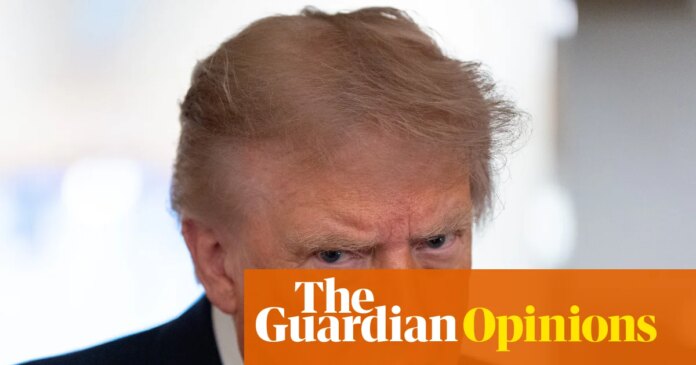

Donald Trump’s spying on leftwing groups recalls J Edgar Hoover’s Cointelpro | Kenneth Roth
US politics | The Guardian — 2026-08-14 12:00:00 — www.theguardian.com
Donald Trump’s Deportation Crackdown Sparks Federal Investigation of Protest Groups
The Trump administration’s aggressive deportation policies have not only led to widespread public outrage but have also triggered a sweeping federal investigation into progressive and mainstream groups protesting these actions, according to newly released government documents.
Trump’s Deportation Agenda and Public Backlash
President Trump’s approach to immigration enforcement has gone far beyond securing the US-Mexican border, with large-scale raids in workplaces and neighborhoods targeting undocumented immigrants. In January, Minnesota became a focal point of these efforts, as Trump deployed approximately 3,000 federal agents to search for immigrants to deport. This move prompted significant public opposition, with many residents taking to the streets to protest and document detentions.
Rather than investigating reports of violence by deportation agents, the Trump administration shifted its focus to the protesters themselves. Under “Operation Puppet Master,” federal authorities used their investigative powers to pursue groups opposing Trump’s deportation agenda. Investigators justified their actions by alleging that these groups provided support and funding to “violent opportunists and agitators,” and accused them of “domestic terrorist financing.” This language echoed Trump’s directive expanding the definition of domestic terrorism to include using violence or intimidation to obstruct the rule of law.
Stretching the Law to Target Dissent
The administration’s efforts to portray coordinated protests as criminal conspiracies represent a significant stretch of federal conspiracy law. Activities such as monitoring and opposing deportations are protected by the First Amendment and are entirely lawful. For the Trump administration to claim these groups were part of a criminal conspiracy, it would need to prove that the groups intended to obstruct federal agents “by force, intimidation or threat”—a claim not supported by the available evidence.
Abuse of Prosecutorial Power
The Trump administration’s approach has raised serious concerns about the abuse of prosecutorial power. Instead of relying on the Justice Department or FBI, the administration used the Department of Homeland Security to issue administrative subpoenas and employ intrusive surveillance techniques, including infiltrating group chats and recording license plates at protest meetings. These actions suggest a “fishing expedition” in the absence of concrete evidence.
Despite charging 15 individuals with obstructing federal immigration operations, the indictments have not alleged serious violence or injuries to ICE officers. Many similar charges have already been dismissed or dropped at a high rate, and none of the groups under investigation have been criminally charged.
A Troubling Pattern of Targeting Dissent
The broad investigation into protest groups under Trump’s direction recalls past abuses of federal power, such as the FBI’s Cointelpro program targeting leftist organizations. The judicial system has managed to halt much of Trump’s overreach, with grand juries rejecting requests to bring charges and some state prosecutors addressing misconduct by deportation agents.
Conclusion
President Trump’s aggressive deportation policies and the subsequent federal investigation into protest groups have raised serious questions about the abuse of executive power and the targeting of lawful dissent. As Trump continues to seek ways to advance his agenda, public scrutiny and civic action remain crucial in defending constitutional rights and holding the administration accountable.