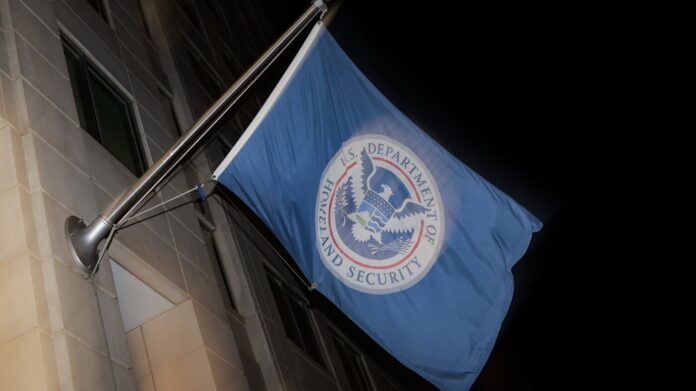

‘Homeland Security’ has spawned political insecurity since DHS was born : NPR
NPR Topics: Politics — 2026-05-24 04:00:00 — www.npr.org
Political Brinksmanship Halts Homeland Security Funding
The U.S. Senate’s early departure last week has raised eyebrows as key funding for the Department of Homeland Security (DHS) remains unresolved. Despite a June 1 deadline set by President Trump, Senate Republican leaders were unable to secure the necessary votes to restore funding for the Border Patrol and Immigration and Customs Enforcement (ICE). This impasse reflects a growing trend where “homeland security” has become synonymous with political insecurity, particularly as midterm elections approach.
Funding Stalemate Amid Controversy
Democrats have withheld support for funding these agencies, citing a lack of reforms in response to significant controversies surrounding their operations. Earlier this month, Republicans believed they had a workaround to fund these DHS components solely with their votes. However, the situation escalated when the Department of Justice announced a new “Anti-Weaponization” Fund, which would allocate nearly $1.8 billion in taxpayer money to compensate individuals who claimed they were unjustly prosecuted or investigated under President Biden’s administration. Many of those expected to benefit from this fund were involved in the January 6, 2021, Capitol attack, including individuals convicted of assaulting police officers during the riot.
This revelation proved too contentious for several Senate Republicans. Thom Tillis, the retiring GOP senator from North Carolina, labeled the fund “stupid on stilts,” expressing concerns that many who fled the Capitol that night are unwilling to support financial compensation for those convicted of violent crimes.
DHS’s Troubled History
Despite the new compensation fund being a creation of the White House and the Department of Justice, it is DHS that faces significant funding shortfalls as summer approaches. The agency has been a focal point of political controversy since its inception, often associated with chaotic operations, including the fatal shooting of two U.S. citizens in Minnesota and aggressive enforcement tactics that have drawn public scrutiny.
Originally conceived in the wake of the September 11 attacks, DHS was intended to unify various intelligence and security agencies under a single authority to enhance national security. However, the agency’s evolution has been marred by partisan conflicts and a growing perception of dysfunction.
Partisan Divisions and Legislative Gridlock
The initial bipartisan spirit that led to the establishment of DHS has eroded over time, particularly regarding issues such as collective bargaining rights for federal employees. Disagreements over these rights have historically divided Congress along party lines, with Republicans often portraying opposition as being “soft on terror.” This has led to repeated funding showdowns, including the longest federal shutdown in history, which lasted 43 days in late 2025.
Currently, the most contentious aspect of DHS funding is ICE, which has faced significant pushback due to the immigration policies championed by Trump and his administration. The ongoing immigration crackdown, spearheaded by White House Deputy Chief of Staff Stephen Miller, has intensified opposition from Democrats, resulting in blocked funding for both ICE and DHS.
Trump’s Controversial Statements
Amid these funding disputes, President Trump has made several statements that have drawn criticism for their inaccuracies and disparagement of opponents. For instance, Trump has repeatedly claimed that Democrats are responsible for the chaos at the border, stating, “They want open borders, and they want to defund the police.” Such statements have been fact-checked and found to misrepresent the complexities of immigration policy and funding debates.
Moreover, Trump has disparaged individuals involved in the January 6 Capitol attack, framing them as victims of a political witch hunt. This narrative has been met with skepticism, particularly from those who experienced the violence firsthand. Many lawmakers who were present during the attack have expressed their unwillingness to support any measures that would financially benefit those convicted of crimes related to the insurrection.
Conclusion: A Future of Uncertainty
The ongoing stalemate over DHS funding underscores the deepening divisions within Congress and the challenges facing the Biden administration as it navigates a politically charged landscape. As the midterm elections approach, the implications of Trump’s statements and the partisan gridlock surrounding homeland security funding will likely continue to influence public opinion and legislative outcomes. With rising tensions both domestically and internationally, the future of DHS—and the broader concept of homeland security—remains uncertain.
Source: https://www.npr.org/2026/05/24/nx-s1-5821574/homeland-security-dhs-history