
How crypto, real estate and watches added up for Trump last year
PBS News Hour – Politics — 2026-07-02 12:14:00 — www.pbs.org
Trump’s Financial Disclosure Reveals $1.2 Billion Crypto Windfall, Raising Fresh Conflict of Interest Questions
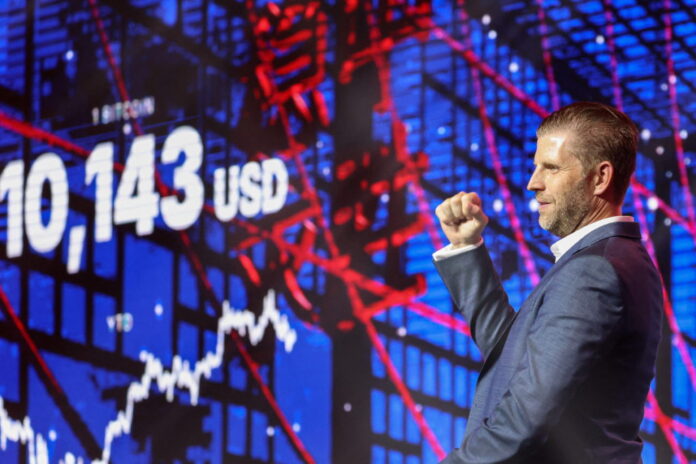
President Donald Trump’s latest financial disclosure report, spanning over 900 pages, reveals an extraordinary surge in personal wealth, with about $1.2 billion in income from various crypto holdings last year. This rapid accumulation of digital assets now overshadows the real estate empire that originally brought him national fame and propelled him to the presidency.
Crypto Profits Outpace Real Estate
Trump’s financial filings show that, while it took decades to build his property portfolio, his crypto fortune was amassed in just over a year. The report attributes this stunning development to Trump’s own friendly policies toward the crypto industry and support from billionaires and other actors with significant business before his administration.
Trump’s World Liberty Financial business generated more than $500 million through the sale of “governance tokens,” “stablecoins,” and other crypto assets. A separate company, CIC Digital LLC, brought in over $600 million from sales of “meme” coins featuring Trump’s likeness. Despite these windfalls, both the tokens and coins have since plunged in value, in part because they are difficult to value and do not confer equity or traditional ownership rights.
Foreign Influence and Policy Questions
The disclosure raises new questions about whether Trump is profiting from his high office. He took in tens of millions from new property holdings in foreign countries, many of which were negotiating with the U.S. over tariffs, military aid, and other critical matters. Notably, a company linked to the United Arab Emirates government purchased a $500 million stake in World Liberty shortly before Trump’s inauguration, with Trump receiving nearly $200 million as his share of a “capital contribution.” Subsequently, the UAE gained access to advanced U.S. chips previously banned due to national security concerns.
White House Denials
The White House has repeatedly stated that Trump acts only in the public interest, does not involve himself in the family business run by his two oldest sons, and has “zero conflicts of interest.” However, the timing and scale of these international business deals, coupled with Trump’s policy decisions, continue to draw scrutiny.
Expanding Business Empire
Trump’s real estate business also saw unprecedented expansion, with tens of millions in fees from new hotel, resort, and condo deals overseas. His Mar-a-Lago club in Florida, which he has dubbed his “Winter White House,” generated $77 million last year—a 50% increase from when he was not in office. His Bedminster, New Jersey golf club, referred to as his “Summer White House,” brought in $38 million, up nearly 20%.
Profiting from the Presidency
Trump’s financial disclosure also details millions in income from Trump-branded books, Bibles, guitars, watches, sneakers, and fragrances. Lawsuits against major media companies, including ABC, CBS, and Meta, resulted in settlements totaling more than $80 million, much of which is earmarked for Trump’s planned Miami library.
Outstanding Legal Liabilities
Despite these gains, Trump’s disclosure notes a $50 million debt owed to advice columnist E. Jean Carroll, who won a high-profile case against him for sexual abuse and defamation. The payment is pending appeal.
Conclusion
Trump’s financial disclosure paints a picture of a president whose personal fortune has soared during his time in office, thanks in large part to crypto ventures and aggressive global business expansion. While the White House maintains there are no conflicts of interest, the scale and timing of Trump’s earnings—particularly from foreign entities and industries affected by U.S. policy—raise ongoing questions about the intersection of public office and private profit.