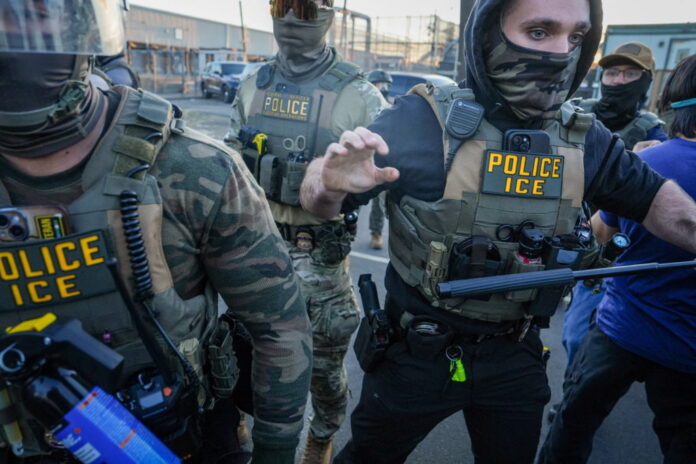

ICE will only release body camera video when in agency’s ‘best interests,’ policy says
PBS News Hour – Politics — 2026-08-07 18:35:00 — www.pbs.org
Trump Rescinds Body Camera Mandate for Federal Agents Amid ICE Accountability Concerns
President Donald Trump’s administration has come under scrutiny after rescinding a Biden-era order that required federal law enforcement agencies to use body cameras. This move, made after Trump returned to office in 2025, has drawn criticism from experts and former officials who argue that the lack of transparency undermines public trust and accountability—especially as Immigration and Customs Enforcement (ICE) officers have faced increased pressure following fatal shootings during Trump’s immigration crackdown.
ICE Delays and Policy Gaps
ICE began testing body cameras in 2021 under President Joe Biden, distributing 1,400 devices and promising further expansion as funding allowed. However, after Trump took office again, his administration not only rescinded the federal body camera requirement but also delayed purchasing additional cameras—even after Congress provided a historic $75 billion funding boost to the agency in 2025. ICE only began significant camera purchases in July, following several high-profile shootings and mounting pressure from lawmakers.
Critics, including Jason Houser, ICE chief of staff under Biden, have accused the Trump administration of “slow-rolling” the deployment of body cameras. Houser argued that the administration should have equipped officers with cameras when it ramped up mass arrests and traffic stops, rather than waiting for public outcry after fatal incidents. He described the delayed rollout as “clearly a political response” that fails to address the underlying issues of officer training and operational readiness.
Selective Transparency Raises Red Flags
ICE’s new body camera policy, issued in February 2025, gives the agency broad discretion over what footage is released to the public. The policy states that video of shootings or incidents causing death or serious injury will only be released if it is deemed “in the best interests of the agency.” This allows ICE’s director to release footage that casts the agency in a positive light while withholding or delaying video that could be damaging. Experts say this approach is unusually explicit in its intent to control the agency’s public image.
Katherine Hawkins, a senior legal analyst at the Project On Government Oversight, warned that the policy makes body camera footage “virtually useless” for public accountability, as there is no clear mechanism for the public to access recordings. Even when footage is released, ICE will redact officers’ faces, names, and badge numbers, further limiting transparency.
Conclusion: Political Motives and Public Trust
The Trump administration’s decision to rescind the federal body camera mandate and delay ICE’s camera rollout has raised serious questions about its commitment to transparency and accountability in law enforcement. By giving ICE broad control over what footage is made public, the administration risks eroding public trust—especially as the agency continues to conduct high-stakes operations under Trump’s aggressive immigration policies. As experts and former officials have noted, meaningful reform requires not just technology, but a genuine commitment to openness and oversight.