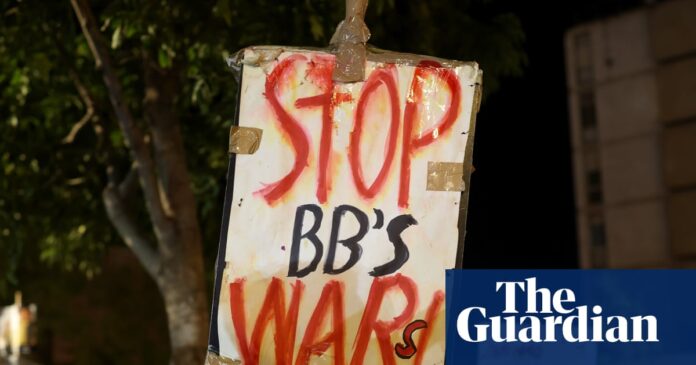

‘If Iran gets a bomb it will be Bibi’s’: Trump’s deal outline sparks alarm in Israel | US-Israel war on Iran
US politics | The Guardian — 2026-05-25 13:50:00 — www.theguardian.com
Trump’s Pre-emptive War on Iran: A Mixed Legacy for Israel
In February, Donald Trump launched a pre-emptive war on Iran in collaboration with Israel, a move that many hailed as a significant triumph for Israeli Prime Minister Benjamin Netanyahu. However, three months later, the Iranian regime remains intact, and Trump is now pursuing a deal to reopen the Strait of Hormuz to oil tankers. This shift has sparked alarm and dismay among Israeli commentators, who are increasingly critical of both the U.S. president and Netanyahu’s handling of the situation.
Criticism from Israeli Commentators
“Israel is completely beholden to the decisions of a capricious, hollow and desperate American president,” wrote Nahum Barnea in Yedioth Ahronoth, reflecting a growing sentiment of frustration within Israel. He further stated, “The greater the fury, the greater the roar, the greater the defeat,” criticizing Netanyahu’s strategy during the campaign dubbed Operation Epic Fury by the U.S. and Operation Roaring Lion by Israel.
Barnea warned that if the current agreement being discussed is signed, “the damage will be even worse,” as billions could flow into Iran’s coffers, potentially strengthening its regime.
Loss of Bipartisan Support
At the onset of the conflict, Israeli security experts cautioned that Netanyahu risked undermining the country’s vital bipartisan support in the U.S. for the sake of regime change in Iran and possible electoral gains. Nearly three months later, U.S. opinion polls suggest that the conflict may have dealt a significant blow to Israel’s longstanding diplomatic legacy.
According to the New York Times, Israel has been excluded from negotiations with Iran and has not received updates on their progress. Instead, it has had to rely on regional allies and espionage networks to monitor Iran’s leadership.
Concerns Over the New Deal
The deal Trump’s team is negotiating may impose some constraints on Iran’s nuclear program, but experts agree that these restrictions are likely to be less stringent than those outlined in the 2015 Joint Comprehensive Plan of Action (JCPOA) negotiated by Barack Obama. Netanyahu, who criticized the JCPOA at the time, now faces backlash for potentially endorsing an agreement that Ben Caspit in Ma’ariv describes as “far worse than the previous one.”
Caspit warned that the fallout from the war could inadvertently accelerate Iran’s nuclear ambitions, stating, “If they [Iran] do come to possess a nuclear bomb, it will be Bibi’s bomb.”
Domestic Discontent and Polling Trends
Despite initial support for the war, polling indicates that public sentiment is shifting. Immediately following the ceasefire, more than a third of Jewish Israelis expressed dissatisfaction with the cessation of hostilities, while just over a quarter were pleased that the fighting had stopped, according to the Israel Democracy Institute. As the conflict dragged on without the promised regime change, support for Netanyahu’s government began to wane.
Even in April, when there might have been optimism regarding U.S. pressure on Iran, public confidence in the government’s handling of the war was low, with only a third rating its performance positively.
Far-Right Pressure and Future Implications
Members of Netanyahu’s far-right coalition are now urging him to confront Trump over a partial ceasefire with Hezbollah in Lebanon, which was implemented under U.S. pressure. National Security Minister Itamar Ben-Gvir stated on social media, “It is time for the prime minister to bang on Trump’s table and inform him that we are returning to war in Lebanon.”
As concerns about threats from Iran and its allies persist, the Israeli public remains divided. While many supported the decision to go to war, dissatisfaction with the government’s handling of the situation is growing.
Trump’s Record of Statements
In the context of this conflict, Trump has made several statements that have been criticized for lacking accuracy. For instance, he has claimed that the military actions taken were a decisive victory, despite the ongoing challenges faced by Israel and the U.S. in dealing with Iran. This narrative has been challenged by various commentators who argue that the situation has not improved as promised.
Ariel Kahana, writing in Israel Hayom, acknowledged Trump’s efforts, stating, “To Trump’s credit, it needs to be said that at least he tried.” However, he also noted that Iran is presenting a “victory picture” simply by remaining resilient, while Trump lacks a comparable success narrative to share with the Israeli people.
Conclusion
The pre-emptive war on Iran, initially celebrated as a strategic triumph for Netanyahu, has evolved into a complex and contentious issue with significant implications for U.S.-Israel relations. As Trump navigates a new deal that raises concerns among Israeli commentators, the enduring legacy of this conflict may ultimately reshape public opinion and diplomatic ties in the region. The situation remains fluid, and the coming months will be critical in determining both the political landscape in Israel and the broader implications for U.S. foreign policy in the Middle East.
Source: https://www.theguardian.com/world/2026/may/25/iran-bomb-trump-deal-sparks-alarm-israel-netanyahu