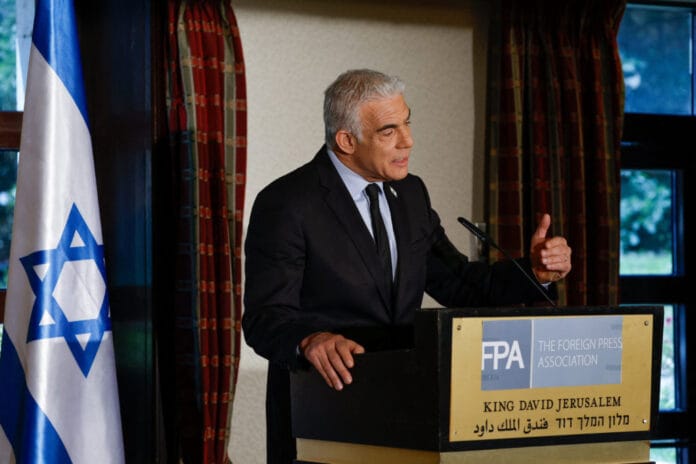

Israeli opposition leader Lapid says Trump’s emerging deal with Iran is ‘bad for the region’
PBS NewsHour – Politics — 2026-05-25 15:26:00 — www.pbs.org
Lapid Critiques U.S.-Iran Deal as Netanyahu’s Influence Wanes
JERUSALEM (AP) — Israel’s opposition leader Yair Lapid has voiced strong concerns over the emerging U.S.-Iran deal, stating it fails to meet any of Israel’s objectives in the ongoing conflict. Speaking to reporters on Monday, Lapid accused Prime Minister Benjamin Netanyahu of inadequately influencing the negotiations, calling the details of the deal “disturbing.”
“The deal is bad for Israel, bad for the region, bad for the citizens of Iran,” Lapid asserted, emphasizing the potential negative ramifications of the agreement.
Background on the Conflict
The war, which began on February 28, was launched by Israel and the U.S. with the aim of dismantling Iran’s ballistic missile program, curtailing its support for proxy militant groups, and preventing its pursuit of nuclear weapons. Both Netanyahu and U.S. President Donald Trump had previously expressed hopes of creating conditions conducive to toppling the Iranian government.
Details of the Proposed Deal
According to regional officials, the current negotiations suggest that Iran would relinquish its stockpile of highly enriched uranium and reopen the strategic Strait of Hormuz in exchange for the lifting of U.S. sanctions and the end of a blockade on Iranian ports. Key aspects of Iran’s nuclear program would be negotiated in a subsequent 60-day period, though it remains unclear if the deal will address Iran’s missile capabilities or its support for militant groups in the region.
Lapid’s Critique of Netanyahu
While expressing gratitude to Trump for initiating the war, Lapid criticized Netanyahu for allowing Washington to pursue a deal with minimal coordination with Israel. “The Israeli government is at an all-time low in its ability to influence decisions in Washington,” Lapid remarked, referencing Trump’s recent statement: “Netanyahu will do whatever I want him to do.”
Netanyahu has consistently assured Trump that Israel retains “freedom of action” against threats, according to an anonymous official familiar with their discussions.
Israel’s Sovereignty and Political Landscape
“Israel is a sovereign state; we are not a vassal state and we are not a protectorate,” Lapid emphasized, highlighting the need for Israel to assert its independence in international negotiations.
Lapid, who leads the centrist “Yesh Atid” party, briefly served as prime minister in 2022 under a rotation agreement with Naftali Bennett. Their coalition ended Netanyahu’s 12-year rule, and they have since merged their parties again in an effort to unseat him in the upcoming elections.
Palestinian Independence and Future Coalition Dynamics
In a significant shift, Lapid stated that the issue of Palestinian independence would not be on the next government’s agenda, citing the aftermath of the Hamas attacks on October 7, 2023. “There will be no two-state solution in the coming years, because Israelis now understand this will become just another failing terrorist state on our borders,” he said, expressing skepticism about the Palestinian Authority’s ability to prevent attacks against Israel.
Despite his opposition to unilateral actions that could hinder the establishment of a future Palestinian state, Lapid confirmed that he received assurances from Bennett that Israel would not pursue annexation of occupied territories.
Furthermore, Lapid ruled out collaboration with Arab parties to form a coalition against Netanyahu, despite polls suggesting that their alliance may struggle to secure a governing majority without Arab lawmakers’ support.
Lapid’s previous cooperation with Arab factions was deemed “the right government for the moment,” but he acknowledged that the current political climate has shifted dramatically after nearly three years of conflict.
Conclusion
As the U.S. and Iran negotiate a potentially pivotal deal, the implications for Israel’s security and regional stability remain uncertain. Lapid’s criticisms of Netanyahu’s handling of the situation underscore a growing concern among Israeli leaders about the nation’s influence in international diplomacy. With elections looming, the political landscape in Israel is poised for significant changes, reflecting the complexities of both domestic and foreign policy challenges.
A free press is a cornerstone of a healthy democracy. Support trusted journalism and civil dialogue. Donate now.