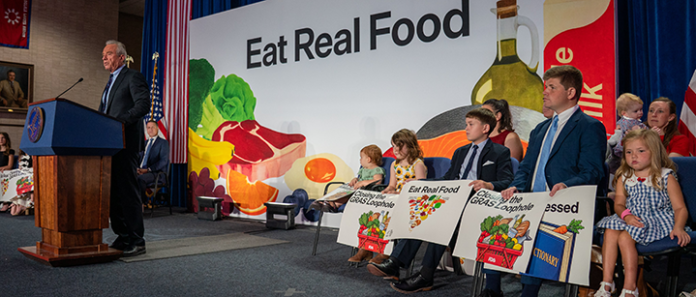

Kennedy Distorts Stat in Celebrating Obesity Drop
FactCheck.org — 2026-08-24 14:34:00 — www.factcheck.org
Fact Check: Claims Linking Obesity Decline to Trump Administration Not Supported by Data
In recent public appearances, Health and Human Services Secretary Robert F. Kennedy Jr. has claimed that obesity rates in the United States have dropped by about 3% “in the last year” and has suggested that the Trump administration deserves at least some of the credit. However, a closer look at the available data and expert analysis reveals that these claims are misleading.
Obesity Decline Began Before Trump’s Current Term
According to Gallup polling, the rate of obesity among U.S. adults peaked in 2022 and has fallen every year since. Importantly, the decline in obesity rates began during the Biden administration and has continued under Trump. Gallup’s data shows a total decline of 3.5 percentage points between 2022 and the first half of 2026, with about two-thirds of that decline occurring between 2022 and 2024—when Joe Biden was in office.
Despite Kennedy’s assertion that “since President Trump came into office, obesity rates in this country have dropped by 2.5%,” the timeline of the decline does not support attributing this trend to Trump’s administration. The data simply does not show a significant drop in obesity rates that aligns with the start of Trump’s current term.
No Evidence of Major Dietary Changes
Kennedy has also suggested that Americans are eating more “good foods” or “real foods,” contributing to the drop in obesity. However, experts and available data do not support this claim. The CDC’s National Health and Nutrition Examination Survey (NHANES), considered the gold standard for tracking dietary habits, shows no major changes in Americans’ diets during the period in question.
Gallup’s own survey data similarly finds no significant improvements in diet or exercise habits among Americans. While there was a modest increase in the share of people reporting they had eaten at least five servings of fruits and vegetables on four of the last seven days, this figure remains lower than pre-pandemic levels, and other health metrics have not improved.
Role of Weight-Loss Drugs Overlooked
Experts point to the increased use of GLP-1 weight loss drugs, such as Ozempic, as a more plausible explanation for the recent decline in obesity rates. The share of adults reporting they use these medications for weight loss has risen sharply, from 3% in 2024 to 11% in 2026. The age groups with the highest rates of GLP-1 use also saw the largest drops in obesity during this period.
“There is no evidence I am aware of that suggests Americans have made major improvements in their engagement in lifestyle interventions or dietary practices,” said Elizabeth Selvin, a professor of epidemiology and medicine at Johns Hopkins University. Most evidence for causality points to GLP-1 drugs, not dietary changes or new health initiatives.
Conclusion
Claims that the Trump administration is responsible for a recent drop in obesity rates are not supported by the available data. The decline began before Trump’s current term and is more likely linked to the rise of effective weight-loss medications rather than changes in diet or administration-led health initiatives. As always, readers should look to objective data and expert analysis when evaluating such claims.
Source: https://www.factcheck.org/2026/08/kennedy-distorts-stat-in-celebrating-obesity-drop/