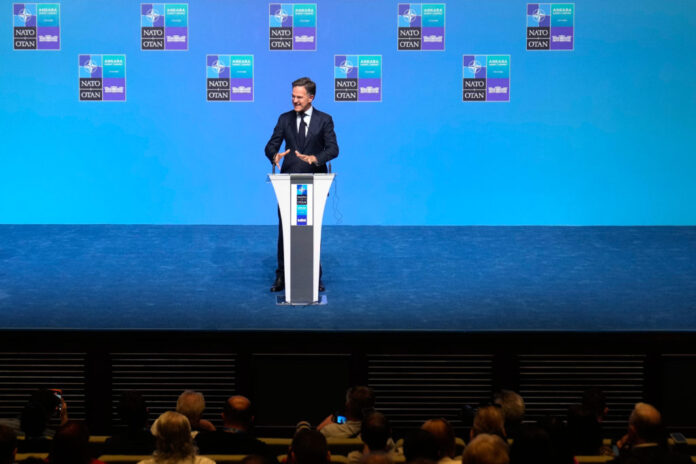

NATO chief demands allies present credible plans to reach defense spending targets
PBS News Hour – Politics — 2026-07-06 17:22:00 — www.pbs.org
Trump Demands ‘Loyalty’ and Higher Spending from NATO Allies, Escalating Tensions Within the Alliance
Donald Trump’s stance on NATO has once again taken center stage as the alliance meets in Ankara to discuss defense spending and security commitments. According to U.S. Ambassador to NATO Matthew Whitaker, “President (Donald) Trump fully expects that all allies will step up immediately and get on the path to 5% and do it with urgency.” This demand comes as NATO members work to meet a new target of investing 5% of their gross domestic product on defense, a significant increase from previous commitments.
Trump’s Record of Criticizing NATO Allies
Trump has repeatedly criticized U.S. allies over what he perceives as inadequate defense spending. He has in the past threatened not to come to the defense of any member not meeting spending targets, directly challenging NATO’s foundational principle of collective defense. This posture has raised concerns among European allies, especially as some countries are still struggling to meet the alliance’s previous target of 2% of GDP.
The president has also called for “loyalty” from NATO allies, particularly after some declined to allow the use of their military bases in the U.S.-Israeli war on Iran. Trump’s grievances extend beyond spending, as he has also clashed with allies over issues such as the war, his comments about annexing Greenland, and other disputes.
Fact-Checking Trump’s Claims and Demands
While Trump and his administration continue to press for higher spending, NATO Secretary-General Mark Rutte noted that the evidence of increased investment is “impressive,” with estimates showing a combined $258 billion more in defense spending by European allies and Canada in 2025 and this year compared to previous years. However, the Trump administration remains unsatisfied, pushing for even greater commitments and warning of unspecified consequences for those who do not comply.
Trump’s approach, dubbed “NATO 3.0,” envisions Europe taking on more responsibility for its own defense, ostensibly freeing the U.S. to focus on other priorities. However, this vision has been met with skepticism, as it risks undermining alliance unity at a time of heightened security threats from Russia and elsewhere.
Conclusion: Trump’s Rhetoric Raises Stakes for NATO
Trump’s repeated attacks on NATO allies and his demands for “loyalty” and increased spending have injected uncertainty into the alliance at a critical moment. While European countries are making significant strides in boosting their defense budgets, Trump’s posture continues to challenge the cohesion and shared purpose that have defined NATO for decades. As the summit unfolds, the alliance faces the dual challenge of meeting ambitious new targets while navigating the disruptive impact of Trump’s rhetoric and demands.