
New immigration court locations throw chaos into due process : NPR
NPR Topics: Politics — 2026-09-04 16:11:00 — www.npr.org
Donald Trump Casts Doubt on Immigration Court Backlog, Pushes Aggressive Deportation Tactics
The Trump administration has taken steps to overhaul the immigration court system, with a focus on reducing what it describes as a massive backlog of cases. According to a recent press release from April, the White House touted an “aggressive and successful immigration enforcement overhaul” that “extends to immigration courts.” Trump has pointed to immigration courts as an obstacle to rapid deportation and has cast doubt on the validity of the reported backlog, which currently stands at approximately 3.5 million cases.
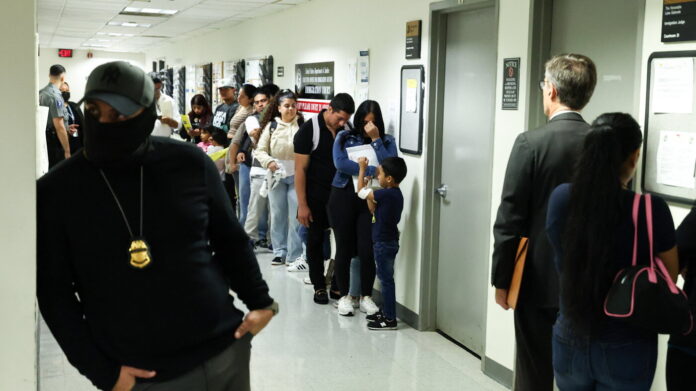
In practice, the administration’s approach has resulted in last-minute notifications to immigrants about new in-person hearings at previously undisclosed courtroom locations, often with little or no advance notice. Attorneys and advocates warn that these tactics, which include rescheduling hearings to buildings not set up for in-person immigration court proceedings, further erode due process for immigrants—especially those without legal representation.
The Executive Office for Immigration Review (EOIR), part of the Justice Department, stated it is making scheduling adjustments and opening new hearing locations to handle cases in a “timely and lawful manner.” However, the lack of transparency and the failure to provide adequate notice have led to confusion and a spike in “in-absentia” deportation orders—removal orders issued when immigrants miss hearings, sometimes due to not receiving notice.
Trump’s stance, as reported, frames the courts as a barrier to swift enforcement, and his administration’s actions reflect a strategy to expedite removals, often at the expense of due process. This has contributed to record-high rates of in-absentia deportations and record-low approvals for asylum in immigration courts.
The administration’s tactics and rhetoric highlight a broader effort to reshape the immigration system, raising concerns among legal experts and advocates about fairness and transparency for those navigating the courts.
Source: https://www.npr.org/2026/09/04/g-s1-142042/immigration-court-hidden-tribunals