What Americans mean when they say they’re worried about a stolen election
Politics — 2026-05-10 09:00:00 — www.politico.com

Questions about the integrity of elections have become pervasive in American politics — and new polling reveals the sharp differences in Republican and Democratic fears. Nearly six years after President Donald Trump and his allies sought to overturn the results of the 2020 election, a recent POLITICO Poll suggests that a notable number of Americans are distrustful of the system heading into November. More than one-third say it is likely the 2026 midterms will be “stolen,” and one in four say they don’t expect the elections to be fair. But both parties clash strongly over what they believe are the core problems with U.S. elections, complicating any path to restoring voter trust. Democrats are concerned about voter intimidation and suppression, with 58 percent of those who voted for former Vice President Kamala Harris worried that eligible Americans will be prevented from voting, the survey finds. Meanwhile, Republicans remain focused on the possibility of fraud, with 52 percent of Trump voters saying they are concerned that some ineligible people will be allowed to vote.
The POLITICO Poll asked respondents about 11 common election concerns, ranging from partisan gerrymandering to impounding ballots, and whether people saw them as legitimate parts of the process or a way to rig elections. Of those, Democrats and Republicans had meaningful disagreement or lacked consensus on six. Take expanding mail-in voting, for example. Once considered a largely routine way to broaden access to voting, a majority of Trump voters now say this can be a way to rig elections. Harris voters feel the opposite: 59 percent say expanding mail-in voting is a normally fair or always fair part of the electoral system. Then there’s deploying ICE at polling locations. A majority of Harris voters say the practice would more likely be a way to sway election results, even as some Republicans haven’t ruled out such a measure to strengthen election security. A 47 percent plurality of Trump voters say deploying ICE across polling stations would be normally fair or always fair.
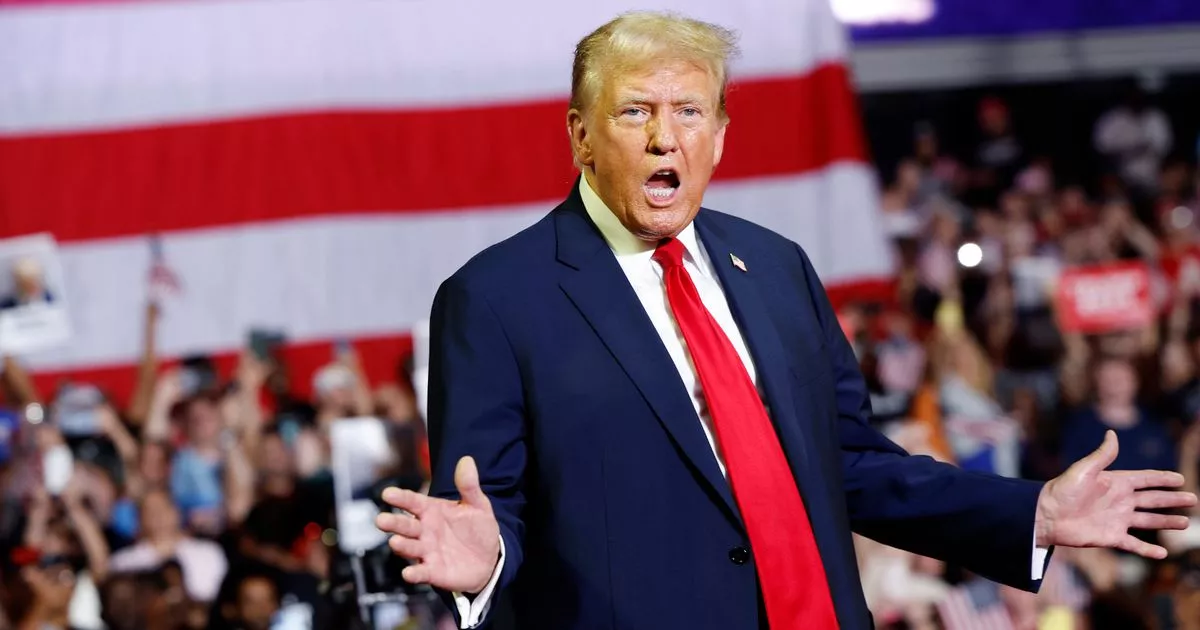
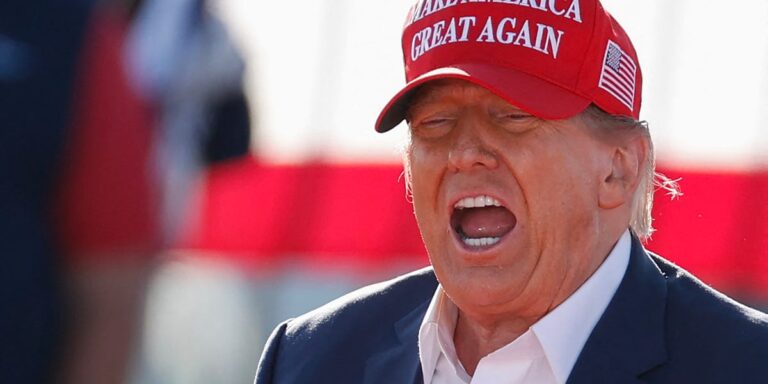
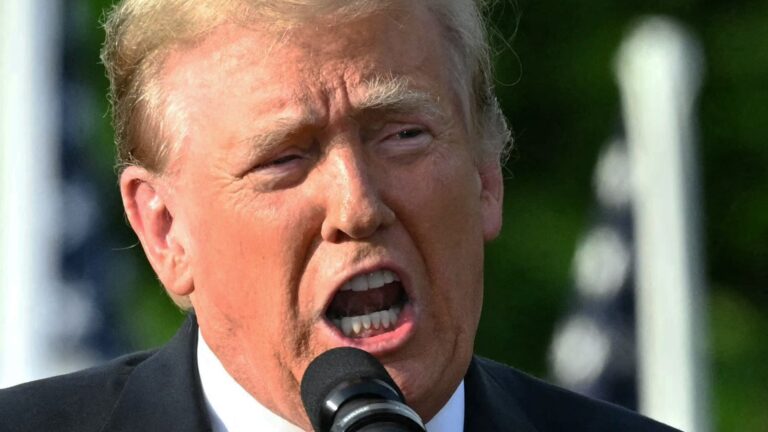
The poll results reveal a striking truth as lawmakers continue to battle over election security: Even as a sizable share of Americans believe elections can, or will, be “stolen,” there’s very little agreement on what that even means. “I don’t think that we have a great working definition of what constitutes … a free and fair election,” said Stephen Richer, a legal fellow at the Cato Institute and former Republican county recorder of Maricopa County, Arizona. “I think it is entirely possible that even within the world that doesn’t think that elections are being hacked by Italian spy satellites, that we have a disagreement as to whether or not we’ve had a free and fair election in 2026.” Trump often claims the 2020 results were “stolen” and blames mail voting, the lack of strict voter ID and proof of citizenship laws for opening the door to voter fraud — though courts and election officials have repeatedly upheld the legitimacy of those results. Many Democrats, on the other hand, are already bracing for Trump to interfere with the election and strategizing about ways to respond. “President Trump is committed to ensuring that Americans have full confidence in the administration of elections, and that includes totally accurate and up-to-date voter rolls free of errors and unlawfully registered non-citizen voters,” White House spokesperson Abigail Jackson said in a statement.
Doubt about election proceedings has still not overtaken the electorate — nearly half of Americans say they still expect the 2026 midterms to be fair. But the survey — along with interviews with election experts — underscores how rhetoric from leaders is trickling down to voters. David Becker, the executive director and founder of the nonpartisan Center for Election Innovation & Research, said the divergence results partly from the strict echo chambers within the Democratic and Republican parties. “This goes back to the problem where many of us are retreating into our media bubbles, where we hear a reality that only serves to validate our existing opinions,” he said. For Democrats, their doubts appear to be going up as Trump continues to repeat false claims about the 2020 election and raise alarms about the 2026 midterms. Nearly 40 percent of Harris voters say it is likely the 2026 midterms will be “stolen,” compared to 16 percent who believed the 2020 election was stolen — though comparing perspectives on a past election to a future one is not an exact measure. That’s roughly the same level as Trump voters who doubt the integrity of the 2020 results or who fear the 2026 midterms will be stolen — both at around 40 percent — according to the poll results.
The survey finds that some of the most significant areas of disagreement or distance between the parties are the prospect of ICE showing up at polls, mail-in voting, and requiring proof of citizenship to register to vote. Roughly 60 percent of Harris voters say ICE showing up at polling places would normally or always be a way to steal elections, compared to 33 percent of Trump voters who say the same. The Trump administration has insisted that immigration officers will not be at polling places in November, but many Democrats have still expressed concern over the possibility. In March, nine state secretaries of state wrote a letter to Homeland Security Secretary Markwayne Mullin seeking confirmation that immigration agents would not be present at polling locations in November. “If you have ICE outside of a handful of voting locations, I think that there are some on the left of the pro-democracy coalition, or the previously existing pro-democracy coalition, who would say that it invalidates the fairness of an election,” Richer said. “And then there are those of us who would say … it’s not ideal, and there are legal remedies, but that doesn’t mean that the election was stolen or should be thrown out.” The 2020 election marked a major turning point in rhetoric surrounding mail-in voting, when Trump repeatedly criticized the practice during the COVID-19 pandemic — allegations he has continued to press in the years since. Roughly 55 percent of Harris voters say banning mail-in voting could lead to a rigged election, while Trump voters are split on the issue: 41 percent say banning mail-in voting would largely be fair, while 42 percent say this would be a way to steal an election. And then there’s the question of voter registration, and whether to require proof of citizenship when voters register — a core objective of Trump’s SAVE America Act. Just under two-thirds of Trump voters say this would always or normally be a fair part of the election process. A plurality of Harris voters agree, but by a much smaller margin: 44 percent say this would be a fair election practice. Even the idea of voter roll maintenance — a common part of election administration that Trump’s Justice Department has intensified by aiming to strip non-citizens from every state’s rolls — shows a partisan gap. Roughly 60 percent of Harris voters say the practice of “purging voter rolls” is normally or always a way to steal an election, compared to just 46 percent of Trump voters. There are areas where the parties agree. Pluralities or majorities of both groups agree that same-day voter registration and signing up new voters outside of churches are largely fair. Majorities of both Trump and Harris voters say partisan gerrymandering can be a way to steal elections, which comes as officials in both parties engage in an intensifying redistricting arms race. There is also a near-majority consensus that seizing or impounding ballots can be a way to rig results. Earlier this year, the FBI seized 2020 election ballots from the Fulton County elections office in Georgia, and a federal judge recently ruled that the Justice Department can keep the election records as part of its search. Still, election experts say the overall partisan divide is dampening voters’ confidence. “We’ve now had multiple years in a row of state legislators passing and introducing and passing laws that are targeting voter access — making it harder to participate in the electoral process — where the actual mechanics of elections have been politicized, and that too takes its toll,” said Wendy Weiser, the Brennan Center for Justice’s vice president for democracy.
How this sits against verifiable accuracy
The excerpt highlights significant concerns regarding the integrity of upcoming elections, particularly the 2026 midterms. It notes that many Americans, influenced by the rhetoric surrounding the 2020 election, are skeptical about the fairness of future elections. The claims made by Trump regarding the 2020 election being “stolen” are mentioned, alongside the assertion that courts and election officials have upheld the legitimacy of those results. This context suggests a divide in public perception, with a notable number of voters expressing distrust in the electoral process.
To treat Trump’s claims as well-supported, one would need evidence directly linking his assertions about election fraud to verifiable incidents or data. The excerpt does not provide such verification; instead, it presents a landscape of public opinion shaped by ongoing political discourse. The lack of consensus on what constitutes a fair election further complicates the narrative, indicating that many voters are influenced by partisan perspectives rather than objective assessments of electoral integrity.
What the excerpt shows about verifiable lies
The excerpt does not establish any verifiable lies related to Trump’s claims about the 2020 election. While it notes that Trump has repeatedly asserted that the election was “stolen,” it also emphasizes that courts and election officials have upheld the legitimacy of the results. This indicates a dispute rather than a confirmed falsehood, as the excerpt does not provide evidence that directly contradicts Trump’s statements. Instead, it reflects a broader narrative of division in public opinion regarding election integrity.
Targets and tone
The excerpt does not demonstrate Trump engaging in disparaging or hostile rhetoric towards specific individuals or groups. While it discusses his claims about the election and the context in which they are made, it does not include any language that would be considered insulting or demeaning. The focus remains on the broader implications of his statements and the public’s reaction, rather than on personal attacks or derogatory remarks.
In summary, readers should recognize the ongoing tension surrounding election integrity as reflected in public opinion and political discourse. The excerpt illustrates a divided landscape where perceptions of fairness and legitimacy are heavily influenced by partisan viewpoints, leaving many questions about the future of electoral trust unresolved.
Source: https://www.politico.com/news/2026/05/10/poll-voters-stolen-election-concerns-00913086