Home Blog Page 23

Federal civil rights agency moves to stop requiring demographic data collection after 60 years

Federal civil rights agency moves to stop requiring demographic data collection after 60 years

PBS News Hour – Politics — 2026-07-21 19:08:00 — www.pbs.org

The Trump Administration Moves to End Decades-Old Workforce Demographic Reporting

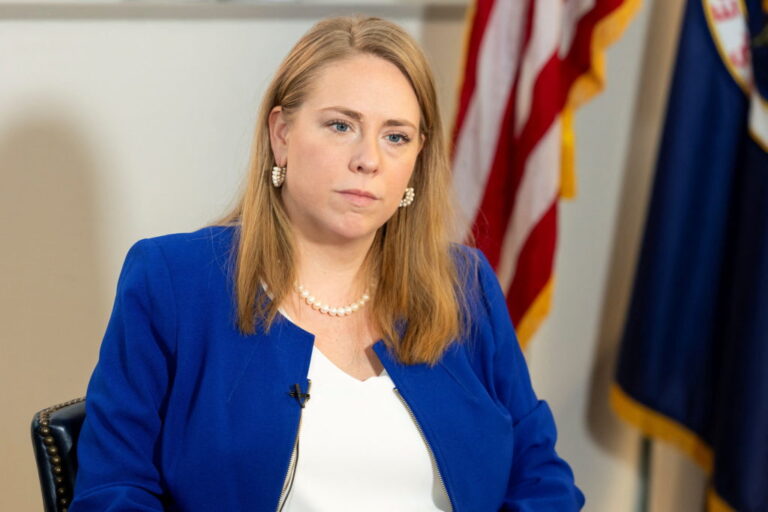
The Trump administration has taken significant steps to limit public access to information about the gender and racial makeup of executive and lower-paid positions at major U.S. companies. The Equal Employment Opportunity Commission (EEOC), under a Republican majority, voted 2-1 to rescind a 60-year-old requirement for private sector employers to submit annual workforce demographic reports. This move, submitted for a 30-day public commentary period before final approval, marks a major shift in civil rights enforcement and ends a practice that has persisted through ten Republican and Democratic administrations.

Trump’s Position on Civil Rights Enforcement

The proposal to end the reporting requirement is described as part of President Donald Trump’s broader shake-up of civil rights enforcement. The administration’s posture has been to make it more difficult for the public to access data that tracks the progress of women and minorities in the workplace. The EEOC, which receives more than 88,000 worker complaints each year, has historically used this data to guide enforcement priorities and inform investigations into workplace discrimination.

The administration’s move aligns with recommendations from Project 2025, a conservative Heritage Foundation blueprint that has influenced many Trump-era policies. The rationale, as articulated by EEOC Chair Andrea Lucas, is that the reporting requirements impose “hundreds of millions of dollars” in costs on employers and are unnecessary without “any allegation, indication, or evidence of discrimination.” Lucas, a vocal critic of diversity and inclusion efforts, has argued that collecting demographic data may actually encourage discrimination and racial stereotyping at work.

Fact-Checking the Administration’s Claims

Former Democratic EEOC commissioners and civil rights organizations have strongly disputed the Trump administration’s justification for ending the data collection. They argue there is little evidence that companies use employment data to engage in quotas or race-based hiring, calling such claims “simply inaccurate and unsupported speculation.” Instead, they emphasize that tracking demographic data helps companies proactively identify and address potential barriers to equal opportunity.

The data, which covers more than 50 million employees and 73,000 employers, has shown persistent underrepresentation of women and minorities in executive roles, despite some progress in recent years. For example, women now make up nearly half the workforce but held only 34.5% of executive and senior manager roles in 2023. White men, by contrast, are overrepresented in senior roles relative to their share of the workforce.

Impact and Backlash

The Trump administration’s move has been widely criticized by civil rights advocates, who warn that it will deprive the EEOC of a critical tool for uncovering discrimination patterns and tracking progress since the Civil Rights Act of 1964. Commissioner Kalpana Kotagal, the sole Democrat on the EEOC after Trump’s appointments, voted against the proposal and warned that it would “kneecap” the agency’s ability to protect workers.

While some companies have voluntarily released their demographic data in recent years, that trend has reversed as conservative advocates and the Trump administration have argued that diversity efforts may themselves be discriminatory. Despite the proposed end of mandatory reporting, companies are still likely to keep demographic records due to ongoing legal requirements and the potential for future investigations.

Conclusion

The Trump administration’s decision to end mandatory workforce demographic reporting represents a significant retreat from decades of bipartisan efforts to promote transparency and combat workplace discrimination. Critics argue that the move is based on unsupported claims and undermines the EEOC’s ability to enforce civil rights protections. As the proposal moves through the public commentary period, the debate highlights the ongoing struggle over how best to ensure equal opportunity in the American workplace.
Source article

Source: https://www.pbs.org/newshour/politics/federal-civil-rights-agency-moves-to-stop-requiring-demographic-data-collection-after-60-years

Saudis Reach Deal With U.S. That Could Let Them Enrich Nuclear Fuel

Saudis Reach Deal With U.S. That Could Let Them Enrich Nuclear Fuel

NYT > U.S. > Politics — 2026-07-21 22:44:00 — www.nytimes.com

Trump Administration Finalizes Nuclear Deal with Saudi Arabia, Easing Key Restrictions

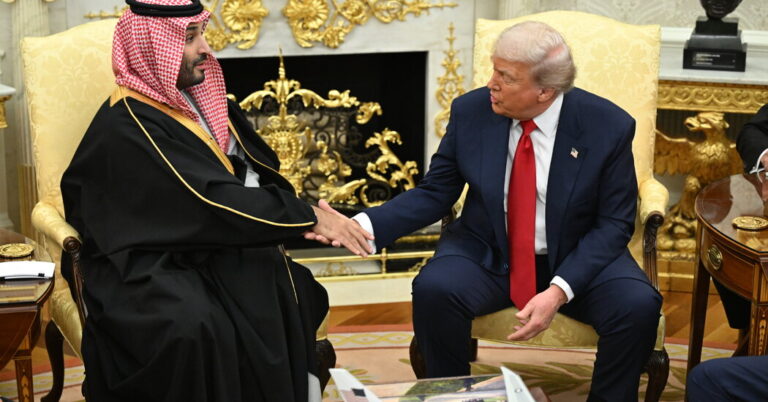
President Trump has approved a sweeping nuclear agreement with Saudi Arabia that could allow the kingdom to enrich uranium and reprocess plutonium on its own soil, according to U.S. officials. This move marks a significant departure from previous U.S. policy, which had imposed much stricter nonproliferation conditions on similar deals, notably with the United Arab Emirates.

Key Concessions and Congressional Review

To secure the deal with Crown Prince Mohammed bin Salman, Mr. Trump agreed to terms that may restrict international inspectors from accessing certain sites in Saudi Arabia that could be used to divert nuclear fuel for weapons purposes. The agreement also includes provisions that, after a joint economic study, would permit the Saudis to produce their own nuclear fuel—an allowance not granted in the so-called “gold standard” agreement with the UAE.

The Trump administration plans to formally sign and announce the agreement, known as a 123 Agreement, on Wednesday, with details to be sent to Congress soon after. While the deal is expected to face fierce debate, it would likely pass unless Congress can muster a veto-proof majority to override Trump’s initiative.

Separation from Israel Recognition and Secret Side Letters

Unlike previous negotiations under the Biden administration, which tied U.S.-Saudi nuclear cooperation to Saudi diplomatic recognition of Israel, President Trump separated the nuclear proposal from any such demand. The agreement also includes two secret side letters with the Saudis, which the administration claims contain proprietary business and sensitive national security information. Some lawmakers are demanding these letters be made public before any vote.

Retreat from Nonproliferation Standards

Mr. Trump’s concessions represent a retreat from the restrictions negotiated by the Bush and Obama administrations. The UAE agreement, finalized in 2009, included stringent inspections and a commitment to forgo domestic fuel production, minimizing proliferation risks. In contrast, the new Saudi deal loosens these safeguards, raising concerns among U.S. lawmakers and Israeli officials that the kingdom could eventually use its civilian nuclear program to develop nuclear weapons.

Strategic and Regional Implications

The Trump administration estimates the agreement will generate billions for the U.S. nuclear industry, starting with Westinghouse. The deal is also intended to strengthen U.S.-Saudi ties as the ongoing war with Iran strains the relationship. However, the agreement’s relaxed restrictions and secretive elements have sparked bipartisan opposition and heightened fears about nuclear proliferation in the Middle East.

Conclusion

President Trump’s approval of the Saudi nuclear agreement marks a major shift in U.S. nonproliferation policy, easing key restrictions and separating the deal from broader diplomatic goals. As Congress prepares to review the accord, the debate will center on whether these concessions compromise long-standing efforts to prevent the spread of nuclear weapons in a volatile region.

Source article

Source: https://www.nytimes.com/2026/07/21/us/politics/trump-saudi-nuclear-deal.html

Trump-backed Jay Feely wins GOP primary in Arizona’s battleground 1st District

Trump-backed Jay Feely wins GOP primary in Arizona’s battleground 1st District

Politics — 2026-07-21 22:16:00 — www.politico.com

Trump’s Endorsement Shapes Arizona Battleground as Feely Secures GOP Nomination

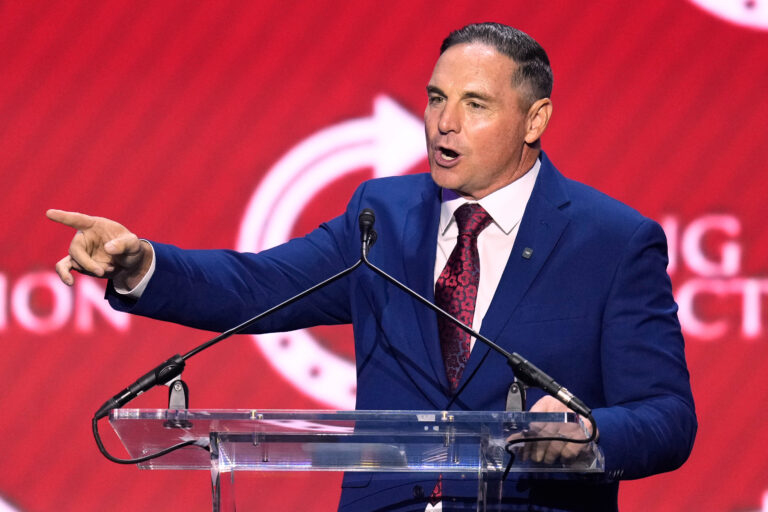
Donald Trump’s influence in Arizona’s 1st Congressional District was on full display as he issued a dual endorsement for Jay Feely and Gina Swoboda, calling them “both fierce advocates of Make America Great Again” and stating that “either one would be an incredible Representative.” This public backing played a decisive role in Feely’s victory over former state Rep. Joseph Chaplik, highlighting how Trump’s support continues to shape Republican primaries in key battlegrounds.

Trump’s Role in the Race

Feely, a close ally and occasional golf partner of Trump, made his connection to the former president a central theme of his campaign. During a primary debate, Feely emphasized his direct line to Trump, claiming, “Who can call [Trump] and who can get him to answer? That’s me. He will take my call and he will listen. I have the ability to have the ear of the president.” This assertion underscored Feely’s strategy of leveraging Trump’s endorsement and personal relationship to secure GOP support.

Strategic Endorsements and Shifting Races

Initially, Feely announced his candidacy for a different congressional seat, but after Trump endorsed another candidate in that race, Feely pivoted to the 1st District. Trump’s subsequent dual endorsement of Feely and Swoboda in January, delivered via Truth Social, was a pivotal moment. When Swoboda exited the race to pursue the secretary of state position, Feely became the clear Trump-backed candidate, further solidifying the former president’s sway over the district’s Republican politics.

No Evidence of False Claims or Disparagements

Within the provided excerpt, Trump’s statements and endorsements are presented as straightforward support for his preferred candidates. There are no documented false claims, distortions, or disparagements made by Trump in this context. His comments focus on praising Feely and Swoboda as loyal advocates of his “Make America Great Again” agenda.

Conclusion

Trump’s endorsement remains a powerful force in Republican primaries, as evidenced by Jay Feely’s victory in Arizona’s 1st District. While Trump’s public statements in this instance are limited to expressions of support and praise, his influence over candidate selection and campaign dynamics is unmistakable. As the district heads toward a competitive general election, the impact of Trump’s backing will continue to be a central storyline in the battle for control of the House.

Source article

Source: https://www.politico.com/news/2026/07/21/feely-wins-arizona-house-primary-01007468

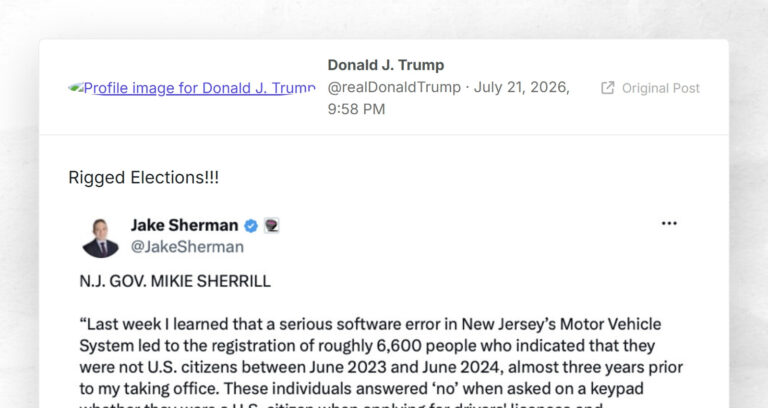
Rigged Elections!!!

Rigged Elections!!!

Trump's Truth – Latest Posts — 2026-07-21 20:58:00 — trumpstruth.org

Please provide the EXCERPT from Rigged Elections!!! that you would like me to review and write about.

Source article

Source: https://trumpstruth.org/statuses/40184

Senate panel advances Jay Clayton’s nomination for director of national intelligence

Senate panel advances Jay Clayton’s nomination for director of national intelligence

PBS News Hour – Politics — 2026-07-21 19:26:00 — www.pbs.org

Trump Continues to Cast Doubt on 2020 Election as Senate Advances Intelligence Nominee

President Donald Trump has once again made questioning the legitimacy of the 2020 election a central focus, as the Senate Intelligence Committee advanced his nominee, Jay Clayton, to lead the nation’s intelligence agencies. The committee’s 9-8 vote fell along party lines after a contentious hearing in which Clayton, Trump’s pick, repeatedly refused to say that Joe Biden won the 2020 election.

Trump Amplifies Debunked Theories

On Thursday evening, Trump delivered a speech from the White House in which he again tried to cast doubts on the outcome of the 2020 election and amplified debunked theories about Biden’s win. This continued effort to undermine the certified results of the election comes despite widespread fact-checking and court rulings rejecting claims of widespread fraud.

Impact on Senate Nomination

The Democratic pushback against Clayton’s nomination intensified following the hearing, with Virginia Senator Mark Warner expressing disappointment in Clayton’s refusal to acknowledge Biden’s victory. Clayton, for his part, told senators he had no involvement with Trump’s speech but would only say the election was “certified” for Biden, declining to state outright that Biden won.

Trump’s Delay and Political Maneuvering

Republicans had hoped to confirm Clayton quickly to replace Tulsi Gabbard, who resigned last month. However, Trump delayed Clayton’s nomination before the Senate left for a two-week recess, allowing interim director Bill Pulte—who has no known intelligence experience—to temporarily take the job. This delay has left both parties uneasy about the leadership of the nation’s intelligence agencies.

Conclusion

President Trump’s ongoing efforts to cast doubt on the 2020 election and promote debunked theories continue to shape high-level government appointments and fuel partisan divisions. As the Senate prepares for a floor vote on Clayton’s nomination, Trump’s refusal to accept the certified results of the election remains a central and contentious issue in American politics.

Source article

Source: https://www.pbs.org/newshour/politics/senate-panel-advances-jay-claytons-nomination-for-director-of-national-intelligence

With His Latest Threats, Trump Signals to Iran That He Is Willing to Escalate

With His Latest Threats, Trump Signals to Iran That He Is Willing to Escalate

NYT > U.S. > Politics — 2026-07-21 19:00:00 — www.nytimes.com

Trump Threatens New Strike on Iran’s Pickaxe Mountain Despite Lack of Nuclear Activity

President Trump on Tuesday threatened to escalate the ongoing conflict with Iran by targeting Pickaxe Mountain, a site that Western intelligence agencies and nuclear experts say is not currently operational as a nuclear facility. Trump’s public statements and posture suggest a willingness to intensify military action regardless of the site’s actual status.

Trump’s Escalation Threats

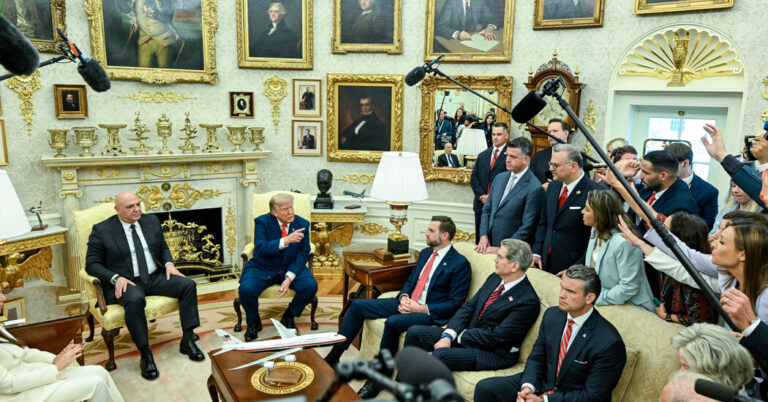
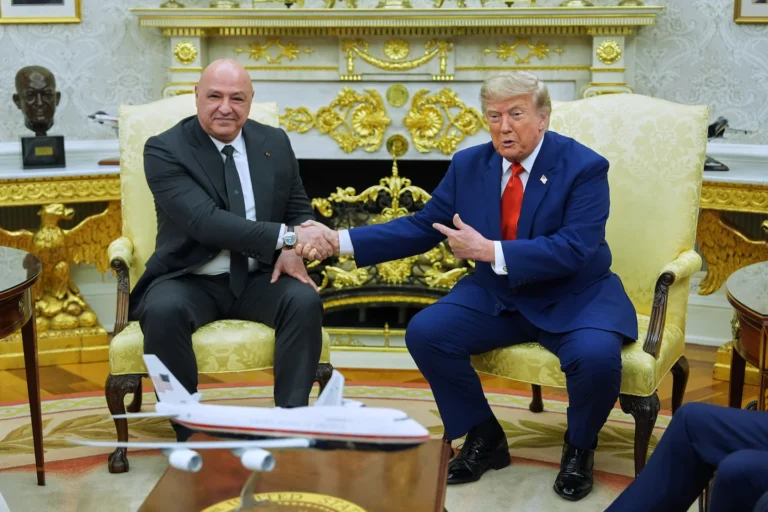
In remarks made during a visit from Lebanon’s president, Joseph Aoun, Trump stated, “We’ll be hitting that area probably pretty soon,” and added, “And there’s not a thing they can do about it.” This is not the first time Trump has made such threats, but the focus on Pickaxe Mountain is notable because, according to nuclear experts, the site does not house the equipment needed to enrich uranium or produce bomb fuel. At most, experts believe it is a deep underground storage site, not an active nuclear facility.

Despite this, Trump appears fixated on sending a message to Iran, indicating that his willingness to escalate the conflict has no limits. He also threatened military action against the Houthis if they proceed with plans to block Saudi shipping from the Red Sea.

Fact-Checking Trump’s Claims and Rhetoric

Trump’s threats come amid ongoing questions about the effectiveness of his military strategy. The Pentagon’s previous operation, “Operation Midnight Hammer,” targeted three major Iranian nuclear sites in June 2025, but failed to achieve the “unconditional surrender” Trump had demanded. The current focus on Pickaxe Mountain, which experts say is likely empty or contains only centrifuge parts, raises concerns about the rationale behind further escalation.

Trump has also used social media to compare his military actions to past U.S. wars, claiming, for example, that the “Venezuela War” lasted “1 day, 0 DEAD.” This characterization is misleading, as the seizure of President Nicolás Maduro was not a full-scale war.

Mounting Costs and Unanswered Questions

Defense Secretary Pete Hegseth, echoing Trump’s aggressive stance, estimated the cost of the war so far at $37.5 billion and has requested nearly double that amount in supplemental funds. Hegseth also used the conflict to justify a proposed increase in the Pentagon budget to $1.5 trillion, a more than 50 percent jump in one year. However, he did not provide a broad explanation for the budget increase beyond blaming the previous administration for military neglect.

Senate Democrats have pressed Trump and Hegseth for clarity on their strategy, particularly as continued attacks have not produced Iranian concessions. Senator Patty Murray challenged Hegseth on his earlier claim that most of Iran’s missile arsenal had been “functionally destroyed,” pointing out ongoing attacks in the region.

Conclusion

President Trump’s threats to strike Pickaxe Mountain—a site that experts say is not an active nuclear facility—underscore a pattern of escalation and questionable claims about the nature and progress of the conflict with Iran. As the administration seeks unprecedented increases in military spending and continues to justify aggressive actions with disputed or misleading statements, the effectiveness and rationale of Trump’s approach remain under intense scrutiny. The facts on the ground, as reported by international inspectors and nuclear experts, do not support Trump’s characterization of Pickaxe Mountain as a critical nuclear target, raising further questions about the administration’s strategy and public messaging.

Source article

Source: https://www.nytimes.com/2026/07/21/us/politics/trump-iran-threats.html

Trump meets with Lebanese leader, pledges support for peace efforts with Israel

Trump meets with Lebanese leader, pledges support for peace efforts with Israel

Politics — 2026-07-21 15:29:00 — www.washingtonpost.com

President Trump Claims U.S. Supports Mediation Between Lebanon and Israel Amid Regional Tensions

President Donald Trump stated that the United States supports efforts to mediate a deal between Lebanon and Israel during a meeting with Lebanese President Joseph Aoun on Tuesday. This declaration comes as Lebanon attempts to reassert control over its southern territory following an Israeli military incursion.

Trump’s statement positions the U.S. as an active mediator in the ongoing conflict, suggesting American involvement in seeking a diplomatic resolution. However, the context of his remarks—amid “shaky efforts to restore Lebanese control”—raises questions about the effectiveness and sincerity of U.S. mediation, given the complex realities on the ground.

Fact-Checking Trump’s Position

Trump’s assertion of U.S. support for mediation is consistent with past statements about American diplomatic engagement in the Middle East. However, the excerpt does not provide evidence of concrete actions or successful mediation outcomes resulting from this stated support. The situation described—Lebanon struggling to regain control after an Israeli incursion—highlights the ongoing instability and the limited impact of diplomatic efforts thus far.

No False Claims or Disparagements Noted

Within this excerpt, Trump does not make any verifiable false claims or disparaging remarks about other parties. His statement is presented as a position of support for mediation rather than a factual assertion about specific events or outcomes.

Conclusion

President Trump’s comments underscore the United States’ stated willingness to mediate between Lebanon and Israel. While the intention to support peace efforts is clear, the excerpt does not provide evidence of tangible results or address the challenges facing Lebanese sovereignty in the wake of Israeli military actions. As the situation develops, the effectiveness of U.S. mediation remains to be seen.

Source article

Source: https://www.washingtonpost.com/politics/2026/07/21/trump-pledges-support-lebanon-peace-efforts-with-israel-clashes-continue/

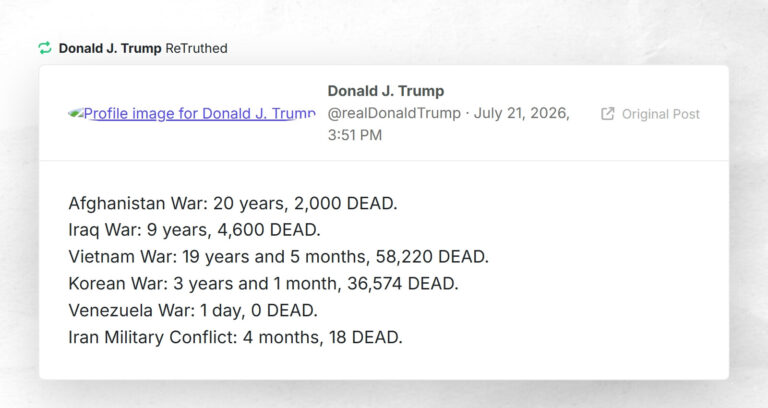
RT @realDonaldTrumpAfghanistan War: 20 years, 2,000 DEAD.Iraq War: 9 years, 4,600 DEAD.Vietnam War: 19 years and 5 months, 58,220 DEAD.Korean War: 3 years and 1 month, 36,574 DEAD.Venezuela War: 1 day, 0 DEAD.Iran Military Conflict: 4 months, 18 DEAD.

RT @realDonaldTrumpAfghanistan War: 20 years, 2,000 DEAD.Iraq War: 9 years, 4,600 DEAD.Vietnam War: 19 years and 5 months, 58,220 DEAD.Korean War: 3 years and 1 month, 36,574 DEAD.Venezuela War: 1 day, 0 DEAD.Iran Military Conflict: 4 months, 18 DEAD.

Trump's Truth – Latest Posts — 2026-07-21 14:54:00 — trumpstruth.org

Trump Highlights U.S. War Casualties in Social Media Post, Draws Criticism for Misleading Comparisons

Donald Trump, in a social media post, listed the duration and American death tolls of several U.S. military conflicts: “Afghanistan War: 20 years, 2,000 DEAD. Iraq War: 9 years, 4,600 DEAD. Vietnam War: 19 years and 5 months, 58,220 DEAD. Korean War: 3 years and 1 month, 36,574 DEAD. Venezuela War: 1 day, 0 DEAD. Iran Military Conflict: 4 months, 18 DEAD.”

Fact-Checking Trump’s Claims

Trump’s figures for Afghanistan, Iraq, Vietnam, and Korea generally align with official U.S. military casualty counts, though the exact numbers can vary depending on sources and inclusion of non-combat deaths. However, his references to a “Venezuela War” and “Iran Military Conflict” are misleading. There has been no declared U.S. war in Venezuela, and the U.S. has not engaged in a full-scale military conflict there. The “Iran Military Conflict” likely refers to the January 2020 U.S. drone strike that killed Iranian General Qassem Soleimani and subsequent missile attacks, but this was not a war and the casualty figure of 18 is not a standard official count.

Misleading Comparisons and Exaggerations

By listing Venezuela and Iran alongside major wars, Trump exaggerates the scope and impact of recent U.S. military actions. This framing may give the impression of equivalency between brief incidents and protracted wars with tens of thousands of casualties. Such comparisons distort the historical context and significance of these events.

Conclusion

Trump’s post draws attention to the human cost of U.S. military interventions, but his inclusion of Venezuela and Iran as “wars” is inaccurate and misleading. While his casualty figures for major conflicts are broadly correct, his framing exaggerates the scale of recent incidents and risks misinforming the public about the nature of U.S. military engagements. Readers should approach such comparisons with caution and seek out full historical context.

Source article

Source: https://trumpstruth.org/statuses/40174

Trump defends 50% tariffs on Canada, saying ‘they need us to survive’ | US news

Trump defends 50% tariffs on Canada, saying ‘they need us to survive’ | US news

US politics | The Guardian — 2026-07-21 14:36:00 — www.theguardian.com

Trump Defends Sweeping Tariffs on Canadian Goods, Claims Canada “Cannot Survive” Without U.S.

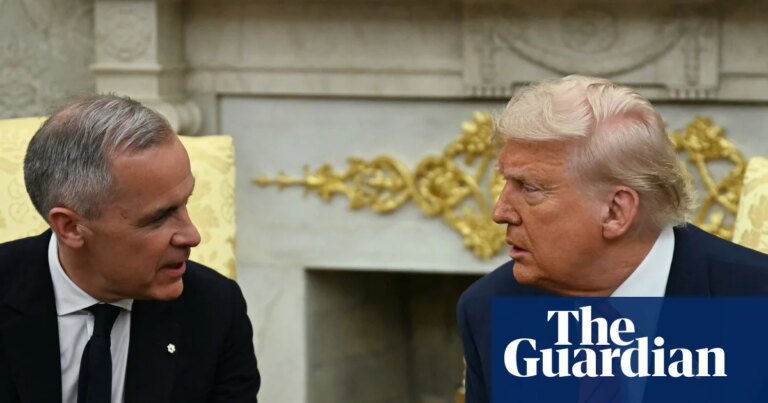
Donald Trump has defended his administration’s decision to impose a new 50% tariff on most Canadian goods, escalating trade tensions and making sweeping claims about Canada’s dependence on the United States. The White House announced the broad round of import duties, set to take effect next month, citing alleged unfair discrimination by Canada against U.S. cars, alcohol, and dairy products.

Trump asserted, “Canada has been very, very tough on us over the years, for many years, and no other president’s done anything about it.” He went further, declaring, “In all fairness to them, they need us to survive. Without us, there’s no way they can survive.” These remarks, made in the Oval Office, sparked fresh outrage in Ottawa, with Canadian Prime Minister Mark Carney responding that his country was “united” in the face of such threats.

Fact-Checking Trump’s Claims

Trump’s assertion that Canada “needs us to survive” is a significant exaggeration. While the U.S. is Canada’s largest trading partner, Canada is also the top export market for many U.S. states and a key supplier of energy, raw materials, and manufactured goods. The economies of both countries are deeply intertwined, and experts widely reject the notion that Canada’s survival depends solely on access to the U.S. market.

The president also accused Canada of “unfairly discriminating” against U.S. products, but both countries have long-standing trade disputes that are typically addressed through negotiation and the United States-Mexico-Canada Agreement (USMCA). Trump’s tariffs will target a wide range of products, including wine, hockey sticks, and cement—some of which were previously protected from import taxes under the USMCA.

Attacks and Shifting Explanations

Trump has also attacked Canada’s response to recent wildfires, blaming Canadian “Willful Negligence” for smoke that affected millions in the U.S. “The cost is incalculable!” Trump wrote on social media. “This is Willful Negligence, and becoming a yearly occurrence, costing the United States Billions of Dollars, which cost of this pollution must of necessity be added to the TARIFFS Canada is currently paying.” However, when pressed by reporters, Trump said his administration was considering those tariffs “separately,” contradicting his earlier implication that the wildfire smoke was a factor in the new duties.

Conclusion

Trump’s defense of the new tariffs on Canadian goods relies on exaggerated claims about Canada’s economic dependence and repeated attacks on its government’s actions. These statements have heightened tensions between Washington and Ottawa and raised concerns about the future of North American trade. As negotiations continue, the accuracy of Trump’s rhetoric and the impact of these tariffs will remain under close scrutiny.

Source article

Source: https://www.theguardian.com/us-news/2026/jul/21/trump-defends-tariff-canada

The U.S. Is Pulling Back on Energy Efficiency

The U.S. Is Pulling Back on Energy Efficiency

NYT > U.S. > Politics — 2026-07-21 13:03:00 — www.nytimes.com

Trump Administration Rolls Back Energy-Efficiency Standards Amid Rising Energy Costs and Climate Concerns

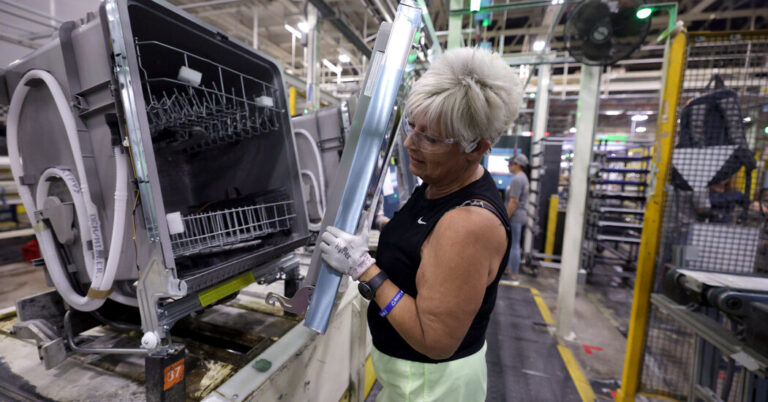
President Trump has repeatedly criticized federal energy conservation rules, claiming they limit consumer choice and degrade the performance of household appliances. At a 2023 event, he declared, “Now they want to take away your gas stoves. They want to take away your washing machines and your dryers. They don’t want to give you any water for the washing machine.” This rhetoric has been matched by a series of policy actions aimed at dismantling longstanding energy-efficiency programs.

Policy Shifts and Consumer Impact

Over the past year, the Trump administration has proposed rescinding requirements for manufacturers to produce washing machines and other appliances that use less electricity and water. The administration has also relaxed fuel-economy rules for new cars and trucks and criticized state building codes designed to curb energy use. Trump’s domestic policy bill phased out tax breaks for homeowners who upgraded insulation or purchased more efficient water heaters.

The Energy Department has gone further, proposing a rule that would make it more difficult for future administrations to tighten appliance efficiency standards. The administration’s stated position is that the country faces an energy emergency and does not have enough power to meet growing needs, particularly for data centers supporting artificial intelligence. Officials argue that the solution is to generate more electricity and increase the use of oil, gas, coal, and nuclear power.

Fact-Checking Trump’s Claims

Trump’s assertion that efficiency rules “ruin appliances” and restrict consumer choice is disputed by manufacturers and contradicted by studies. For example, a recent analysis from Lawrence Berkeley National Laboratory found that current appliance efficiency standards have reduced U.S. energy use by 6.5 percent and saved the average household $576 per year compared to a scenario without such standards. Furthermore, stricter fuel-economy standards for cars have saved Americans an estimated $5 trillion in gasoline costs over the decades.

Despite claims that efficiency rules make appliances less effective, manufacturers have disputed these assertions, noting that technological advances have continued to improve both performance and efficiency.

Industry and Political Response

The administration’s efforts have sparked backlash from both industry groups and bipartisan lawmakers. When the Trump administration attempted to eliminate the Energy Star program—a popular efficiency certification—dozens of industry groups opposed the move, citing $40 billion in annual savings for American households.

While some states have rolled back their own efficiency programs to cut near-term costs, the overall progress in U.S. energy efficiency has slowed, according to the International Energy Agency. Many in the industry express frustration with the constant policy swings, emphasizing the need for predictable standards to guide long-term planning.

Conclusion

President Trump’s campaign against energy-efficiency regulations marks a significant departure from decades of bipartisan policy aimed at reducing energy consumption and costs for American consumers. His claims about the negative impacts of these standards are not supported by available evidence, and the rollback of efficiency programs comes at a time of rising energy prices and increasing demand. As the debate continues, the future of U.S. energy policy—and its impact on both the environment and household budgets—remains uncertain.

Source article

Source: https://www.nytimes.com/2026/07/21/climate/trump-energy-efficiency-standards.html