
Trump Claims Credit for Drug Price Decline. Experts Say It’s More Complicated.
FactCheck.org — 2026-08-31 15:36:00 — www.factcheck.org
Trump Claims Credit for Prescription Drug Price Drop, But Experts Cite Other Factors
President Donald Trump and his administration are touting what they call historic reductions in prescription drug prices, crediting their deals with pharmaceutical companies and the launch of the TrumpRx direct-to-consumer platform. However, health policy experts say these claims are exaggerated and that other forces are largely responsible for the recent decline.
Trump’s Claims
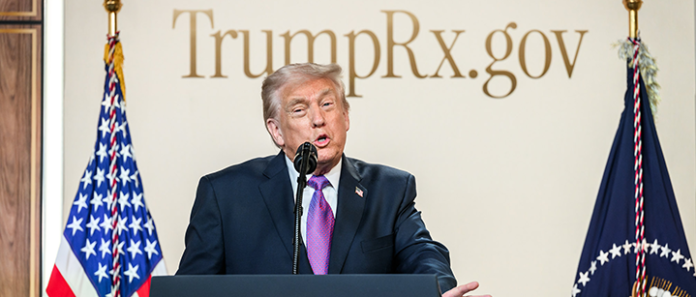
Trump has repeatedly taken credit for the drop in drug prices. In an August 14 speech on Long Island, he declared, “Under my most-favored-nation policy on drug prices, we are delivering the largest prescription drug price cuts in the history of our country.” He reiterated these claims at a White House event later that month, and his administration has pointed to agreements with major drug companies and the TrumpRx platform as the main drivers of the price decline.
What the Data Shows
According to the Bureau of Labor Statistics, prescription drug prices fell 3.1% over the past year—the largest one-year decrease since 1963. Trump and his officials attribute this to their deals with drugmakers to offer certain drugs at “most favored nation” (MFN) prices, which are intended to match prices in other developed countries.
Expert Analysis: Claims Overstated
Experts interviewed for the fact-check say the Trump administration’s actions are unlikely to be the main reason for the price drop. They point to several other factors:
- Market Competition: Increased competition, especially among GLP-1 weight-loss drugs, has driven prices down.
- Entry of Generics: More generic drugs have entered the market, lowering prices for consumers.
- Biden-Era Medicare Negotiations: A policy from the Biden administration allowing Medicare to negotiate prices for certain drugs has also played a role.
Cynthia Cox of the nonpartisan KFF noted that while both Republican and Democratic policies may have contributed, “there’s also just market forces at play, in particular around GLP-1 drugs, that are really hard to ignore.”
Limited Impact of Trump’s Policies
The MFN agreements touted by Trump are narrower than he suggests. They mostly apply to new drugs and only in specific circumstances, such as direct-to-consumer sales through TrumpRx, certain Medicaid programs, and a subset of Medicare and Medicaid drugs. Most Americans with private insurance are not affected.
Health economist Jeromie Ballreich explained that the only place MFN prices would show up in the Consumer Price Index is through TrumpRx, which serves a small portion of patients and is “not a big factor in the market.”
The administration claims TrumpRx has saved Americans over $700 million, but this represents less than 0.2% of the $467 billion spent on prescription drugs in 2024, and the methodology behind this figure has not been disclosed.
Conclusion
While President Trump continues to claim credit for the recent drop in prescription drug prices, independent experts say his administration’s policies are not the primary cause. Instead, market competition, the introduction of generics, and recent Medicare negotiations under the Biden administration have played more substantial roles. The scope and impact of Trump’s drug pricing deals remain limited and unclear, making his sweeping claims about “the largest prescription drug price cuts in the history of our country” misleading.