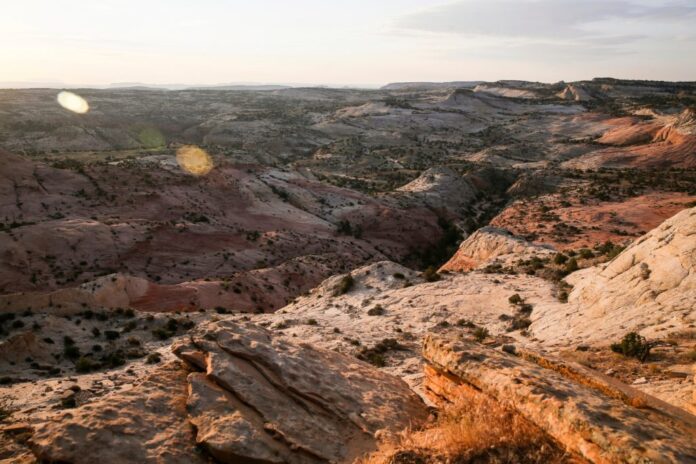

Trump reduces the size of 2 national monuments in Utah as Republicans reshape land management
PBS News Hour – Politics — 2026-07-13 17:28:00 — www.pbs.org
Trump Calls National Monument Protections a “Massive Land Grab” as He Slashes Bears Ears and Grand Staircase-Escalante
President Donald Trump has once again moved to reduce the size of two national monuments in Utah, undoing protections established by previous administrations for lands considered sacred by many Native Americans. Trump, a Republican, issued proclamations under the Antiquities Act to shrink Bears Ears and Grand Staircase-Escalante national monuments, repeating actions from his first term that were later reversed by President Joe Biden.
Trump’s Position: “Massive Land Grab”
During his first term, Trump described the creation of these monuments as a “massive land grab,” a characterization he has maintained as he continues to push for shrinking their boundaries. The monuments, which together span more than 3.2 million acres—nearly the size of Connecticut—contain ancient cliff dwellings, petroglyphs, and canyons, as well as valuable coal and uranium deposits that Utah officials want to open for development.
Policy Reversal and Resource Extraction
Trump’s approach stands in stark contrast to Biden’s conservation goals. While Biden has aimed to conserve at least 30% of U.S. lands and waters by 2030, Trump’s policies have focused on expanding drilling, mining, and logging on public lands, and rolling back protections for imperiled species. Trump has also used proclamations to lift commercial fishing prohibitions in expansive marine monuments, prioritizing commercial interests over conservation efforts.
Native American and Conservationist Backlash
The reduction of Bears Ears is particularly controversial, as it was the first national monument protected at the request of tribal nations. Davina Smith-Idjesa, co-chair of the Bears Ears Inter-Tribal Coalition, called the move “heartbreaking” and accused federal officials of sidestepping their legal responsibility to consult with tribal nations. She emphasized that Bears Ears is “not simply a piece of federal public land,” but a living cultural site with deep significance for Native communities.
Legal and Political Debate
The Supreme Court has upheld the president’s authority to create national monuments, but there is ongoing debate about whether Trump has the authority to change their boundaries. Efforts by some Republicans to sell or transfer federal lands to states have largely failed, facing bipartisan opposition.
Conclusion
Trump’s repeated characterization of national monument designations as a “massive land grab” is a distortion of the Antiquities Act’s intent, which allows presidents to protect sites of historic, archaeological, or cultural importance. His actions have drawn sharp criticism from Native American leaders and conservationists, who warn that opening these lands for commercial exploitation threatens irreplaceable cultural and natural resources. The ongoing tug-of-war over public land protections underscores the stark divide between Trump’s resource extraction agenda and efforts to preserve America’s natural heritage.