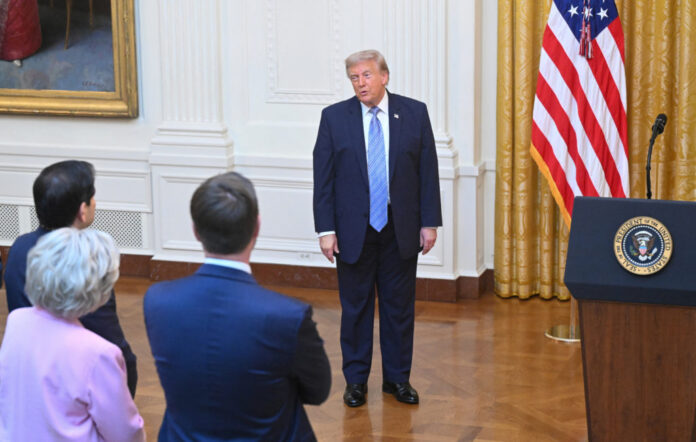

Trump tries to undermine trust in elections, but documents don’t support his claims
PBS News Hour – Politics — 2026-07-17 17:55:00 — www.pbs.org
Trump Revives Debunked Election Claims in Prime-Time Address, Fact-Checks Show
President Donald Trump used a recent prime-time address to revive a series of debunked claims about the integrity of American elections, painting a dire picture of U.S. election security and calling for more restrictive voting laws ahead of the November midterms.
False Claims About Foreign Interference
In his address, Trump announced the “immediate declassification and release of critical intelligence revealing shocking vulnerabilities in our election infrastructure.” He claimed, “The People’s Republic of China carried out what is believed to be the largest compromise of election data in history, resulting in China’s illicit acquisition of 220 million U.S. voter files.” However, a close examination of the White House’s own released documents tells a different story. The intelligence community discussed China’s attempts to potentially influence the 2020 election, but the documents present these as potential dangers, with no evidence that any attempts were successful. One declassified document explicitly states that publicly available voter registration information for six states was downloaded by China in 2022, well after the 2020 election.
David Becker, Executive Director of the Center for Election Innovation and Research, directly refuted Trump’s claims, stating, “The reality is, it wasn’t a hack.” He explained that voter lists in the United States are public and available for purchase or even free in some states.
Unfounded Allegations About Voting Machines
Trump also alleged that U.S. voting machines are “vulnerable and they’re easily compromised,” referencing a supposed CIA report about Venezuela’s Maduro regime rigging its own elections. However, fact-checks reveal that such efforts would only be possible if every step of the election process was under government control, which is not the case in the U.S. Released documents conclude that attempts to manipulate vote totals would not work in the American system, which relies on paper ballots and strict chain of custody protocols.
Exaggerated Numbers on Noncitizen Voters
Turning to immigration, Trump claimed, “According to the DHS review, state voter rolls and public records, they identified approximately 278,000 noncitizens who are registered to vote in federal elections.” The report did not explain how this number was reached, and Homeland Security Secretary Markwayne Mullin could not say how many, if any, of those people actually voted. Federal databases and screening tools used to identify noncitizens have been shown to frequently flag U.S. citizens in error, especially naturalized Americans. A federal judge recently blocked the Trump administration from using such data, noting it “haphazardly combined and repurposed the private information of millions of Americans, including citizenship data that they knew to be unreliable.”
Sowing Doubt Ahead of the Midterms
Despite repeated fact-checks and the lack of evidence supporting his claims, Trump continues to use false statements to sow doubt about the integrity of American elections. As the midterms approach, these claims appear designed to undermine public confidence and justify restrictive voting measures.
Conclusion
President Trump’s latest address repeats a pattern of making exaggerated and unsupported claims about election security, foreign interference, and noncitizen voting. Fact-checks and official documents consistently contradict his assertions, highlighting the importance of scrutinizing such statements as the nation prepares for another critical election cycle.