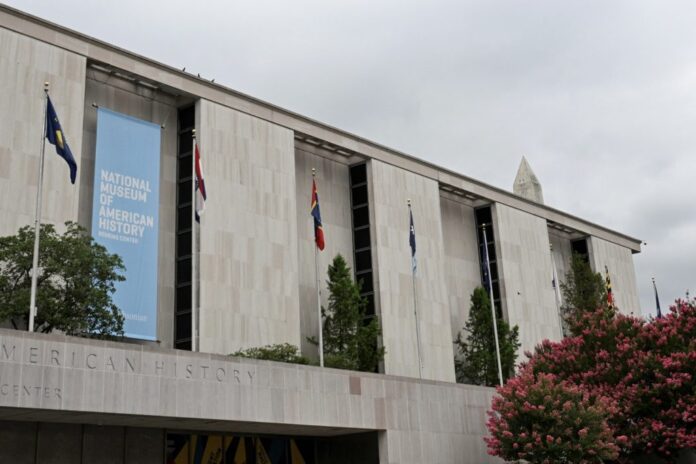

White House report brands Smithsonian leadership as radical activists who can’t be trusted
PBS News Hour – Politics — 2026-07-05 17:21:00 — www.pbs.org
Trump Intensifies Attacks on Smithsonian, Accuses Museum Leaders of Radical Activism
President Donald Trump has escalated his campaign to reshape America’s cultural institutions, targeting the Smithsonian Institution and, in particular, the National Museum of American History. According to a White House report released by the Domestic Policy Council, Trump’s administration claims that the Smithsonian’s current leadership “cannot be trusted to tell America’s story honestly and in a way that is inspiring, unifying, and worthy of our great republic.”
Trump’s Executive Order and Accusations
In March, Trump revealed his intention to force changes at the Smithsonian through an executive order, specifically targeting funding for programs he labeled as advancing “divisive narratives” and “improper ideology.” The White House report, led by a former top Trump speechwriter, goes further, accusing museum leaders of “ideological capture” and shifting the museum’s mission away from historical education toward “extreme political activism that seeks to transform our country.”
The report asserts that the National Museum of American History “confronts visitors with materials intended to undermine faith in American institutions and the longstanding shared ideals of the American people.” Trump’s stated goal is “Restoring Truth and Sanity to American History,” and the review concludes that the museum has become “subject to institutional capture by a radical, activist ideology that is fundamentally opposed to telling the noble, honest story of the great country we know and love.”
Broader Effort to Reshape Cultural Institutions
Trump’s campaign against the Smithsonian is part of a broader effort to overhaul cultural and historic institutions he considers too liberal. He previously installed himself as chairman of the John F. Kennedy Center for the Performing Arts, aiming to change its programming, and forced Columbia University to alter policies by threatening to withhold federal funding.
The administration has also intervened at historical sites beyond Washington, including a court victory in Philadelphia that allowed the reinstallation of interpretive panels at President George Washington’s home. Critics argue these changes whitewash the history of slavery and present a more triumphant, less painful view of America’s past.
Critics Warn of Historical Revisionism
Pennsylvania Governor Josh Shapiro accused Trump and his allies of trying to “rewrite history,” emphasizing the importance of sharing the full, complex story of America. “There’s not one individual narrative that a president gets about our history,” Shapiro said, warning against efforts to suppress uncomfortable truths.
Conclusion
Trump’s aggressive push to reshape the Smithsonian and other institutions reflects a broader strategy to impose his preferred narrative on American history. By branding museum leaders as untrustworthy radicals and threatening funding for programs he deems divisive, Trump continues to attack institutions that do not align with his ideological vision. The ongoing controversy raises critical questions about who gets to define America’s story—and at what cost to historical truth.