Home Blog Page 2

Trump news at a glance: US president holds a rare bipartisan bill hostage | Trump administration

Trump news at a glance: US president holds a rare bipartisan bill hostage | Trump administration

US politics | The Guardian — 2026-06-24 20:05:00 — www.theguardian.com

Trump Blocks Bipartisan Housing Bill, Calls It “Minor Importance” Amid Push for Restrictive Voting Measures

Despite overwhelming bipartisan support for a landmark bill to lower housing costs, President Trump is refusing to sign the 21st Century Road to Housing Act. Trump has made clear he will not approve the legislation unless the Senate passes his Save America Act, which would impose strict new voting regulations, including requiring proof of citizenship at voter registration and sharply limiting mail-in voting.

The housing bill, which passed both the Senate and House with large majorities after months of negotiation, is considered one of the most significant efforts in decades to increase housing supply and reduce prices for Americans. However, Trump dismissed the bill on Wednesday morning as being of “minor importance,” downplaying its potential impact on millions of Americans struggling with housing affordability.

Political Fallout and Criticism

Trump’s decision to hold the housing bill hostage has drawn sharp criticism from both sides of the aisle. Senate Democratic leader Chuck Schumer condemned the move, saying, “It’s utterly amazing. Trump is running away from one of the very few accomplishments that could actually help the American people.” Both Democrats and Republicans had previously celebrated the bill’s passage, anticipating that housing affordability would be a major issue for voters ahead of the November midterm elections.

Pattern of Exaggeration and Obstruction

Trump’s characterization of the housing bill as “minor” stands in stark contrast to the bipartisan consensus on its importance. This episode fits a broader pattern in which Trump has downplayed or dismissed the significance of widely supported measures, often tying their fate to unrelated and controversial demands. In this case, his insistence on passing the Save America Act—a bill that would dramatically alter voting rights—has stalled a rare opportunity for legislative progress on housing.

Conclusion

President Trump’s refusal to sign the bipartisan housing bill unless his voting restrictions are enacted highlights his willingness to leverage critical legislation for partisan objectives. By calling the housing bill of “minor importance,” Trump has minimized an issue that affects millions of Americans, drawing bipartisan criticism and raising concerns about his approach to governance. As the debate continues, the fate of both the housing bill and the proposed voting restrictions remains uncertain, with significant consequences for American families and the democratic process.

Source article

Source: https://www.theguardian.com/us-news/2026/jun/24/trump-news-briefing-congress-housing-bill

WATCH: Under proposed rule, USPS won’t deliver mail ballots to states that don’t provide voter rolls, postmaster general says

WATCH: Under proposed rule, USPS won’t deliver mail ballots to states that don’t provide voter rolls, postmaster general says

PBS NewsHour – Politics — 2026-06-24 18:15:00 — www.pbs.org

Trump Pushes New Restrictions on Mail Voting Despite His Own Use of Ballots

President Donald Trump’s administration is moving to tighten mail voting rules, citing concerns about election integrity—even as Trump himself has repeatedly used mail ballots in past elections. A proposed U.S. Postal Service (USPS) rule, based on Trump’s March executive order, would require states to provide the federal government with lists of people who have requested absentee or mail ballots. If states refuse, the USPS would withhold mail ballots from those states’ voters.

Trump’s Contradictory Stance on Mail Voting

Despite his personal reliance on mail ballots, Trump has called the voting method “cheating.” This claim stands in stark contrast to his own actions and is not supported by evidence presented in the excerpt. The proposal to tighten mail voting rules is directly attributed to Trump’s executive order, which seeks to create eligible voter lists and increase federal oversight of state-run elections.

Constitutional Concerns and Fact-Checking Trump’s Claims

The Constitution explicitly grants states the authority to run their own elections, with Congress having only a limited role in adopting election regulations. Trump’s push for federal intervention, as outlined in the executive order and the proposed USPS rule, challenges this longstanding principle. The excerpt highlights the contradiction between Trump’s rhetoric—labeling mail voting as “cheating”—and his documented use of the same process.

Conclusion: A Pattern of Misinformation

President Trump’s repeated attacks on mail voting, despite his own participation in the system, exemplify a broader pattern of false and misleading statements about election integrity. The new USPS rule, rooted in Trump’s executive order, raises significant questions about federal overreach and the factual basis for these proposed changes. As the debate over mail voting continues, Trump’s record of contradictions remains central to the national conversation on election security and democratic norms.

Source article

Source: https://www.pbs.org/newshour/politics/watch-under-proposed-rule-usps-wont-deliver-mail-ballots-to-states-that-dont-provide-voter-rolls-postmaster-general-says

Trump cancels signing ceremony for bipartisan housing bill, again upending GOP agenda

Trump cancels signing ceremony for bipartisan housing bill, again upending GOP agenda

NPR Topics: Politics — 2026-06-24 16:37:00 — www.npr.org

President Trump Derails GOP Celebration Over Bipartisan Spending Bill

President Trump upended Republican plans to celebrate the passage of a bipartisan spending bill on Wednesday, marking the latest in a series of public rifts between Trump and his own party. The disruption highlights the ongoing tensions and unpredictability that have characterized Trump’s relationship with congressional Republicans.

Trump’s decision to scuttle the planned celebration drew immediate attention, as lawmakers had hoped to showcase bipartisan cooperation on a major piece of legislation. Instead, Trump’s actions underscored his willingness to break with party leaders and disrupt legislative momentum, even on measures that have broad support.

This episode is not an isolated incident. It reflects a pattern in which Trump’s positions and responses have repeatedly put him at odds with Republican leadership, often leading to confusion and frustration within the party. These rifts have sometimes resulted in mixed messaging and stalled progress on key legislative priorities.

While the specific reasons for Trump’s intervention were not detailed in the excerpt, the incident serves as another example of his unpredictable approach to governance and his readiness to assert his influence, regardless of party consensus. The fallout from such actions can undermine efforts to present a unified front and complicate the legislative process.

In summary, President Trump’s move to halt the celebration of a bipartisan spending bill once again highlights the ongoing divisions between him and his party. This pattern of disruption and contradiction continues to shape the dynamics within the Republican Party and impact its legislative agenda. Readers should note the significance of these recurring rifts as they assess the party’s ability to govern effectively.

Source article

Source: https://www.npr.org/2026/06/24/nx-s1-5869371/trump-cancels-signing-ceremony-for-bipartisan-housing-bill-again-upending-gop-agenda

White House seeks $87.6B from Congress for Iran war costs, U.S. farmers and Ebola response

White House seeks $87.6B from Congress for Iran war costs, U.S. farmers and Ebola response

PBS NewsHour – Politics — 2026-06-24 16:52:00 — www.pbs.org

Trump Clashes with Senate Republicans, Requests $87.6 Billion for Iran War and Other Priorities

President Donald Trump engaged in a heated confrontation with Republican senators during a private lunch, reportedly shouting at one over their votes to approve a war powers resolution that would halt further hostilities with Iran. This confrontation came just hours before the White House, through the Office of Management and Budget, formally requested $87.6 billion from Congress—primarily to replenish Pentagon funds following the U.S.-led attack on Iran, known as Operation Epic Fury.

A Contentious Funding Request

The supplemental spending request, submitted at a politically fraught moment, faces skepticism from both Republican and Democratic lawmakers who have voiced objections to further military action. The administration’s request is largely aimed at covering Defense Department expenses tied to the Iran conflict, but it also includes a variety of unrelated items, such as aid for American farmers, support for the Ebola crisis in Africa, and funding for restoration projects in Washington, D.C.

Trump’s Aggressive Response to Senate Pushback

The excerpt details that President Trump “assailed Republican senators during a private lunch—engaging in a shouting match with one—over their votes to approve a war powers resolution that would halt further hostilities.” This direct confrontation underscores Trump’s combative approach toward members of his own party who oppose his handling of the Iran conflict.

Political Maneuvering and Legislative Hurdles

The White House’s request is seen as an attempt to secure not only war-related funding but also tens of billions of dollars for other priorities. Lawmakers from both parties have criticized the inclusion of unrelated spending, with Washington Sen. Patty Murray describing the request as “not merely to pay for ‘the president’s disastrous war, but an attempt to secure tens of billions of additional dollars for unrelated Pentagon priorities that should rightly be considered through the annual appropriations process.’”

Conclusion: Trump’s Confrontational Style and Controversial Funding Demands

President Trump’s willingness to engage in direct, heated exchanges with Republican senators over their opposition to his Iran policy highlights his confrontational leadership style. The sweeping supplemental funding request, which faces uncertain prospects in Congress, has drawn criticism for bundling war expenses with unrelated projects. As lawmakers debate the merits of the request, Trump’s approach continues to spark division within his own party and across the political spectrum.

Source article

Source: https://www.pbs.org/newshour/politics/white-house-seeks-87-6b-from-congress-for-iran-war-costs-u-s-farmers-and-ebola-response

Trump Stokes Chaos in Congress as He Huddles With the G.O.P.

Trump Stokes Chaos in Congress as He Huddles With the G.O.P.

NYT > U.S. > Politics — 2026-06-24 16:07:00 — www.nytimes.com

President Trump Throws Congress Into Turmoil, Demands Voting Restrictions and Attacks GOP Senators

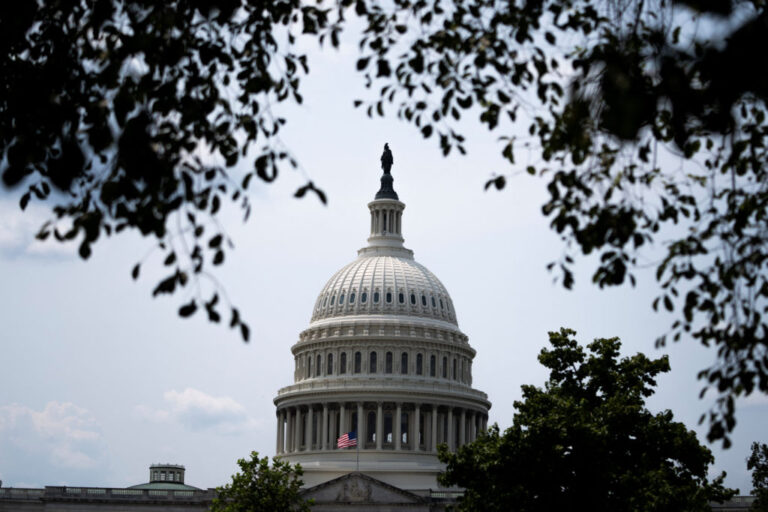
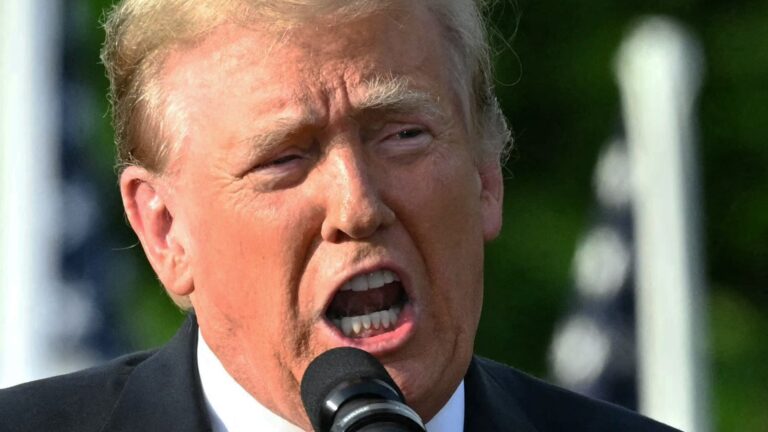
President Trump plunged Congress into chaos on Wednesday by abruptly canceling the signing of a bipartisan housing measure and issuing new demands that Republicans pass sweeping voting restrictions, despite repeated warnings from party leaders that the votes do not exist to do so.

Trump’s surprise move came just hours before a tense closed-door meeting with Senate Republicans. He blindsided allies by refusing to sign the housing bill—intended to address high costs for Americans and project Republican unity ahead of the midterm elections—even as preparations for the signing ceremony were underway in the Capitol. In a social media post, Trump dismissed the bill as “of minor importance,” emboldening right-wing House members who then stalled the Republican agenda in protest over the Senate’s failure to advance his preferred voting legislation.

Trump’s actions further deepened weeks of turmoil and exposed bitter divisions between the president and key Senate Republicans, especially Majority Leader John Thune of South Dakota. Trump has been feuding with Thune over the filibuster, repeatedly urging him to eliminate it and to “get the bad Republicans to approve” his voting bill, known as the SAVE America Act. Thune and other GOP leaders have consistently stated there is not enough support to pass the measure, a reality confirmed by multiple test votes.

Inside the Capitol, Trump’s arrival did little to calm tensions. He ignored questions about his relationship with Thune, instead telling reporters the war in Iran was “going very well” and attacking Democrats for “pushing communists” as candidates. Behind closed doors, Trump reportedly launched into an angry tirade over a Senate vote challenging his authority on Iran, personally attacking Republican senators who opposed him. He referred to Senator Bill Cassidy as a “loser” and made similar disparaging remarks about Lisa Murkowski and Mitch McConnell.

Participants in the meeting described little substantive policy discussion, with Trump instead reiterating demands to gut the filibuster, eliminate Senate “blue slips,” and expressing grievances about his own indictment. The session, according to those present, was dominated by Trump’s personal attacks and complaints rather than legislative strategy.

Trump’s insistence on making the SAVE America Act the party’s top priority has energized hard-line conservatives, who responded by threatening to block key legislation in the House. Republican leaders were forced to postpone planned votes, lacking the support needed to move forward.

The president’s actions have left many lawmakers from both parties stunned, viewing his moves as undermining Republican efforts to maintain congressional majorities and address pressing issues for voters. Trump’s repeated false claims about the urgency and viability of his voting bill, coupled with his personal attacks on fellow Republicans, have thrown the party’s legislative agenda into disarray just ahead of the Fourth of July recess.

Conclusion

President Trump’s abrupt cancellation of a major housing bill signing and his renewed push for restrictive voting legislation—despite clear opposition within his own party—have deepened divisions among Republicans and stalled their legislative agenda. His pattern of dismissing bipartisan achievements, attacking GOP senators, and making unsupported claims about election integrity continues to fuel chaos on Capitol Hill, raising questions about the party’s ability to govern effectively as the midterm elections approach.

Source article

Source: https://www.nytimes.com/2026/06/24/us/politics/trump-senate-republicans-meeting.html

A frustrated Trump unloads on Senate Republicans behind closed doors

A frustrated Trump unloads on Senate Republicans behind closed doors

Donald Trump — 2026-06-24 14:39:00 — www.politico.com

President Arrives on Capitol Hill Determined to Target Dissenting Republican Lawmakers

President Trump arrived on Capitol Hill with a clear objective: to prosecute his grudges against the Republican lawmakers who have opposed him. This posture underscores a pattern in which the president singles out members of his own party who do not align with his agenda, escalating internal party tensions.

Trump’s approach, as reported, was not one of reconciliation or bridge-building, but rather a deliberate effort to confront and retaliate against those within the GOP who have challenged his leadership. This stance highlights his ongoing willingness to use his influence to pressure or punish dissenters, rather than seeking unity.

Such behavior has been a hallmark of Trump’s tenure, where loyalty to him personally often takes precedence over broader party interests or policy debates. By arriving with the intent to prosecute grudges, the president reinforces a divisive strategy that has repeatedly drawn criticism for undermining party cohesion and democratic discourse.

In summary, President Trump’s actions on Capitol Hill exemplify his continued focus on personal loyalty and retribution, rather than consensus-building. This approach raises questions about the long-term impact on the Republican Party and the effectiveness of governance when internal divisions are exacerbated by the president’s own conduct.

Source article

Source: https://www.politico.com/news/2026/06/24/donald-trump-senate-lunch-00974397

Trump exits Senate meeting: 'I don't like a few people': Live updates

Trump exits Senate meeting: 'I don't like a few people': Live updates

Administration News — 2026-06-24 14:39:00 — thehill.com

President Trump Claims GOP “Unified” After Senate Meeting, Voices Displeasure With Some Lawmakers

President Trump met with Senate Republicans at their policy lunch Wednesday, urging them to pass the SAVE America Act. After the meeting, Trump described it as a “good meeting” and asserted that the party is “unified.” However, he also noted that he was not happy with every GOP lawmaker, stating, “I don’t like a few people, but I….”

Trump’s remarks highlight his ongoing efforts to project party unity while simultaneously expressing dissatisfaction with certain members of his own party. By claiming the GOP is “unified” immediately after acknowledging his personal disapproval of some lawmakers, Trump presents a contradictory message about the state of Republican cohesion.

This pattern of making broad, positive claims about party unity while singling out dissenters is consistent with Trump’s previous public statements. His approach often involves both rallying support and publicly criticizing those within his ranks who do not align with his agenda.

The meeting and Trump’s subsequent comments underscore the challenges Senate Republicans face as they navigate internal divisions and pressure to advance key legislative priorities. While Trump seeks to present a united front, his open criticism of some GOP lawmakers reveals ongoing tensions within the party.

In conclusion, President Trump’s statements following the Senate policy lunch reflect his dual strategy of promoting unity while targeting intra-party critics. This approach continues to shape the dynamics within the Republican Party as it considers major legislative initiatives.

Source article

Source: https://thehill.com/homenews/administration/5936473-live-updates-trump-senate-state-fair/

USPS is no longer expected to run out of money in 2027 : NPR

USPS is no longer expected to run out of money in 2027 : NPR

NPR Topics: Politics — 2026-06-24 11:19:00 — www.npr.org

President Trump’s Executive Order on Mail Voting Sparks Legal and Political Controversy for USPS

President Trump’s executive order seeking to restrict voting by mail has placed the U.S. Postal Service (USPS) at the center of a heated legal and political battle, as detailed in recent congressional testimony and reporting. The order calls for the Postal Service to use information from state election officials to create lists of approved mail voters, a move that has triggered multiple lawsuits and widespread criticism.

Trump’s Order and USPS Response

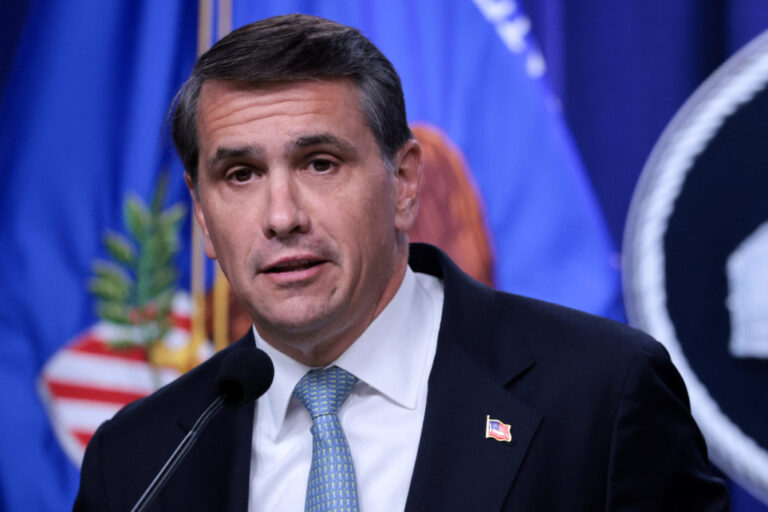
In response to the executive order, USPS recently proposed regulations that would require states to provide absentee voter lists to the federal government. When asked by Sen. Gary Peters of Michigan whether USPS would mail ballots for states refusing to turn over these lists, Postmaster General David Steiner stated, “Under our proposed regulation, no. We would tell the state that we need the manifest.” This proposal, directly tied to Trump’s directive, has raised alarm among voting rights advocates and state officials.

Legal and Constitutional Challenges

The Trump administration’s order has prompted lawsuits from nearly two dozen Democratic-led states and voting rights groups. Plaintiffs argue that the Constitution grants the authority to set federal election rules to state legislatures and Congress—not the president—and that USPS lacks the legal power to refuse ballot delivery based on Trump’s criteria. The entire Senate Democratic caucus has also called on USPS to abandon the proposed regulation and return to its core mission of providing universal postal services.

Political Fallout and Unanswered Questions

At a recent Senate confirmation hearing, Trump’s nominees for the Postal Service board of governors, Jeffrey Brodsky and William Gallo, declined to directly answer whether USPS should play a role in deciding who can vote by mail, as outlined in Trump’s order. Gallo remarked, “As far as I’m concerned, you have to have the courts and Congress make the decision.”

Conclusion

President Trump’s executive order on mail voting has thrust the USPS into a contentious debate over election integrity, federal authority, and the agency’s independence. The ongoing legal challenges and political scrutiny underscore the far-reaching implications of Trump’s actions for both the Postal Service and the nation’s electoral process.

Source article

Source: https://www.npr.org/2026/06/24/nx-s1-5859334/us-postal-service-david-steiner

Trump abruptly cancels signing of bipartisan bill on affordable housing

Trump abruptly cancels signing of bipartisan bill on affordable housing

Politics — 2026-06-24 12:45:00 — www.washingtonpost.com

President Delays Housing Bill, Ties Action to Election Integrity Legislation

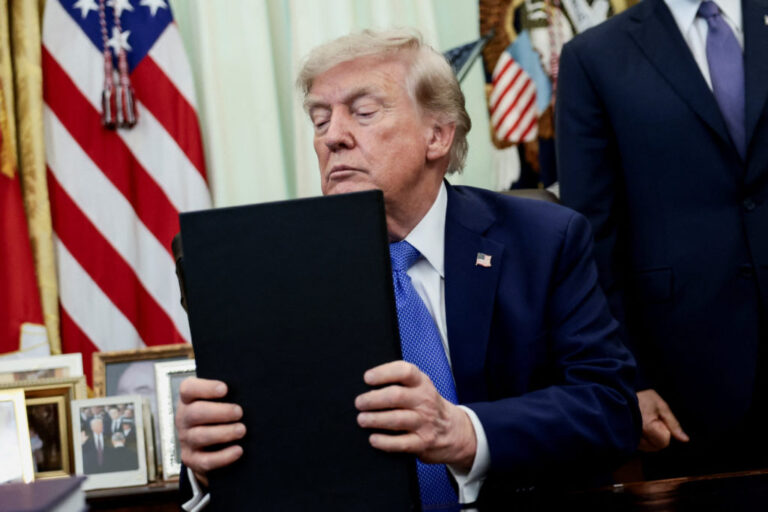
President Trump announced on social media that he would not sign the housing bill until the Senate passes his election integrity bill. This move has injected uncertainty into the fate of the housing legislation, with the president’s intentions regarding its ultimate passage remaining unclear.

Trump’s decision to publicly link the housing bill to his election integrity priorities is a notable example of his willingness to use legislative leverage to advance his agenda. By stating that the signing was “off until the Senate passes his election integrity bill,” Trump has effectively placed the future of the housing measure in doubt, despite its prior progress.

The president’s announcement has not only stalled the housing bill but also raised questions about his commitment to addressing housing issues. It is unclear whether Trump intends to kill the housing bill entirely or is using the threat as a negotiating tactic to pressure lawmakers into action on election-related legislation.

This episode highlights Trump’s pattern of making public declarations that introduce uncertainty into the legislative process. By tying unrelated policy issues together, he has created confusion among lawmakers and the public about his true intentions and the prospects for important legislation.

In summary, President Trump’s decision to halt the housing bill’s signing until his election integrity bill is passed demonstrates his willingness to use high-stakes legislative brinkmanship. The lack of clarity about whether he intends to kill the housing bill leaves both lawmakers and constituents in a state of uncertainty, underscoring the unpredictable nature of his approach to governance.

Source article

Source: https://www.washingtonpost.com/politics/2026/06/24/trump-abruptly-cancels-signing-bipartisan-bill-affordable-housing/

Trump says he asked US attorney for California election probe: ‘Do me a favor’

Trump says he asked US attorney for California election probe: ‘Do me a favor’

Donald Trump — 2026-06-23 16:49:00 — www.politico.com

Trump’s “Do Me a Favor” Remark: Examining the President’s Statement

President Trump’s words have often drawn scrutiny for their accuracy and intent, and his recent statement is no exception. In the excerpt, the president said, “I said, ‘Do me a favor. Take a look.’”

The Key Statement

The president’s direct quote, “Do me a favor. Take a look,” is notable for its simplicity but carries significant implications depending on its context. This phrase has been at the center of major political controversies, as it has been interpreted as a request that may have influenced official actions.

Fact-Checking the Claim

While the excerpt provides only this brief statement, it is important to highlight that such remarks from the president have previously sparked debate about their meaning and intent. The phrase “do me a favor” has been scrutinized in investigations and fact-checks, especially regarding whether it constituted a request for personal or political benefit.

Context and Implications

The president’s choice of words—asking someone to “take a look” as a personal favor—has been cited in various reports and hearings. Critics argue that such language blurs the line between official duties and personal interests. Fact-checkers have examined the context in which Trump has used similar phrases, often finding that his statements can be misleading or open to interpretation, depending on the circumstances.

Conclusion

President Trump’s statement, “Do me a favor. Take a look,” exemplifies the kind of language that has fueled ongoing scrutiny of his communications. While the excerpt does not provide further context or additional claims, the quote itself highlights the persistent questions about the president’s use of language and the potential for misinterpretation or controversy. Readers should remain attentive to the context and fact-checking of such statements as they continue to shape public discourse.

Source article

Source: https://www.politico.com/news/2026/06/23/trump-california-election-probe-do-me-a-favor-00972919