Home Blog Page 4

Trump renews bid to fire Fed governor Lisa Cook despite supreme court ruling | Federal Reserve

Trump renews bid to fire Fed governor Lisa Cook despite supreme court ruling | Federal Reserve

US politics | The Guardian — 2026-08-07 13:47:00 — www.theguardian.com

Donald Trump Renews Effort to Remove Fed Governor Lisa Cook, Repeating Disputed Allegations

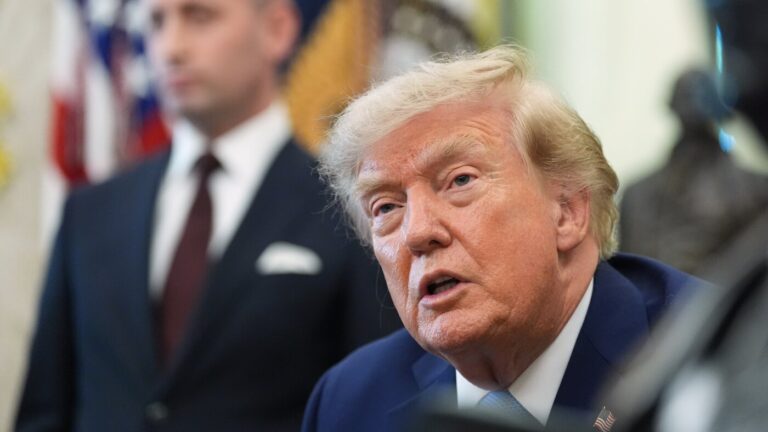
Donald Trump is once again seeking to remove US Federal Reserve governor Lisa Cook, reviving allegations of mortgage fraud against her despite a recent Supreme Court decision that upheld the central bank’s independence and Cook’s right to remain in her position while contesting the charges.

According to reports, Cook received a letter from the White House this week indicating that Trump is “considering removing” her from her Fed post over the same mortgage fraud claims he raised last summer. The letter, first reported by ABC News, accused Cook of falling “well short of the standard” required of a sitting Fed governor and requested a written response to the allegations within three weeks.

The Supreme Court ruled 5-4 in June that Cook was entitled to stay on as Fed governor while she fights the president’s allegations, stating in its majority opinion that Trump “failed to afford Cook the procedural protections to which she was entitled by statute.” The justices noted, “Without such protections, she could not properly dispute the charges the president laid against her.”

Trump’s Allegations and Attacks on the Fed

Trump’s drive to oust Cook began last August, when he abruptly fired her in what was widely seen as an unprecedented attack on the central bank’s independence. The White House accused Cook of wrongly designating two separate properties in Georgia and Michigan as her primary residence and failing to report rental income on her Atlanta property for two years. Cook has denied the allegations, describing them as “inadvertent” paperwork errors, and has sued the Trump administration for firing her without cause or proper procedure. Her legal team has argued that the administration is “cherrypicking” facts to support its claims.

Cook’s firing and ongoing legal battles have coincided with Trump’s repeated attacks on the Federal Reserve for not lowering interest rates. Cook, along with then Fed chair Jerome Powell, supported the central bank’s decision not to lower rates, drawing Trump’s ire. Trump disparaged Powell, calling him “too stupid and too political,” and initiated a Justice Department investigation into Powell’s renovations of the Fed’s headquarters, an inquiry that has since been dropped.

Fact-Check and Legal Context

The Supreme Court’s ruling made clear that Trump’s attempt to remove Cook did not follow the required legal procedures, and that Cook is entitled to due process before any removal can take place. Cook’s attorney, Abbe D Lowell, responded to the latest White House letter by calling the allegations “as baseless now as they were a year ago when President Trump tried to remove Governor Cook and interfere with the independence of the Federal Reserve.” Lowell added, “No matter what President Trump tries to do next, this much is clear under the facts and Supreme Court precedent – there is no valid cause for removing Governor Cook.”

Cook, appointed by Joe Biden in 2022 to a 14-year term, is the first Black woman to serve as a Fed governor. Her career includes service on Barack Obama’s council of economic advisers and teaching positions at Harvard and Stanford.

Conclusion

Trump’s renewed effort to remove Lisa Cook from the Federal Reserve board continues his pattern of attacking the central bank’s independence and making allegations that have been repeatedly challenged and, so far, rejected by the courts. The Supreme Court’s recent decision underscores the importance of due process and the legal protections afforded to Fed governors, even in the face of presidential opposition. As the legal and political battle continues, the independence of the Federal Reserve remains a central issue.

Source article

Source: https://www.theguardian.com/business/2026/aug/07/trump-lisa-cook-fed-firing-scotus-ruling

Appeals court rules Trump can’t build White House ballroom without congressional approval

Appeals court rules Trump can’t build White House ballroom without congressional approval

PBS News Hour – Politics — 2026-08-07 13:34:00 — www.pbs.org

Trump Dismisses Court Ruling Halting White House Ballroom, Insists Congressional Approval Not Needed

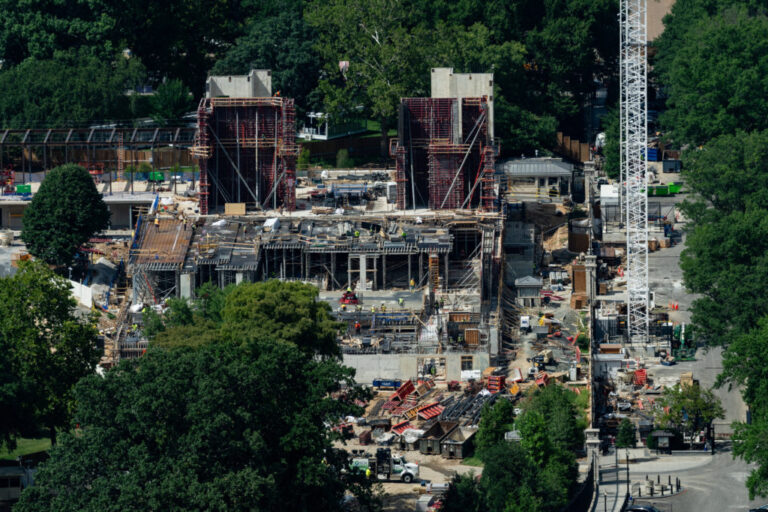
A federal appeals court has ordered President Donald Trump’s administration to stop construction of a $400 million, 90,000-square-foot ballroom at the White House, citing a lack of congressional approval. Trump, however, maintains that he does not need Congress’s authorization to proceed, calling the court’s decision “unjust” and vowing to appeal to the U.S. Supreme Court.

Trump’s Response and Claims

After the ruling, Trump took to social media to denounce the decision, quoting from a dissenting opinion by Judge Neomi Rao, whom he nominated. He described the planned facility as including bomb shelters, a hospital, medical facilities, and “Top Secret Military Facilities,” arguing that the project is essential for national security. Trump asserted, “The Military and Secret Service are viewing this horrendous, politically motivated, and unlawful ruling as a National Security threat to our Nation in that the entire Complex is being built for the protection of our Country and, additionally, all future Presidents.”

Trump further argued that congressional approval is unnecessary because, according to him, no public money is being used for the ballroom’s construction. He claims to have raised hundreds of millions of dollars from corporations, wealthy individuals, and himself to fund the project.

Contradictions and Congressional Oversight

Despite Trump’s insistence, the record shows that his administration requested $1 billion for the ballroom, which Congress refused in May. Additionally, Democrats have raised concerns that $350 million from a tax cuts law may have been redirected to the project—contradicting Trump’s assertion that no public funds are involved.

The appeals court’s 2-1 decision sided with historic preservationists who sued to stop the construction, emphasizing that only Congress can authorize such a significant alteration to the White House. The court wrote, “Whether or not a massive ballroom should be constructed is for Congress to decide and is not a matter for Executive self-help.”

National Security Justification Challenged

Trump and government lawyers have argued that the ballroom and associated underground facilities are necessary for national security, citing threats such as drones and missiles. However, attorneys for the preservation group countered that the absence of a White House ballroom does not constitute a national security emergency, a position the court found reasonable.

Conclusion

Trump’s public statements and the administration’s actions reveal a pattern of bypassing established legal and constitutional processes, particularly regarding congressional oversight of federal spending and construction. The court’s ruling underscores that even the president must adhere to the law and seek congressional approval for major changes to national landmarks. As the legal battle continues, the controversy highlights ongoing tensions between executive authority and the checks and balances fundamental to American democracy.

Source article

Source: https://www.pbs.org/newshour/politics/appeals-court-rules-trump-cant-build-white-house-ballroom-without-congressional-approval

Appeals court blocks Trump's White House ballroom construction

Appeals court blocks Trump's White House ballroom construction

Administration News — 2026-08-07 09:56:00 — thehill.com

A federal appeals court has blocked President Trump’s plans for a White House ballroom, ruling in a 2-1 decision that all work must stop except for below-ground construction, including installations that Trump says are needed for security. The U.S. Court of Appeals for the D.C. Circuit panel emphasized that Congress retains control over funding for development at the White House.

Trump’s Security Claims Face Judicial Scrutiny

President Trump has justified the continuation of below-ground work by stating that these installations are necessary for security. However, the court’s decision underscores the ongoing tension between Trump’s stated priorities and the legal limits set by congressional authority over federal spending.

Fact-Checking Trump’s Assertions

Within the context of this ruling, Trump’s claim that the below-ground installations are required for security has not been independently verified in the excerpt. The court’s order does not address the validity of Trump’s security rationale, focusing instead on the broader issue of congressional control over White House development funds.

Conclusion: Legal Limits on Presidential Projects

This latest court decision highlights the checks and balances that restrict presidential authority, particularly regarding federal property and funding. While President Trump maintains that certain construction is essential for security, the court’s ruling makes clear that such claims do not override congressional oversight. Readers should note that Trump’s statements about security needs remain subject to judicial and legislative review.

Source article

Source: https://thehill.com/regulation/court-battles/6016709-donald-trump-white-house-ballroom-construction-appeals-court-block/

Trump Administration Suggested Funding Afrikaner Group in South Africa — ProPublica

Trump Administration Suggested Funding Afrikaner Group in South Africa — ProPublica

ProPublica — 2026-08-07 04:00:00 — www.propublica.org

Trump Administration Redirects Foreign Aid, Promotes Disputed Claims on South Africa

Since returning to office, President Donald Trump’s administration has fundamentally changed the direction of U.S. foreign aid, slashing budgets for well-established programs and labeling them as “not aligned with American interests.” While Congress has continued to require funding for humanitarian, global health, and pro-democracy initiatives, the Trump administration has shifted the focus of these funds—often toward controversial right-wing groups in Europe and elsewhere.

Shift in Priorities: From HIV Aid to White Minority Focus

A major shift has been observed in U.S. policy toward South Africa. For decades, American aid was largely dedicated to supporting HIV care, saving countless lives and maintaining a vital diplomatic relationship. However, since Trump’s return to office, his administration has prioritized the concerns of the white Afrikaner minority in South Africa, a group historically responsible for apartheid. Trump has repeatedly argued that there is a “genocide” of white South Africans and has claimed that they are subject to disproportionate violence. These claims have been used to justify cutting off U.S. funding for HIV treatment and research in South Africa.

Fact-Checking Trump’s Claims

Extensive research, however, contradicts Trump’s assertions. Studies show that white South African farmers are not victims of crime at higher rates than other groups. Experts and former diplomats have expressed shock that the Trump administration would prioritize the victimization of whites in South Africa over more pressing human rights issues elsewhere on the continent. One former agency official called the idea “laughable,” pointing out that South Africa is plagued by violence affecting all communities.

Controversial Grants and Right-Wing Ties

The Trump administration has also considered funding groups with ties to right-wing and borderline white nationalist causes, both in South Africa and Europe. For example, officials suggested a grant for research on crimes against Afrikaners and considered supporting a British free-speech organization that opposes bans on “gay conversion therapy”—a practice widely discredited by medical experts. Some of these proposed grants have been dropped after pushback, but the administration’s overall direction remains clear.

Undermining Competitive Bidding and Oversight

Concerns have also been raised about the administration’s attempts to bypass federal requirements for competitive bidding on grants, potentially increasing the risk of waste, fraud, and abuse. Instead of open competition, millions are being steered toward handpicked organizations, according to sources and documents.

Conclusion: A Risky Redirection of U.S. Influence

By shifting foreign aid away from broad-based humanitarian and health programs to focus on narrow, controversial causes, the Trump administration risks undermining longstanding U.S. interests and relationships abroad. The administration’s promotion of disputed claims about white victimization in South Africa, in particular, has drawn criticism from experts and threatens to drive a wedge between the U.S. and key partners. As these policies continue to unfold, the consequences for America’s global standing and the people affected by these aid decisions remain to be seen.

Source article

Source: https://www.propublica.org/article/trump-administration-afrikaner-south-africa-money

Trump says he would 'probably' get along with Jeffries as Speaker

Trump says he would 'probably' get along with Jeffries as Speaker

Administration News — 2026-08-07 06:51:00 — thehill.com

Trump Predicts He Would “Probably” Get Along with Hakeem Jeffries if Democrats Win House Majority

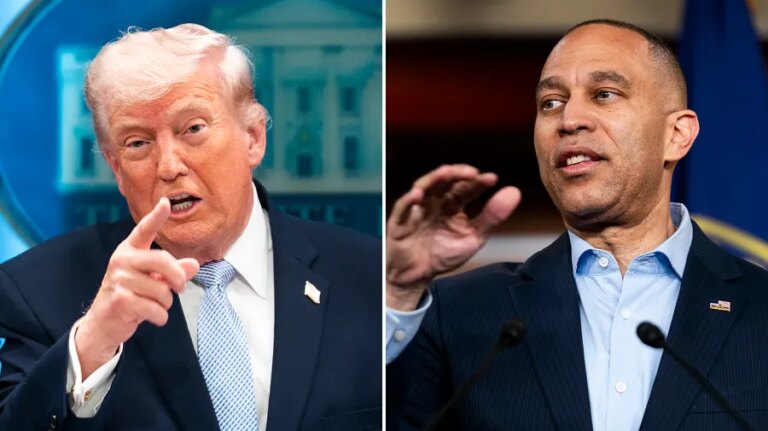
President Trump, in an interview aired early Friday, predicted he would “probably” get along with House Minority Leader Hakeem Jeffries (D-N.Y.) if Democrats regain control of the House of Representatives in the upcoming midterm elections. “I’d probably get along with him very well,” Trump told Punchbowl News when asked if he could do business with Jeffries.

Trump’s Position on Working with Democrats

Trump’s comments signal a willingness to work with Democratic leadership should the balance of power shift in the lower chamber. By stating he would “probably get along with him very well,” Trump suggests a potential for bipartisan cooperation, though the remark stops short of any specific policy commitments or details on how such a relationship would function.

Context and Record

The statement comes as speculation grows over the outcome of the midterm elections and the possibility of a Democratic majority in the House. Trump’s prediction of a positive relationship with Jeffries stands in contrast to his often combative rhetoric toward Democratic leaders in the past. However, the excerpt does not include any specific false claims or disparagements directed at Jeffries or others.

Conclusion

President Trump’s assertion that he would “probably” get along with Hakeem Jeffries if Democrats take the House majority highlights his current posture toward potential bipartisan engagement. While the comment projects optimism, it remains to be seen how this prediction would play out in practice, given the contentious history between Trump and Democratic leadership. Readers should watch for further developments and statements as the political landscape evolves.

Source article

Source: https://thehill.com/homenews/administration/6015931-donald-trump-jeffries-midterm-relations/

Democrats Demand Answers From VA on Vets’ Struggles for Mental Healthcare — ProPublica

Democrats Demand Answers From VA on Vets’ Struggles for Mental Healthcare — ProPublica

ProPublica — 2026-08-07 05:00:00 — www.propublica.org

Trump Administration Claims “Dramatic Improvements” at VA as Mental Health Crisis Deepens

The Trump administration has asserted that it is “solely focused on measuring VA’s success by how well it serves Veterans,” with a spokesperson claiming that this “commonsense approach has led to dramatic improvements for Veterans, families, caregivers, and survivors across the country.” This defense comes as more than 60 House Democrats demand answers about the Department of Veterans Affairs’ (VA) increasingly strained mental healthcare system under President Donald Trump’s second administration.

Worsening Shortages and Veteran Impact

Despite the administration’s claims of improvement, a recent ProPublica investigation and congressional inquiries highlight a starkly different reality. The VA’s mental health workforce has been shrinking at an alarming rate, with hundreds of psychologists and psychiatrists leaving and not being replaced. As a result, veterans are facing longer wait times, reduced access to care, and overburdened providers. Some veterans have reported being shuffled among therapists who soon left the agency, while others have seen individual therapy sessions replaced with large online groups, sometimes limited to just 16 minutes per patient.

Fact-Checking the Administration’s Claims

While the Trump administration touts a record number of completed mental healthcare appointments and lowered wait times, the evidence from inside the VA tells a different story. Exit surveys from departing mental health staffers describe a system that is “understaffed, burned out,” and unable to meet the needs of veterans. The number of psychologists and psychiatrists at the VA has continued to decline, with around 500 fewer in January than a year prior.

Veterans Left Behind

The consequences for veterans are severe. The VA serves 9 million veterans, a population that faces mental health challenges and suicide rates far higher than the general public. Studies show that veterans receive better care at the VA than from private providers, but only if the system is adequately staffed. As experts warn, the loss of experienced VA psychologists means “the veterans are the ones who pay the price.”

Conclusion

Despite repeated promises from President Trump’s administration to deliver “the highest quality care” to veterans, the facts on the ground show a system in crisis. The administration’s claims of improvement are contradicted by widespread staff shortages, declining morale, and growing gaps in care for those who have served. Lawmakers are now demanding transparency and urgent action to address the worsening mental health crisis among America’s veterans.

Source article

Source: https://www.propublica.org/article/democrats-veterans-affairs-doug-collins-letter-mental-health

Trump orders new 15% tariff on key material for solar panels and microchips | Trump administration

Trump orders new 15% tariff on key material for solar panels and microchips | Trump administration

US politics | The Guardian — 2026-08-07 04:11:00 — www.theguardian.com

Trump Orders 15% Tariff on Chinese Polysilicon to Boost U.S. Chip and Solar Industries

President Donald Trump has signed an executive order imposing a new 15% tariff on imported products made of polysilicon, a key material in microchip and solar panel manufacturing that is primarily produced by China. The tariff, set to take effect on December 4, is part of a broader effort to strengthen U.S. supply chains in critical sectors such as artificial intelligence and renewable energy.

In the executive order, Trump stated: “The plan of action in ⁠this proclamation will, among other things, help ensure the commercial viability of United States production of polysilicon and its derivatives that is necessary to meet United States economic and national security requirements.” The order also sets minimum import prices for polysilicon and related products, including $21 per kilogram for polysilicon, $100 per kilogram for ingots and wafers, $0.22 per watt for solar cells, and $0.38 per watt for solar modules or panels.

The administration’s move comes amid longstanding complaints from U.S. solar manufacturers, who accuse Chinese competitors of flooding the market with cheaper products, allegedly enabled by government subsidies and efforts to circumvent existing tariffs. Trump’s order also authorizes the Commerce Department to create an incentive program for companies investing in domestic polysilicon production.

China’s Ministry of Foreign Affairs criticized the new tariffs, accusing the U.S. of “overstretching the concept of national security, and abusing state power to go after Chinese businesses.” Chinese officials warned that such protectionism “seriously disrupts normal trade and economic exchanges between Chinese and US businesses, and is not in the interest of US businesses and consumers or anyone else for that matter.”

Industry Response and Economic Context

The U.S. currently has two major polysilicon factories: Hemlock Semiconductor in Michigan and Wacker Chemie’s facility in Tennessee. Industry representatives welcomed the tariff, with Corning, a Hemlock partner, saying it encourages “continued investment in US capacity and supports long-term US competitiveness.” Wacker Chemie also expressed appreciation for the administration’s engagement on supply chain resilience and national security.

Trump’s action comes as China’s exports, particularly in AI-related products, have surged, with a 23.9% year-on-year increase in July. Experts note that China’s strength in electronics, AI hardware, and other advanced manufacturing sectors continues to drive its global export market share.

Conclusion

President Trump’s decision to impose a 15% tariff on Chinese polysilicon reflects his administration’s ongoing efforts to address concerns about U.S. economic and national security vulnerabilities in critical technology sectors. While the move is praised by some domestic manufacturers, it has drawn sharp criticism from China and raised questions about the broader impact on global trade and consumer costs. As the policy takes effect, its effectiveness in bolstering U.S. industry and countering Chinese competition will be closely watched.

Source article

Source: https://www.theguardian.com/us-news/2026/aug/07/trump-orders-tariff-solar-panels-microchips-manufacturing-ingredient

Trump tries new tack against birthright citizenship after Supreme Court snub

Trump tries new tack against birthright citizenship after Supreme Court snub

Politics — 2026-08-06 17:10:00 — www.washingtonpost.com

President Signs Controversial Executive Orders Targeting Children of “Alien Enemies,” Foreign Lobbyists, and Tourists

President Trump has signed a series of executive orders aimed at children born to “alien enemies,” foreign lobbyists, and tourists, a move that is expected to ignite significant legal challenges. The orders, which target individuals based on their parents’ status or activities, mark a dramatic escalation in the administration’s approach to immigration and foreign influence.

Legal experts and advocacy groups have already raised concerns about the constitutionality and humanitarian impact of these measures. The orders’ language specifically singles out children born to certain categories of non-citizens, raising questions about equal protection under the law and the longstanding interpretation of birthright citizenship.

The president’s decision to sign these orders reflects his continued hardline stance on immigration and foreign involvement in U.S. affairs. Critics argue that targeting children in this manner is both unprecedented and likely to be struck down in court. The administration, however, maintains that these steps are necessary to protect national security and prevent abuses of the immigration system.

As the legal battles begin, the orders are certain to remain at the center of national debate over the limits of executive power and the rights of children born on U.S. soil. The outcome of these challenges will have far-reaching implications for immigration policy and constitutional law in the United States.

In summary, President Trump’s executive orders targeting children born to “alien enemies,” foreign lobbyists, or tourists represent a significant and controversial shift in immigration policy. With legal challenges looming, the nation will be watching closely to see how the courts respond to these unprecedented actions.

Source article

Source: https://www.washingtonpost.com/politics/2026/08/06/trump-tries-new-route-restrict-birthright-citizenship-after-loss/

Justin Pearson and Brent Taylor win primaries for key Tennessee House seat | Tennessee

Justin Pearson and Brent Taylor win primaries for key Tennessee House seat | Tennessee

US politics | The Guardian — 2026-08-06 21:44:00 — www.theguardian.com

Donald Trump’s Endorsements and Redistricting Strategy Shape Tennessee Congressional Races

Donald Trump’s influence loomed large over Tennessee’s recent primary elections, as the state’s congressional map was dramatically redrawn in a move central to Trump’s plan to help Republicans retain a slim majority in the U.S. House. The redistricting, which fractured the previously majority-Black Memphis-based district, is part of a broader national effort pushed by Trump and Republican officials to maximize GOP control.

Trump’s Endorsements and the New Political Landscape

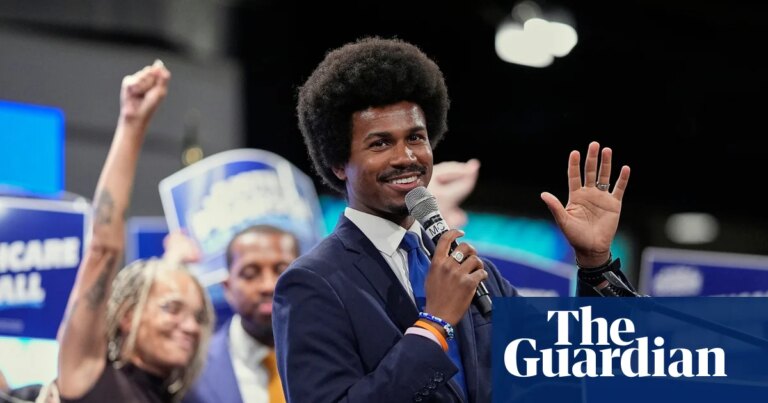
Republicans selected state senator Brent Taylor, who was endorsed by Trump, as their nominee in the newly reconfigured 9th congressional district. This district, which now stretches about 200 miles east from Memphis and includes 71% new voters, was previously a Democratic stronghold but now leans Republican. Trump’s endorsement was a key factor in Taylor’s nomination, reflecting the former president’s ongoing sway over the party’s direction in Tennessee.

The redistricting, enabled by a recent U.S. Supreme Court decision that weakened federal Voting Rights Act protections for minorities, has raised concerns among Memphis voters about diminished representation. Republicans hope the changes, which align with Trump’s broader strategy, could allow them to win all nine of Tennessee’s congressional seats.

A Rare Setback for Trump’s Picks

In the fifth congressional district, Trump’s early endorsement of incumbent Andy Ogles did not prevent Ogles from losing to Charlie Hatcher, a former state agriculture commissioner. Hatcher, while lacking Trump’s direct endorsement, campaigned as pro-Trump and emphasized his farming background. His campaign website stated: “Think what President Trump could do if our congressman spent less time talking and more time doing.” Ogles’s defeat marks a rare loss for Trump in this year’s GOP primaries, where most of his endorsed candidates have prevailed.

Redistricting and Its Broader Implications

For decades, Memphis formed the core of its own congressional district. Now, the city is split among three districts that extend into rural areas, diluting the political power of its urban, largely Black population. This restructuring is seen as part of Trump’s national plan to solidify Republican control, despite concerns about fair representation.

Conclusion

Donald Trump’s endorsements and the Republican-led redistricting in Tennessee are reshaping the state’s political landscape, with the explicit goal of securing a Republican sweep in Congress. While Trump’s influence remains strong, the outcome in the fifth district demonstrates that his backing is not always decisive. The changes in Tennessee highlight the ongoing national debate over voting rights, representation, and the use of redistricting as a political tool.

Source article

Source: https://www.theguardian.com/us-news/2026/aug/06/tennessee-house-primary-elections

Trump signs 2 immigration actions : NPR

Trump signs 2 immigration actions : NPR

NPR Topics: Politics — 2026-08-06 17:06:00 — www.npr.org

Trump Renews Push to Limit Birthright Citizenship Despite Supreme Court Rejection

President Donald Trump announced Thursday that he is once again seeking to restrict who can become an American citizen by birth, signaling his determination to revisit a contentious issue even after the Supreme Court rejected his previous attempt. Trump said he was signing two new executive actions on immigration, including one that would limit the number of people eligible for U.S. citizenship after being born in the United States.

Trump also introduced a second order targeting what he described as “birth tourism,” aiming to increase restrictions on visitors who seek visas to give birth in the U.S. and secure citizenship for their children. While Trump did not provide additional details, he expressed confidence that his latest actions would withstand constitutional scrutiny.

This renewed effort comes just months after the Supreme Court struck down Trump’s earlier executive order, which sought to end birthright citizenship for children born to people in the U.S. illegally or temporarily. The Court upheld a broad interpretation of birthright citizenship, as established by the 14th Amendment, which grants citizenship to anyone born in the country with very limited exceptions.

Trump’s first executive order on this issue, signed on the first day of his second term, was immediately challenged in court. Opponents argued that the order violated the Constitution, and several lower courts blocked it before it could take effect. In June, the Supreme Court rejected the order by a 6-3 vote, a margin that left many immigration advocates and legal observers uneasy about the future stability of birthright citizenship.

Despite these setbacks, Trump has persisted, framing his actions as necessary to address perceived abuses of the immigration system. However, his repeated attempts to curtail birthright citizenship have been consistently rebuffed by the courts, reinforcing the long-standing legal consensus that the 14th Amendment protects this right.

Conclusion

President Trump’s ongoing campaign to limit birthright citizenship stands in direct opposition to established constitutional law and repeated Supreme Court rulings. His latest executive actions, like those before them, are likely to face immediate legal challenges and further scrutiny over their constitutionality. The persistence of this issue highlights the continuing debate over immigration policy in the United States, but the courts have so far maintained a clear stance in defense of birthright citizenship.

Source article

Source: https://www.npr.org/2026/08/06/g-s1-137686/trump-birthright-citizenship-immigration-curb