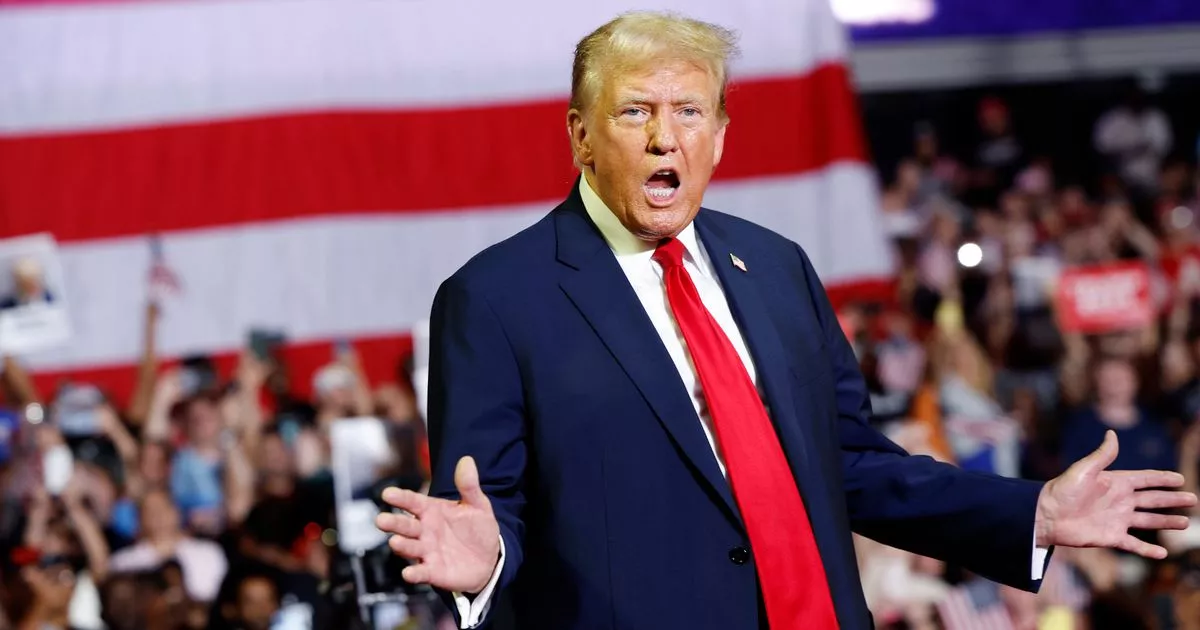

Trump attends White House Correspondents’ Dinner for first time as president
Trump’s Return to the White House Correspondents’ Dinner: A Look Back at the 2011 Roast
In a surprising turn of events, former President Donald Trump is set to attend the White House Correspondents’ Dinner this Saturday, marking his first appearance at the event as a former commander-in-chief after opting out during his presidency. This decision brings Trump back to a storied Washington tradition tied to his tumultuous relationship with the media and political establishment.
The 2011 Dinner: A Turning Point in Trump’s Political Journey
Trump’s return to the dinner table inevitably stirs memories of the 2011 event, where then-President Barack Obama and comedian Seth Meyers famously took jabs at Trump, who was in attendance. Obama’s comments, delivered with his characteristic wit, centered on Trump’s persistent questioning of the former president’s birth certificate. “Now, I know he’s taken some flak lately, but no one is happier, no one is prouder to put this birth certificate matter to rest than The Donald,” Obama quipped, drawing laughter from the audience.
The 2011 dinner has become a widely discussed chapter in Trump’s political narrative, with many speculating that the public mockery helped ignite his eventual bid for the presidency. Trump himself has consistently denied this, telling The Washington Post in 2016, “there are many reasons I’m running, but that’s not one of them.” However, the lingering question remains whether the jabs from Obama and Meyers planted a seed that would grow into his 2016 campaign and subsequent victory.
Trump’s Relationship with the Press
Throughout his presidency, Trump openly criticized the media, often labeling unfavorable coverage as “fake news.” He cited the “rude and crude” treatment during the 2011 dinner as a factor in his decision to avoid the Correspondents’ Dinner during his time in office. “The press was so nasty, I just – so I didn’t do it,” he stated on Fox News’ “The Five.”
Despite these sentiments, Trump has publicly downplayed the impact of the 2011 dinner on his political aspirations, asserting, “There is this theory: I was there while Barack Hussein Obama was speaking, and he was hitting me a little bit. Actually, it was very nice, and I was actually – I loved it. I really loved it.”
Fact-Checking and Trump’s Narrative
Fact-checkers have consistently scrutinized Trump’s statements, as he has a well-documented history of making false or misleading claims. During the 2011 dinner, Obama humorously referenced conspiracy theories, like the moon landing, that Trump could now turn his attention to. This allusion highlighted the broader pattern of Trump’s penchant for embracing and promoting unsubstantiated claims.
Political analysts, such as Daniel Dale of CNN, have noted how Trump’s rhetoric and claims have influenced public opinion, sometimes leading to widespread misinformation. Dale emphasized, “Trump’s repeated falsehoods, especially those about the media and his political rivals, have had a significant impact on public trust and polarization.”
A Moment of Reflection
As Trump prepares to make his return to the White House Correspondents’ Dinner, the occasion serves as a poignant reminder of the complex interplay between political power, media, and public perception. The 2011 dinner was a pivotal moment, not just for Trump but for American politics at large. As he steps back into the spotlight of this traditional event, it remains to be seen how his presence will shape the narrative going forward.
In conclusion, Trump’s upcoming attendance at the dinner underscores the enduring tensions between him and the Washington establishment. It also provides an opportunity to reflect on a defining moment in his political journey that continues to resonate today.